Blender 5.2 LTS is Here!
-
 Written by Amber Kelly
Blender 5.2 LTS Arrives as the First Long-Term Support Release of the 5.x Series
Blender 5.2 LTS released today, closing out the beta and release-candidate cycle that began in early June. It's a milestone release: not because it's flashy, but because it's the first Long Term Support version of the Blender 5.x line, the release studios have been waiting for before moving production pipelines off Blender 4.2 LTS.
Blender ships new features roughly every four months, a pace that suits hobbyists and independent artists but is hard to justify in a studio pipeline, where a mid-project upgrade can quietly change render output or break an exporter. LTS releases solve that by freezing a version for about two years of bug-fix-only updates, no new features, no API changes. Following the pattern set by 2.83, 3.3, 3.6, and 4.2 LTS, Blender 5.2 will be supported through roughly July 2028. That's what makes this release the real adoption moment for Blender 5.x: 5.0 and 5.1 already proved themselves with individual artists, but "the studio pipeline pins it" is a different bar, and it's one only an LTS release clears.
The headline addition is a new experimental physics system, initially focused on hair and cloth simulation. It targets two of the oldest, least-modernized code paths in Blender, and the goal is more stable draping, better cloth-bake iteration, and more natural motion when posing grooms for hair cards or curve exports. True to the "experimental" label, it isn't meant to replace the existing solvers yet. The developers are looking for real-world testing and bug reports, not committed production shots, though shipping it inside an LTS means it will mature against a frozen base for the next two years.
Beyond the new physics work, 5.2 brings a long list of smaller but practical additions:
- A new Fill tool and updated brush library for Grease Pencil
- A new Thin Wall mode in the Principled BSDF shader, for more realistic rendering of leaves, paper, and other thin surfaces
- A new Mesh Bevel node, Sample Sound node (for pulling frequency data from audio into geometry nodes), Geometry Bundles, Lists, and support for Geometry Nodes on Empty objects
- LoopTools features such as Circle, Space, and Flatten built directly into Blender, rather than requiring the add-on
- A Cycles texture cache system that cuts memory use and startup time on texture-heavy scenes
- Support for remotely hosted asset libraries, so users can browse and download assets from within Blender without a manual download step
- An overhauled Screen Space Raytracing pipeline, more robust and better-optimized Fast Global Illumination, EEVEE camera-ray visibility for lights, and EEVEE instancing optimizations that can roughly double performance in CPU-bottlenecked, instancing-heavy scenes
- New input color spaces for Apple, ARRI, Blackmagic Design, Canon, and Sony cameras
For most users, 5.2 will feel like a consolidation release rather than a reinvention, which is exactly the point of an LTS. It settles the platform work introduced in 5.0 (the Vulkan viewport backend) and the workflow additions from 5.1 (geometry nodes expansion, glTF exporter overhaul) into a version worth committing to for the long haul.
See a breakdown of all the new additions large and small in this video.
CG Cookie, who creates these release videos for Blender is wrapping up production on a full CORE fundamentals series for learning Blender in 5.2 LTS. They are currently offering a pre-sale on Superhive at a discounted rate and intend to release the series on August 4 once they are able to complete production following today's release of 5.2.
What this means for Blender Add-ons
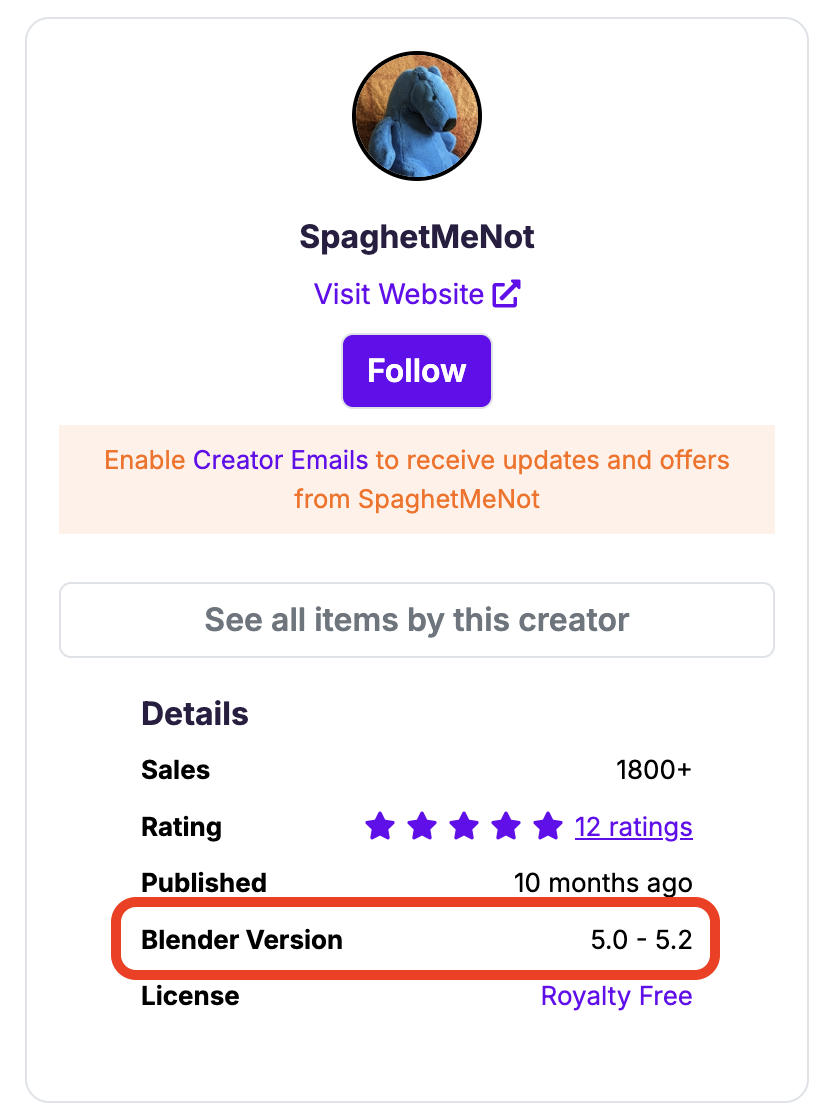
The one real cost of the upgrade, as with any major version bump, is add-ons. Blender's major releases are when deprecated parts of the Python API actually get removed, and the usual breakage comes from renamed properties, the retirement of the legacy bgl OpenGL module in favor of gpu, and data-model changes such as the ongoing shift from particle hair to the curves-based hair system. Add-ons that declare their supported version range in a blender_manifest.toml file will simply refuse to enable outside it; older add-ons built on the legacy bl_info dict are worth testing directly before trusting them on 5.2. Studios sitting on 4.2 LTS should treat this as a deliberate migration project rather than an in-place update. Run add-ons against the 5.2 beta or release candidate first, diff the output of anything that bakes or exports, and keep both versions installed side by side until the checklist passes.
Superhive creators have proactively been updating their add-ons against the 5.2 beta and release candidate. You can check an add-ons Blender version compatibility in the information sidebar of the product page.
For anyone still on 4.2 LTS, Blender 5.2 is the version to start evaluating now and migrate to once it's confirmed stable. For those already running 5.0 or 5.1 day to day, the move to 5.2 should be minor, since it's largely a stabilization pass over familiar ground. And for anyone curious about the new hair and cloth solver, the advice from early testers is consistent: try it on real project data, file bugs, and leave it off the critical path until it graduates out of experimental status.
Full release notes are available on Blender's developer documentation site, and the update is now available through blender.org's standard download channels.