Inside the Hive: Navigating AI as a 3D Model Creator, and What To Model Next
-
 Written by Emil Drkušić
In most marketplaces, including Superhive, we usually focus on two main goals: offering something people truly need and earning money from it.
No matter which one comes first, the two are closely connected. Good content often brings in more income, and the reverse can also be true. But what happens when AI joins the party?
In this article, I want to share a few personal thoughts and reflections. I might not be entirely right, but I believe I’m heading in the right direction, and that we can focus on ideas that create the most positive change for everyone involved.
I hope you enjoy reading this article and happy Blending!
Key Takeaways for Our Scanners in the Room :)
- Access to generative AI services may affect what sells on 3D marketplaces, depending on the buyer and use case.
- Simple or generic models are easier for AI to replicate, but still require some work.
- Focus on complexity, quality, animation, and completeness, the craft of the art.
- Collaboration and sound design can add unique value.
- High-quality, production-ready assets still hold ground.
The Big Question: What Should You Model Next?
Every 3D artist eventually hits this question with AI now capable of cranking out simple models faster than you can unwrap UVs, choosing what to make next matters more than ever when working to build a Blender business surrounding the sales of 3D assets created with the software we all love, Blender.
Keeping a pulse on what is being generated could be helpful.
If you’re spending hours sculpting stylized rocks or barrels, you might notice fewer sales ahead. AI can generate those quickly, and often for free. Sure, some buyers still prefer well-optimized, professional assets, but overall, simple models are the easiest for AI to replace.
So where should you focus your energy? Let’s look at a few real examples, what AI is doing right now, and how you can stay a step ahead. I know this is uncomfortable territory for a lot of us, and trust me, I was hesitant to explore myself. Though feel it's my responsibility to understand new tools and tech in our space. To understand their strengths and weaknesses, so I, as an artist, can still amplify my work, and keep creating amazing things with Blender.
Hang with me...
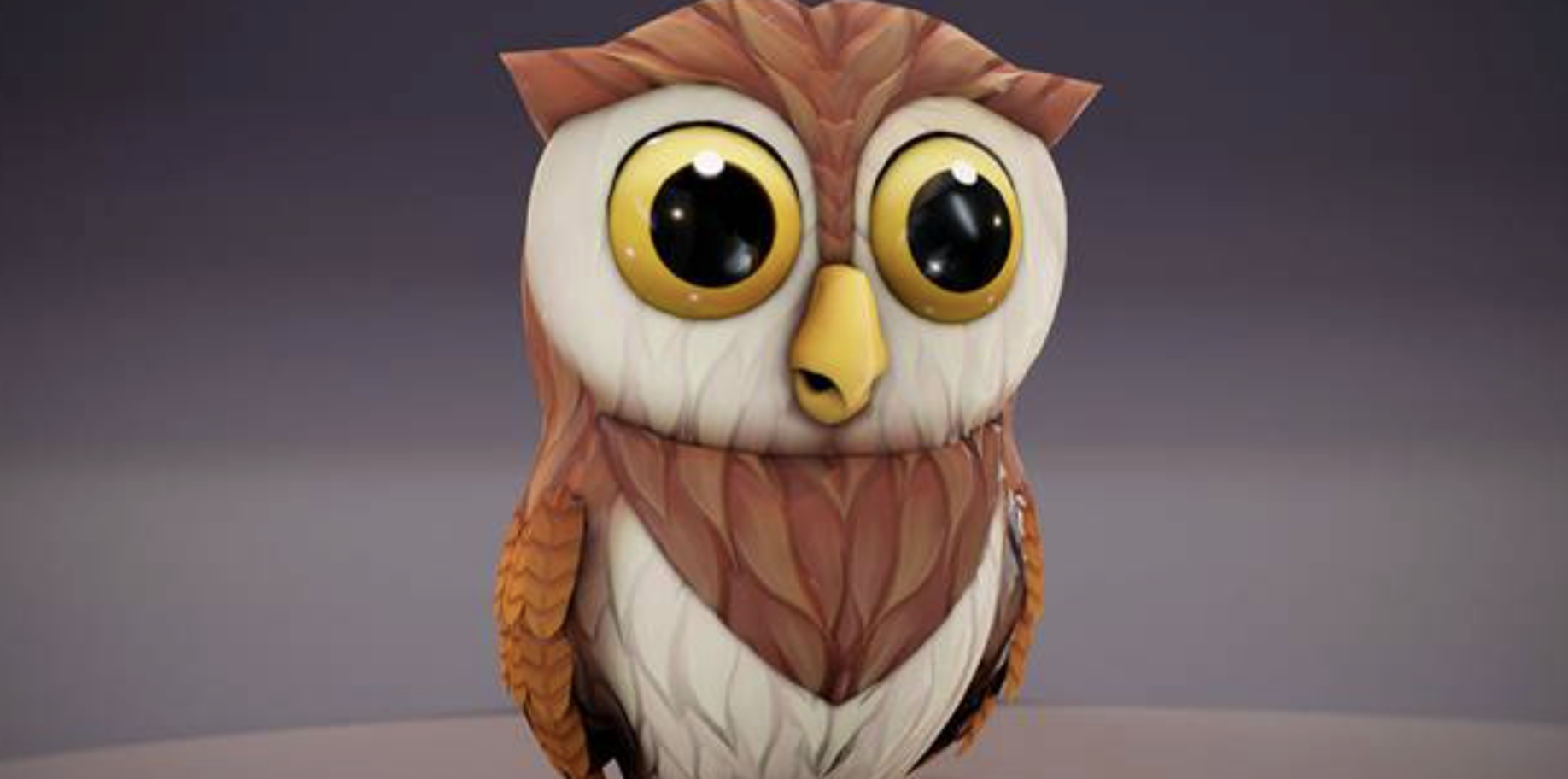
Case Study: Cartoon Owl 3D Model - My work vs generative AI's.
Back in 2021, I created my Cartoon Owl 3D Model. The animated version came rigged with seven actions: idle, talk, walk, take off, fly, glide, and land.
Curious how AI would handle it, I uploaded a front-view image into Copilot 3D, one of the accessible AI generators. The result? Granted I only fed it one image, and that is also sort of the point of this comparison. The more true craft, experience, and skill I'd be able to put into the tool, I suspect the better the output would be. (Read: you still need to learn and understand 3D fundamentals as a valuable skill)
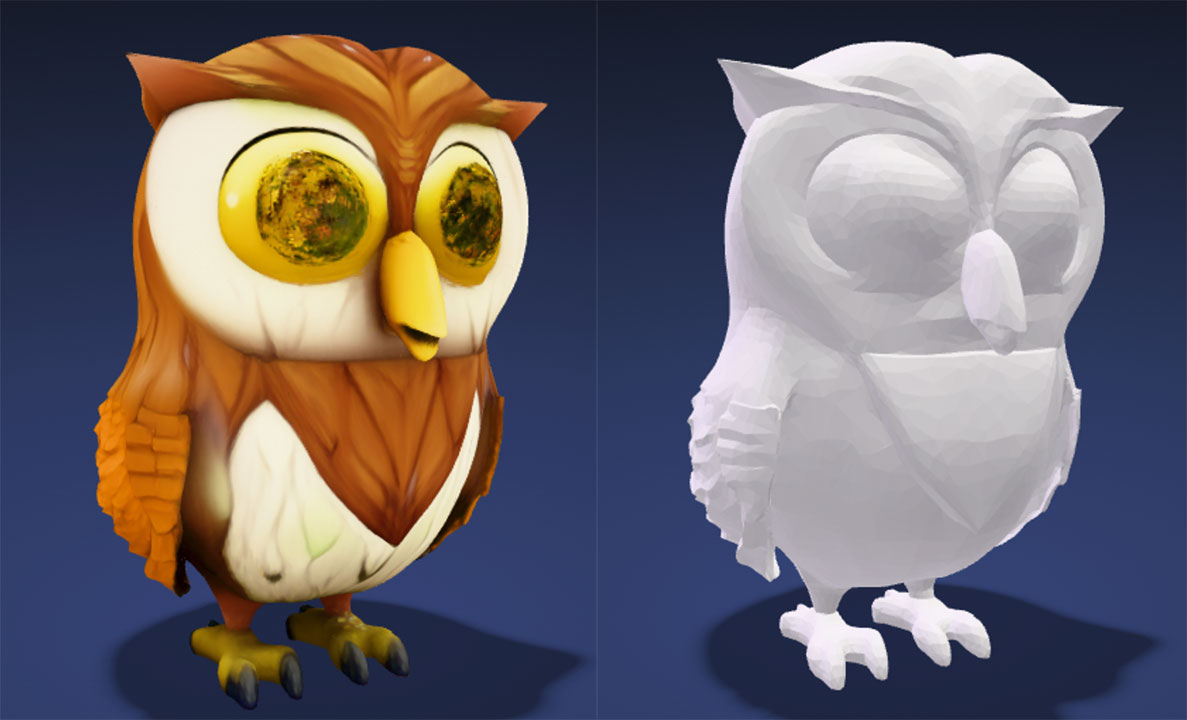
AI Model Positives
- This particular model was free to generate and pretty quick to generate. I could easily iterate and test certain variations.
- Not terrible, not outstanding, but something you could work with over time.
AI Model Negatives
- Noticeably lower quality that requires manual cleanup and fixes. It didn't generate rigging, or animations and generally lacks some of that professional polish. That comes with years of experience and understanding the craft.
A picture really does say it all. The AI version looks like an owl, but not one you’d put in a finished project. So while this may seem like a direct dig at the AI tool, it's more so a curious comparison so I can better understand what it can and cannot do, and where I as an artist fit in.
Stream a few creators talking about it
If you’re exploring how AI impacts 3D art, these creators have dipped their toes into the conversation.
- The Blenderender — I Tried the 3D AI That Will Replace Us
Watch on YouTube
A balanced look at how AI tools compare to human craftsmanship. - Stefan 3D AI Lab — Comparing the Current AI Tools
Watch on YouTube
A useful breakdown of what each generator can—and can’t—do. - Bad Decisions Studio x Blender Guru — AI and the Future of 3D Artists
Watch on YouTube
A candid, high-level chat about what’s coming next. - Kim McMahon — Unexpected Tech World Tea: AI Might Never Become a Threat to Artists in Animation
Watch on YouTube
A refreshing, optimistic take on why creativity still wins.
Where to Focus Next
Here’s a look at one of my latest projects: Cartoon Baby Dragons 3D Model with 5 Music Tracks & 36 Sound Effects – Unity/Unreal Ready.
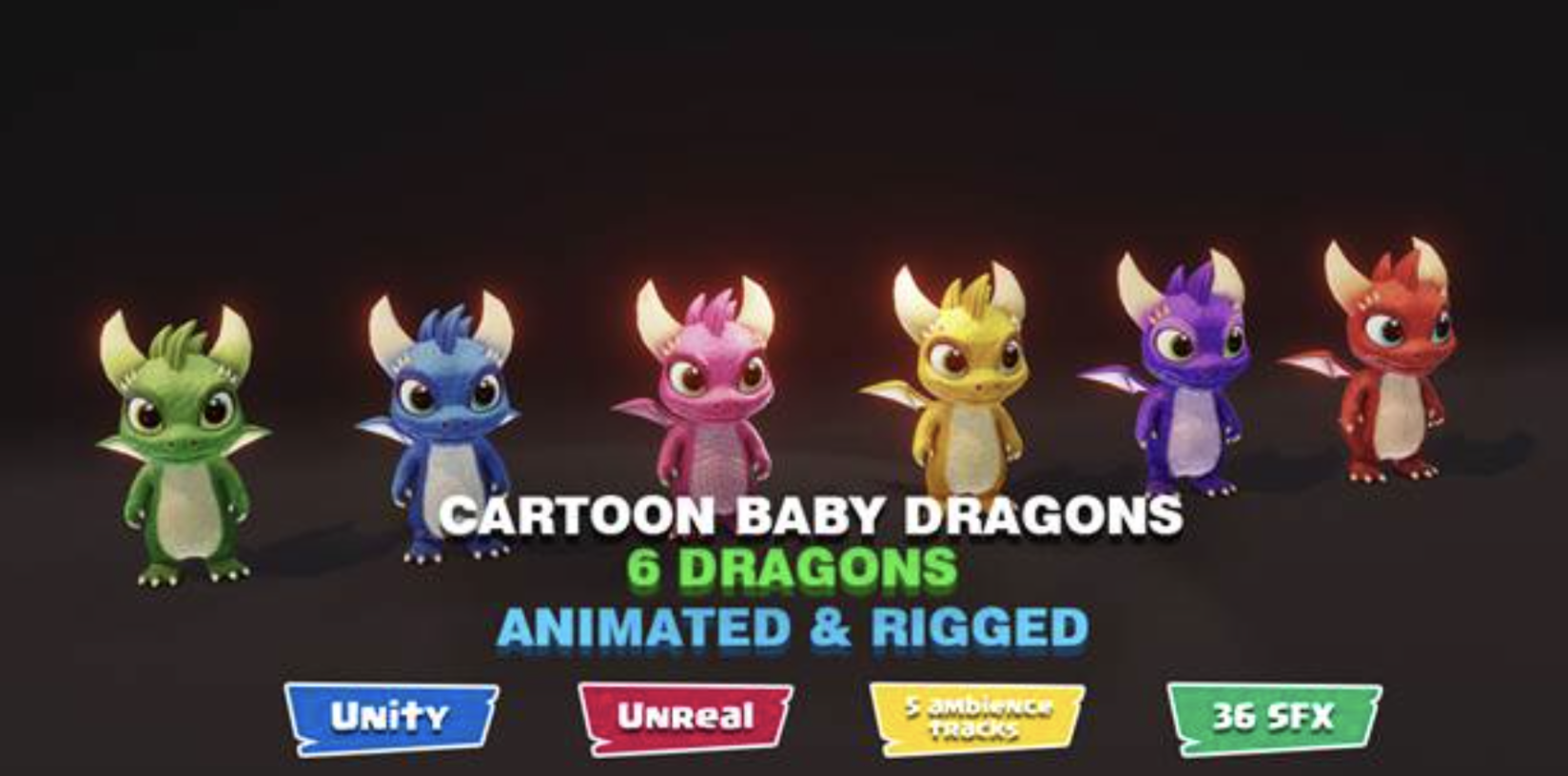
Compared to the earlier owl model, this one is richer in detail and fully animated, plus it comes with audio integration. The point here is to have your models be you, your style, your experience, and your craft.
If you want your work to hold its ground against AI models, I'd recommend focusing on these:
- Go complex. Build detailed, optimized models with clean topology and clear structure.
- Support more formats. Export for Blender, Unity, Unreal, FBX, GLB, and others.
- Animate and rig. Give your models life with functional, purposeful motion.
- Collaborate. Work with sound designers or animators to create complete, ready-to-use packages.
- Be you. Breathe your style and humanity into your artwork. People pick up on this, especially for the higher end assets vs "crap I just need a red barrel" in the background.
AI may make generation faster, but cleanup and polish still cost time and experience. That’s where professional creators shine. Your craft and experience as an artist help you stand out from the generated noise.
🌟 A premium, production-ready asset saves studios far more than a “free” model that needs fixing.
The Bottom Line
AI isn’t going anywhere. It’ll keep evolving, and maybe next week a new tool will shift the field again. But for now, skill, creativity, and completeness still win. These are the crafts that matter today, and in the AI-assisted future.
Focus on what AI can’t replicate easily: taste, craft, storytelling, and human polish.
Thanks for reading!
- Emil - Visit my Superhive Store
FAQs
Are AI tools already being used in game asset creation?
Yes. Studios are testing AI-assisted workflows, especially for base meshes and concept generation. But human artists still refine and finish the work.
Should I learn to use AI tools myself?
Absolutely. Knowing their strengths and weaknesses helps you adapt your pipeline, stay relevant, and stay curious.
Are stylized assets still worth making?
Yes — but push beyond “generic.” Style plus personality sells; style alone doesn’t.