 smice
smice


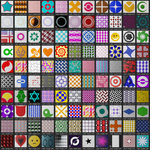
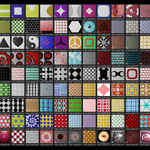
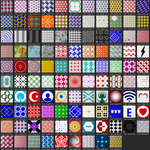
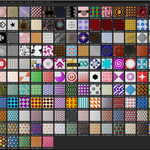
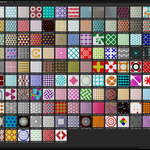
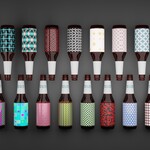

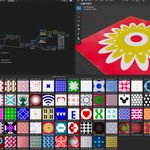
Unzip & Place them
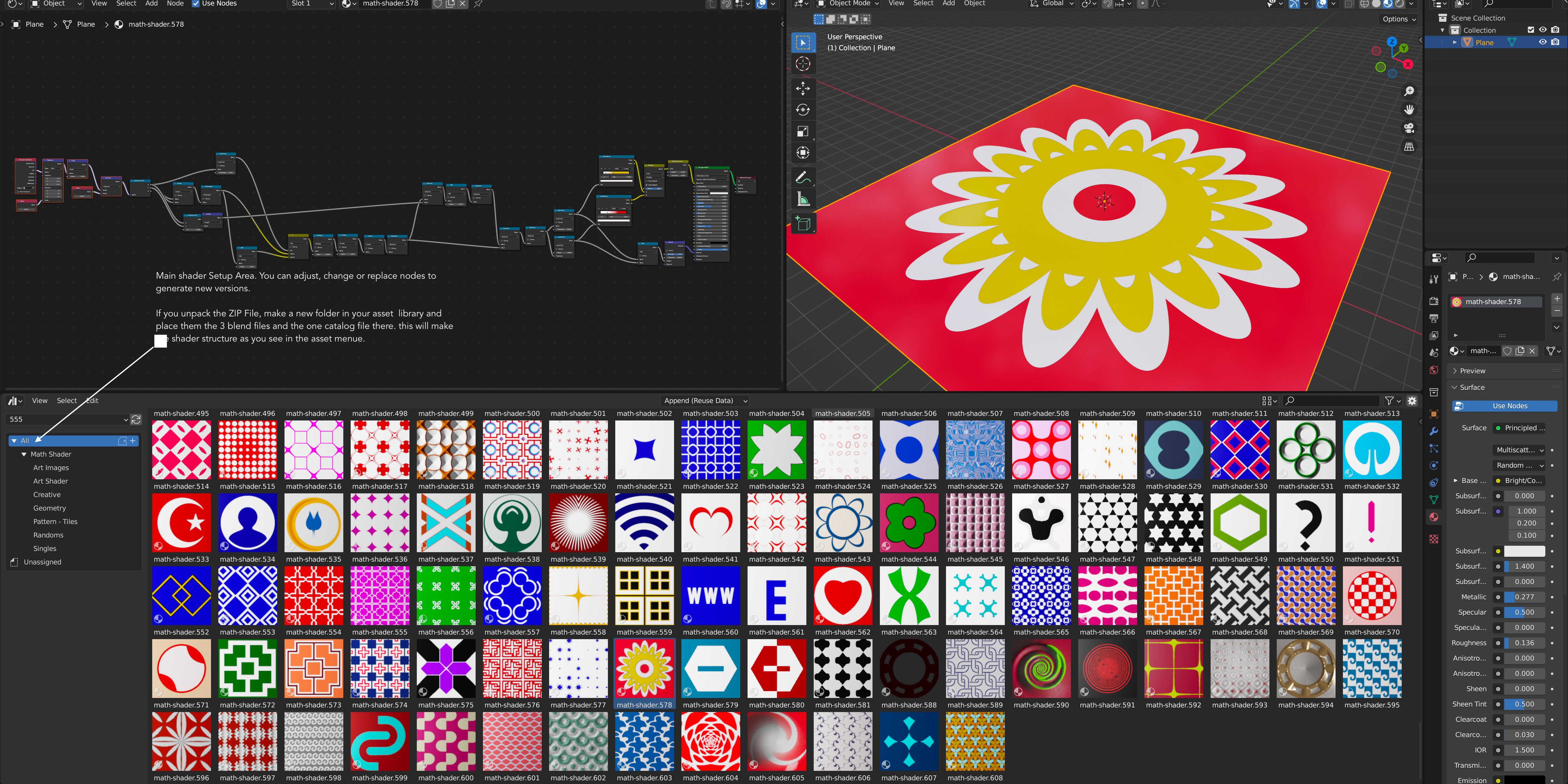
If you unpack the ZIP Files, make a new folder in your private asset library and place the 5 blend files and the one catalogue file there. this will make the shader asset menu, structured in 7 subfolder as you can see in the screenshot at the bottom.
How These Shaders Are Built
Each material in the 1000 shader library comes from a real mathematical formula, often originally visualised using a Wolfram, Desmos or Wikipedia Background.
The source equations include:
-
trigonometric functions (sin, cos, tan…)
-
absolute values and sign functions
-
nested square roots and powers
-
polar and complex-number expressions
-
modulo and wrapping operations
-
vector geometry
-
inequalities describing implicit shapes
The Process
-
The formula is analyzed and rewritten into a form Blender’s math nodes can understand.
-
It is translated into a node network, step by step
-
The inequality or expression is turned into a mask that drives color, emission, or displacement.
-
The result becomes a procedural “ink drawing” — a shape, surface, contour, or sculpture drawn purely by mathematics.
Complexity Level
Some shaders are built from only 10–20 nodes.
Others — especially nested Desmos formulas involving complex numbers — can easily exceed 50+ nodes.
The more complex ones include:
-
layered absolute-value nesting
-
vector distances
-
multi-branch conditional logic
-
chained trigonometric distortions
-
synthetic complex-number arithmetic, all re-implemented using Blender’s basic math operations.
Have questions about this product?
Login to message
| Published | 10 months ago |
| Blender Version | 3.6 - 5.2 |
| Render Engine Used | Cycles, Eevee |
| Misc Data | Uvs-Unwrapped, Normal-Mapped |
| License | Royalty Free |
Discover more products like this
Artwork Asset Libraries advanced-procedural MaterialShader GenerativeArt Generative Art desmos asset library procdural mathematical art