CORE / Fundamentals / Physics COURSE 08
Define the rules. Let Blender calculate
58 lessons across rigid bodies, soft bodies, cloth, fluid, smoke, fire, particles, dynamic paint, and force fields. Motion, destruction, and simulation you could never hand animate. Rebuilt for Blender 5.2 LTS.
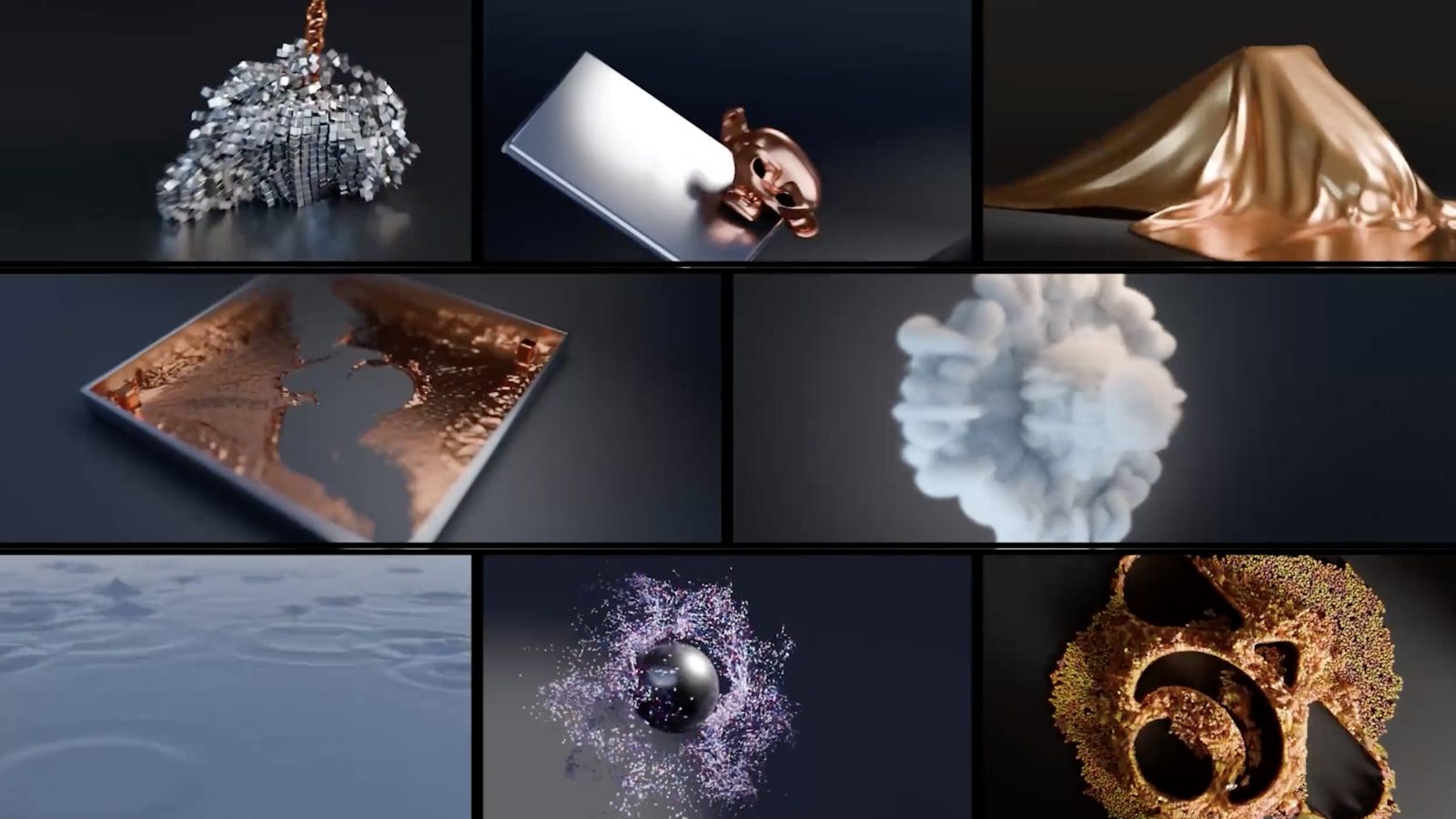
The gap
You animated a fall. It looked like a fall pretending.
Keyframing a bounce takes ages and never quite looks right, because you are guessing at forces a computer could just compute. A stack of crates falling, cloth catching the wind, water finding its level: none of it moves the way your hand thinks it should.
Physics in Blender is not one tool, it is eight related systems that all work the same way underneath. You define a set of rules, mass, friction, collision shape, and Blender performs the calculation. Learn that pattern once on rigid bodies and the same shape of thinking carries into cloth, fluid, and smoke.
Kenny spends chapter one on rigid bodies for exactly this reason. It is the simplest system to reason about, and every harder system later in the course reuses its logic.
That is a mental model problem, and building the model is the first two hours of the course.
Eight builds
What you will be able to build
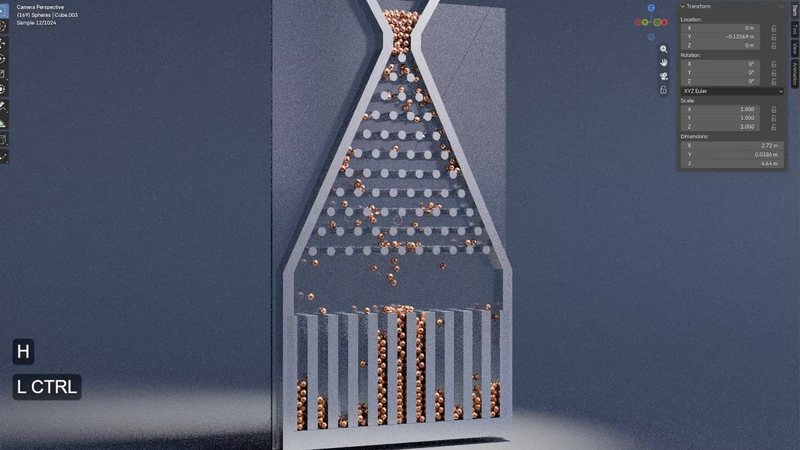
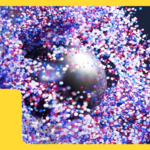
01 / Galton Board
Hundreds of rigid body spheres funnelled through pegs into a bell curve
02 / Product Reveal, Cloth
Fabric pulled back by dynamics to reveal the product underneath
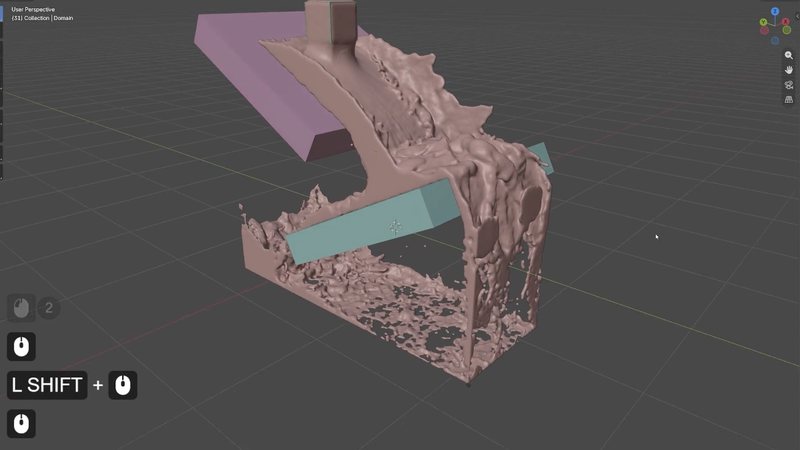
03 / Fluid Logo Reveal
A logo assembled from a fluid simulation settling into shape
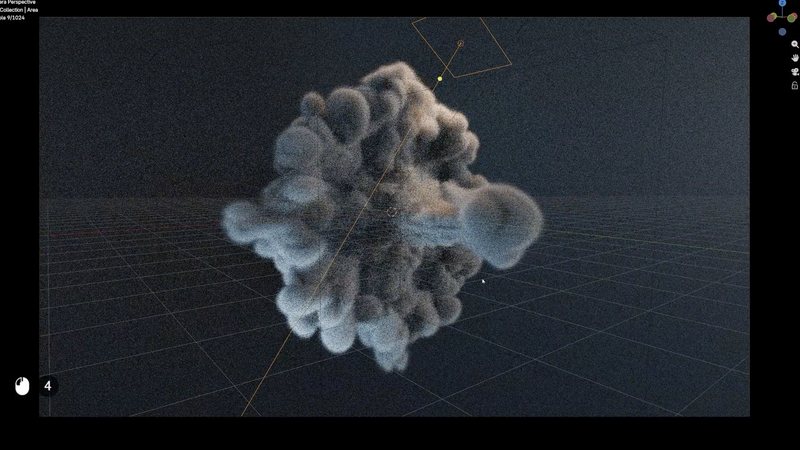
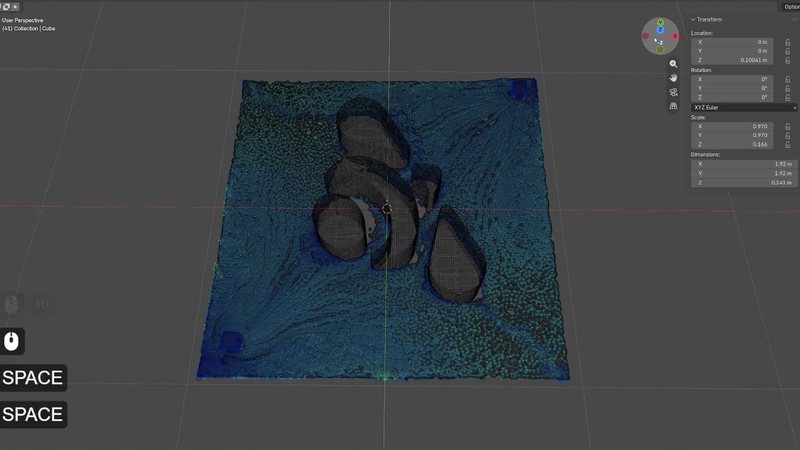
04 / Force Field Project
A field shaping smoke into a cloud that would be nearly impossible by hand
 |
Plus a wrecking ball demolition, soft body strings, an inflation project, a smoke cannon, particle boids, and a dynamic paint rain scene. Eight chapters, eight hands on projects. Every rigid body constraint type gets its own short demo before the wrecking ball puts several of them to work together.
|
|
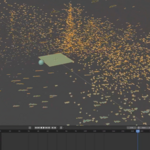

Wrecking Ball
A chained wrecking ball dismantling a stack of rigid bodies. Rigid body constraints, mass, and collision margins, all doing real work at once.
|
Outcomes
What you will actually learn
Rigid body dynamics, properly. Collision shapes, margins, mass, friction, bounciness, and the difference between active, passive, and animated, applied across a Galton board and a full wrecking ball demolition.
Every rigid body constraint. Fixed, point, hinge, slider, piston, generic, spring, and motor, each demonstrated on its own before the final project asks you to combine them.
Soft body simulation. Setup, settings, and a strings project, for objects that deform under their own physics rather than staying rigid.
Cloth, pinned and inflated. Setup, key settings, pinning fabric in place, and inflation, built into a product reveal where cloth pulls back on cue.
Fluid, smoke, and fire. Domain and flow setup for liquid, gas, and combustion, including the NanoVDB volume workflow Blender 5.0 introduced for smoke and fire rendering.
Particle systems and boids. Emission, physics settings, and flocking behaviour, built up into a full particle project.
Dynamic paint. Waves, displacement, weight, and paint canvases, applied to a rain project where drops actually disturb a surface.
Force fields, and how to troubleshoot any of it. Every force field type, then a dedicated troubleshooting chapter for when a simulation explodes, tunnels through the floor, or simply refuses to bake.
|
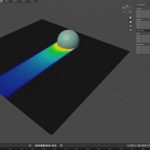
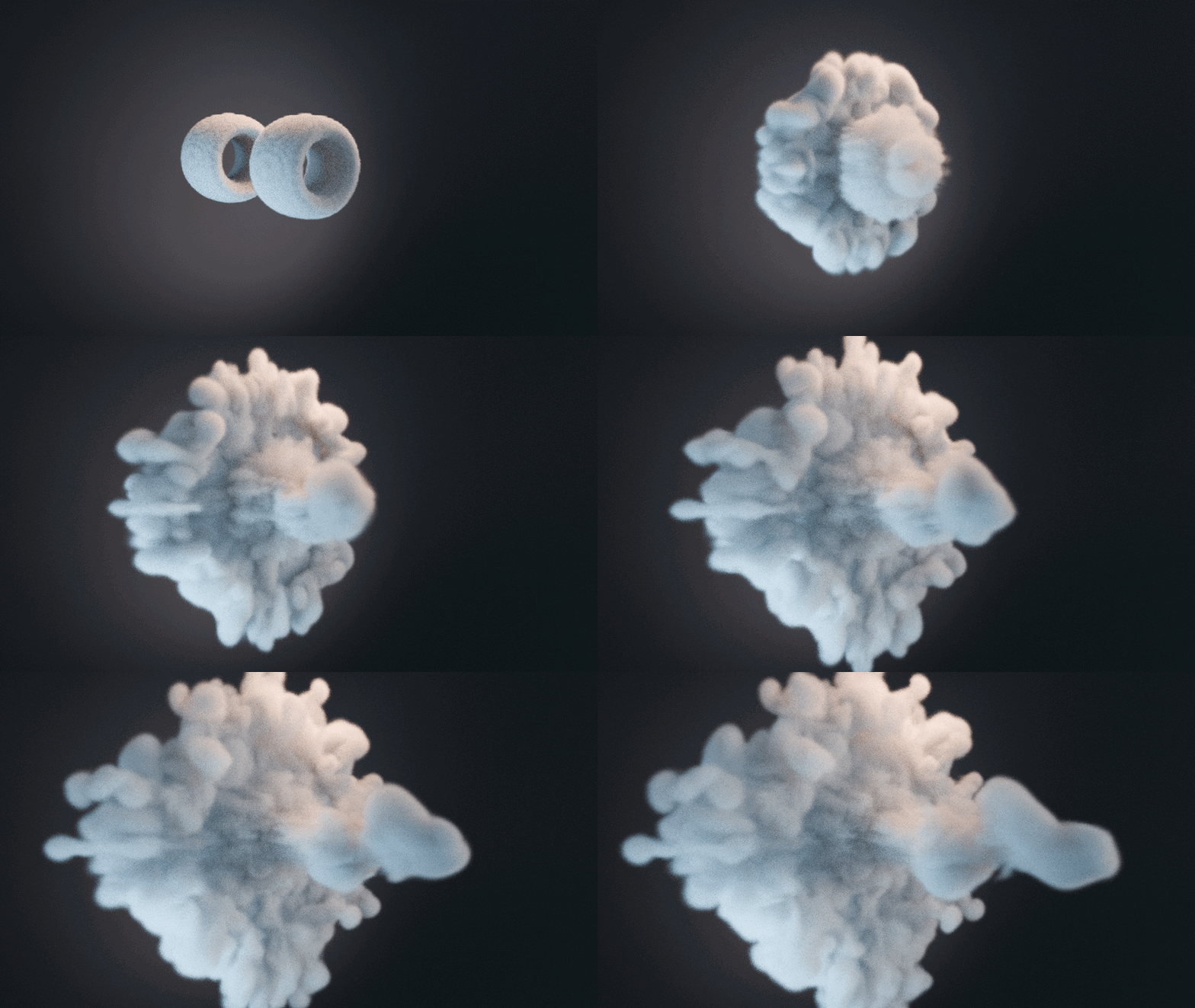
Force Field Project
Smoke shaped by a field rather than keyframed by hand. Fall-off, flow, and an animated field strength doing the sculpting.
|
58 lessons / 8 chapters
Curriculum
Chapter 01 / Rigid Body Dynamics
19 lessons
Collision shapes, margins, mass and friction, active versus animated, scene properties, every rigid body constraint, and two builds: the Galton board and a full wrecking ball demolition.
Chapter 02 / Soft Body Physics
5 lessons
Setup and settings, then a soft body strings project that puts them to use.
Chapter 03 / Cloth Simulation
7 lessons
Setup, settings, pinning, and inflation, built into a product reveal where cloth pulls back to unveil the object underneath.
Chapter 04 / Fluid, Smoke & Fire
8 lessons
Fluid setup and settings, a fluid logo reveal, then smoke and fire, including a smoke cannon project and the NanoVDB based fire shading workflow.
Chapter 05 / Particle Systems
5 lessons
Emission and physics settings, boid flocking behaviour, and a full particle project.
Chapter 06 / Dynamic Paint
6 lessons
Waves, displacement, weight, and paint canvases, finishing on a dynamic paint rain project.
Chapter 07 / Force Fields
4 lessons
Every force field type, fall-off and flow, and a project animating field strength and position to shape a simulation.
Chapter 08 / Troubleshooting & Tools
4 lessons
Why simulations explode or tunnel through the floor, how baking and caching actually work, and the physics tools worth knowing before you close this course out.
Free preview
Watch Scene Properties free
Six minutes on the settings that govern every rigid body simulation in the scene at once, gravity included. Change one number and every falling object responds. It is the lesson that makes the rest of the chapter click. No signup.
Watch the lesson
 |
Your instructor
Kenny Phases
Kenny wrote the physics course for CORE and is the reason simulation gets a chapter of its own elsewhere in the series, since other instructors point students his way whenever a project calls for it.
He teaches troubleshooting as its own subject, not an afterthought. Chapter eight exists because simulations fail in a small number of predictable ways, and knowing them saves hours.
|
| Blender version |
5.2 LTS |
| Lessons |
58 videos, 6h 50m |
| Quality |
1080p, stream or download |
| Captions |
English and Spanish |
| Project files |
Included, a start file for every project and constraint demo |
| Render engine |
Cycles throughout, with the NanoVDB volume workflow for smoke and fire |
| Platforms |
Windows, macOS, Linux |
| Access |
Lifetime, no subscription |
| Also available in |
The CORE bundle, all 11 courses |
The second longest course in CORE. Eight physics systems each need their own setup and settings before the projects, and none of them shortcut cleanly.
Questions
Do I need to take the other CORE courses first?
No. Every project in this course starts from a supplied file, so nothing here depends on your own modeling or rigging.
Which physics system should I expect to spend the most time on?
Rigid bodies. Chapter one is nineteen lessons because it teaches the pattern every later system reuses: define the rules, let Blender calculate. The wrecking ball project alone is close to twenty minutes.
Do old physics cache files still work?
Not directly. Blender 5.2 changed the simulation cache compression format, so caches baked in 4.2 or earlier need to be rebaked. New simulations you bake in 5.2 are unaffected.
Is Flip Fluids required?
No. Flip Fluids is mentioned as an available Extensions Platform add-on for more advanced fluid work, but every fluid lesson in this course uses Blender’s built in Mantaflow system.
Will this work in Blender 4.2 LTS?
Mostly, with two exceptions. The fire shading lesson uses the NanoVDB based volume workflow that changed in Blender 5.0, so the shader setup will not match 4.2. Everything else, rigid bodies, soft bodies, cloth, particles, dynamic paint, and force fields, is unchanged.
Is this the same as the version I already own?
No. This is rebuilt for 5.2 LTS with new recordings, the current cache format, and current volume rendering. If you own the CORE 4.2 bundle, check your loyalty pricing.
I want more than one course. Is there a bundle?
Yes.
CORE is all 11 courses as a single one-time purchase. Buy up to four courses individually and you come out ahead. Past that, the bundle costs less, and all eleven bought one at a time run to more than twice the bundle price. CORE is also included with an annual CG Cookie subscription if you would rather stream than own.
What if I get stuck?
Chapter eight is a dedicated troubleshooting chapter covering the most common ways a simulation goes wrong. Beyond that, post in the CG Cookie community and instructors will answer.
Course 08 of 11
Let it fall
Physics is course eight of eleven in CORE: modeling, sculpting, lighting, materials, texturing, animation, rigging, physics, compositing, grease pencil, and geometry nodes. Take them one at a time, or take the whole spine.
See the full CORE bundlePast four courses, the bundle is the cheaper buy. One purchase, keep it forever.

Teaching Blender since 2008
 CG Cookie