 NizamNet
SHADERHOOD
[ SHADER CODE → NATIVE NODE: 115+ READY SHADERS INSIDE ]
Write Code. Get a Native Node.
Dozens of Math nodes for one effect. OSL is CPU-only and Cycles-only. Shadertoy code doesn't run in Blender.
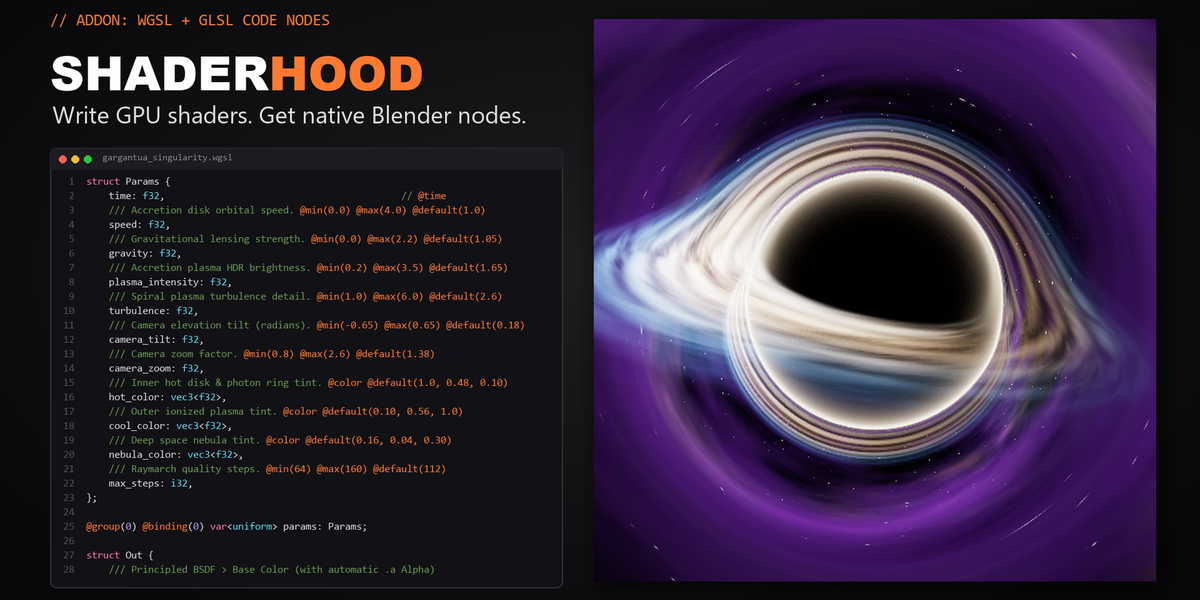
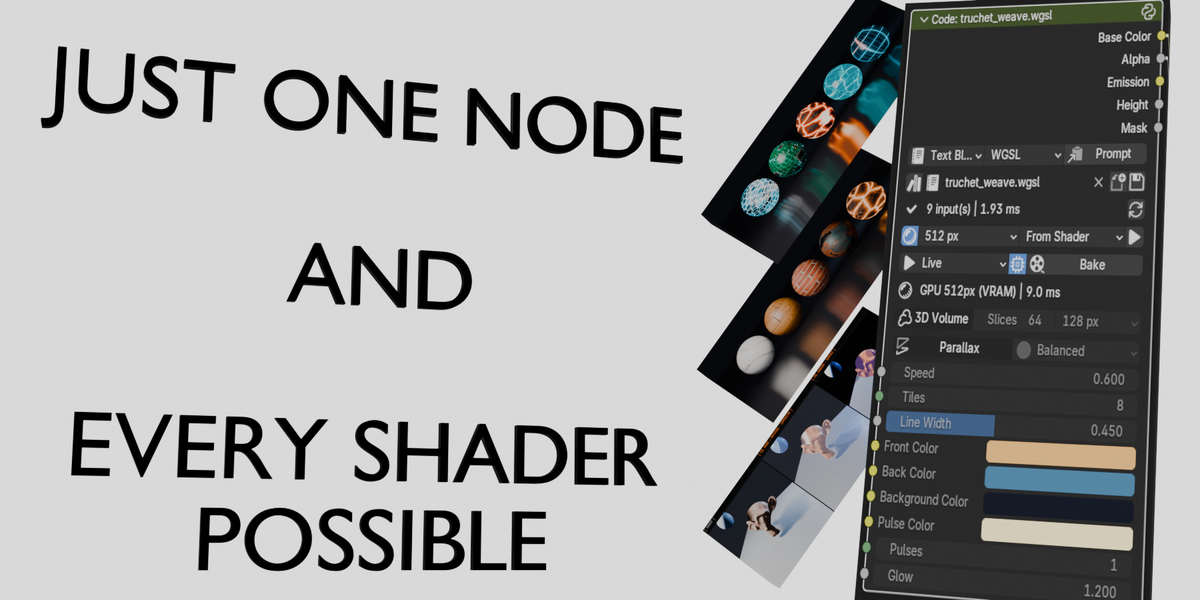
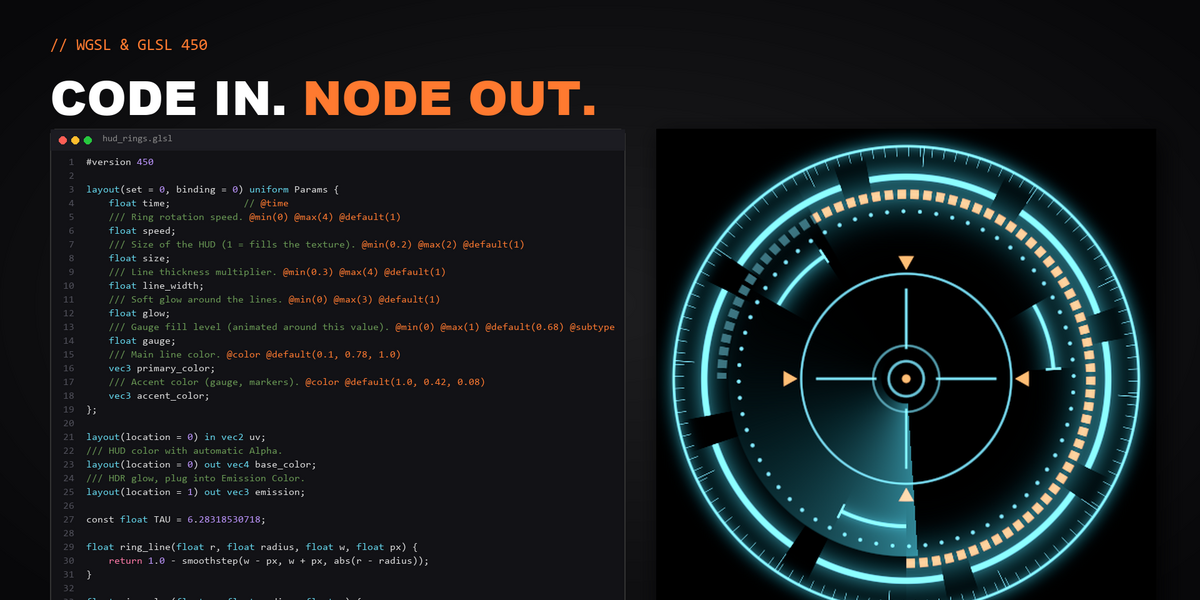
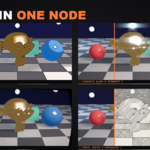
One node. Paste WGSL or GLSL. Every uniform becomes an animatable socket, every output a socket. Runs on the GPU for EEVEE, Cycles and the Compositor.
time: f32, // @time
/// Pulse speed. @min(0) @max(5) @default(1.2)
speed: f32,
/// @color @default(0.1, 0.8, 1.0)
glow_color: vec3<f32>,
};
@group(0) @binding(0) var<uniform> params: Params;
@fragment
fn main(@location(0) uv: vec2<f32>) -> @location(0) vec4<f32> {
let d = length(uv - 0.5);
let ring = sin(d * 40.0 - params.time * params.speed);
return vec4<f32>(params.glow_color * ring, 1.0);
}
- > @time → filled every frame, animates by itself
- > /// @min @max @default → slider range & value
- > @color → color picker socket
- > Return a struct → many outputs (Base Color, Normal, Roughness…)
- > Errors keep your links; clear fix-it hints
A Shader Library That Grows With You
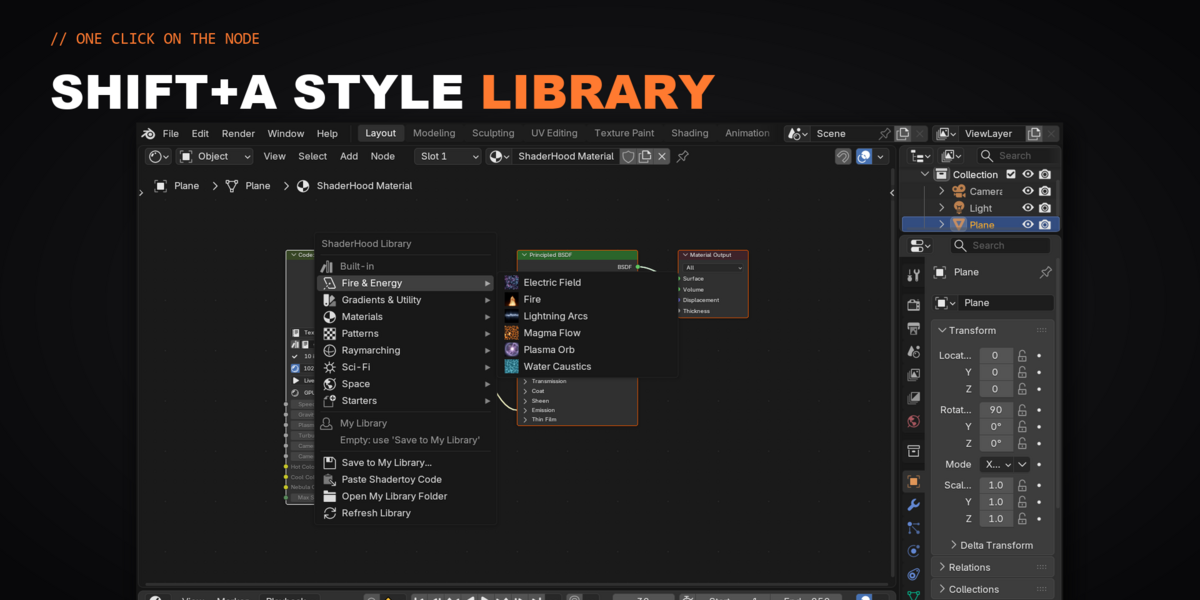
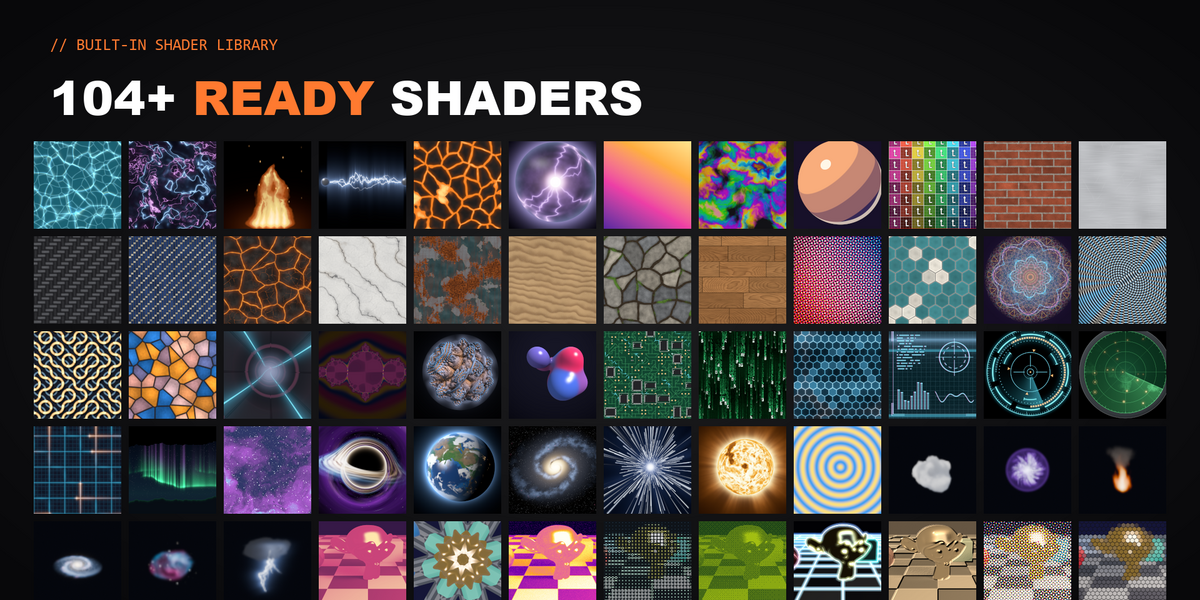
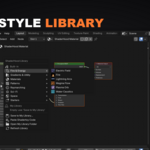
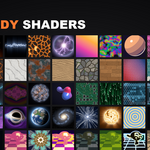
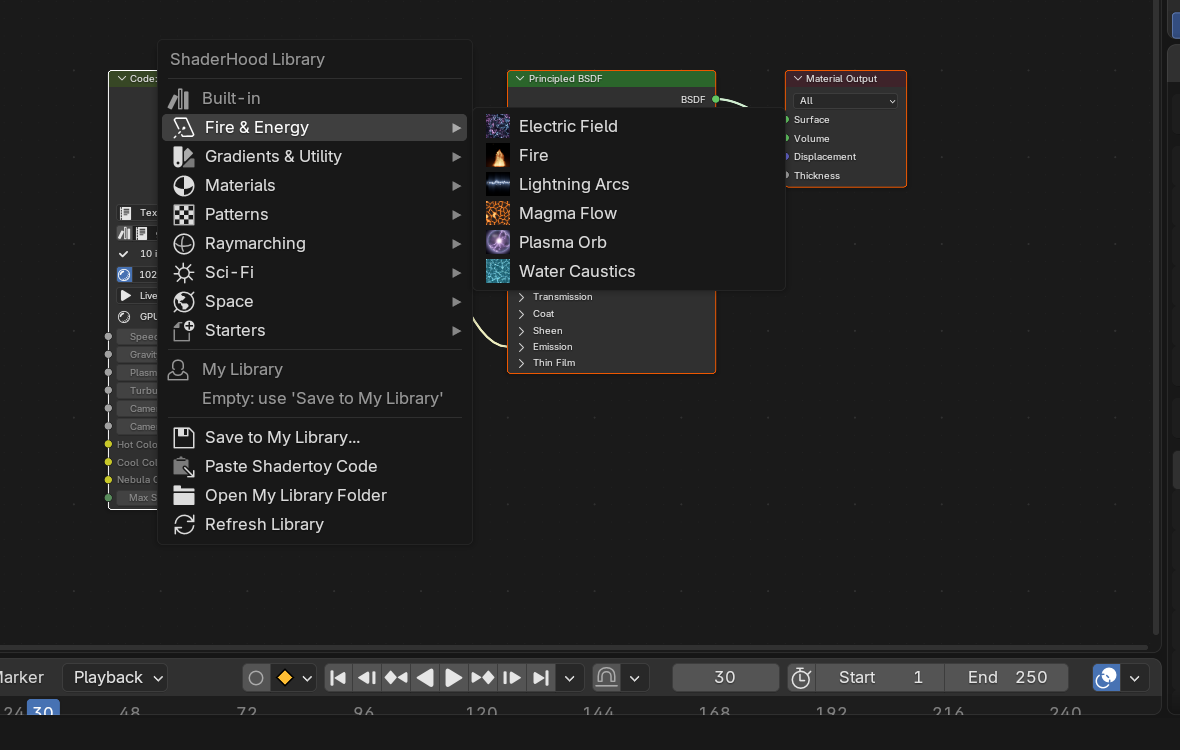
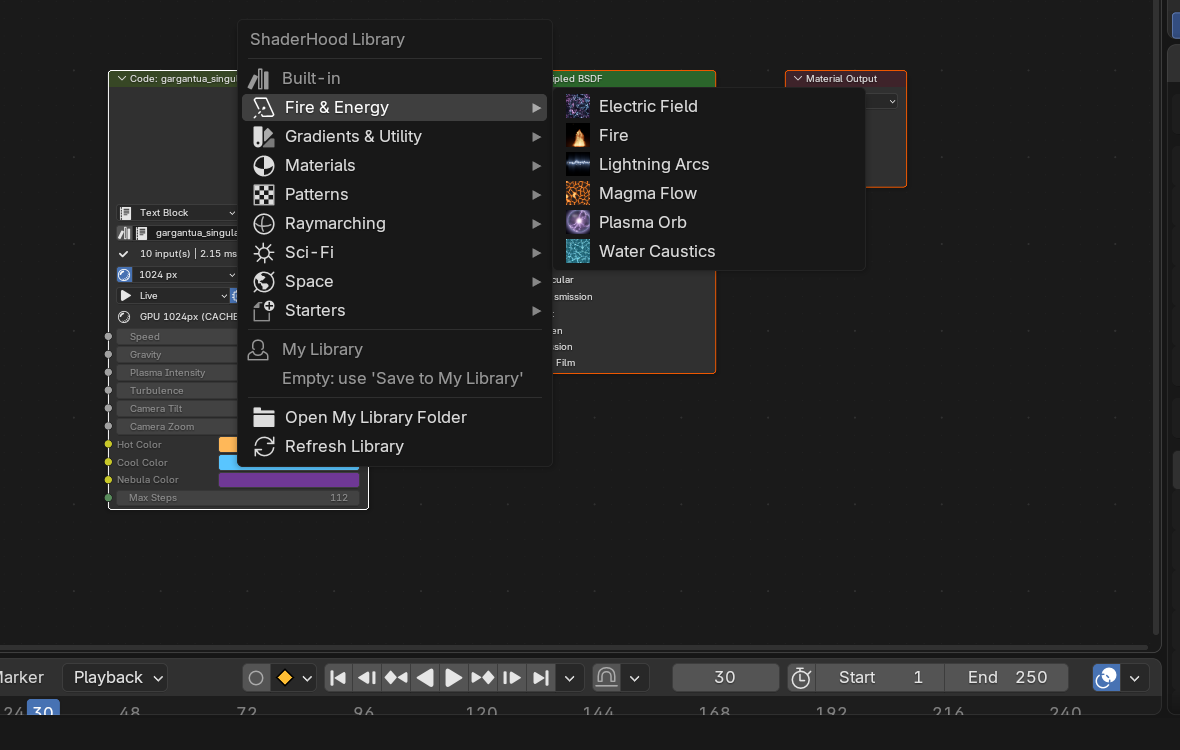
Every node has a library button next to the Text field. Pick from 115+ built-in shaders, or from your own. Same menus in Shift+A → ShaderHood Library to drop a ready node in one click.
- > Type-to-search menus, just like Shift+A
- > Save any node to My Library with your own categories
- > Lives outside the add-on: survives updates & re-installs
- > Folders = menus: organise in Explorer/Finder, Blender follows live
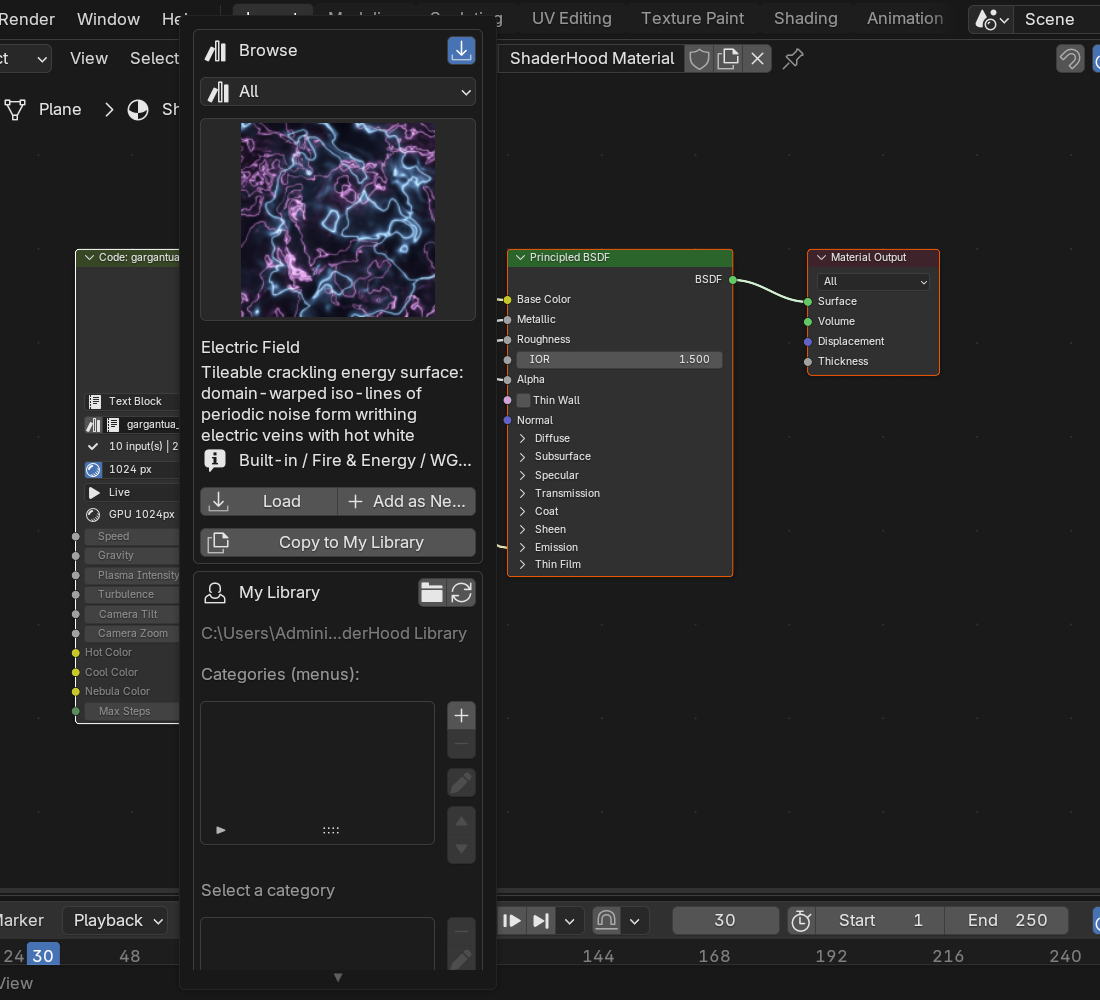
- > Thumbnail browser in the sidebar (N > ShaderHood)
- > Paste Shadertoy code: converted automatically
- > WGSL and GLSL side by side (39 GLSL examples)
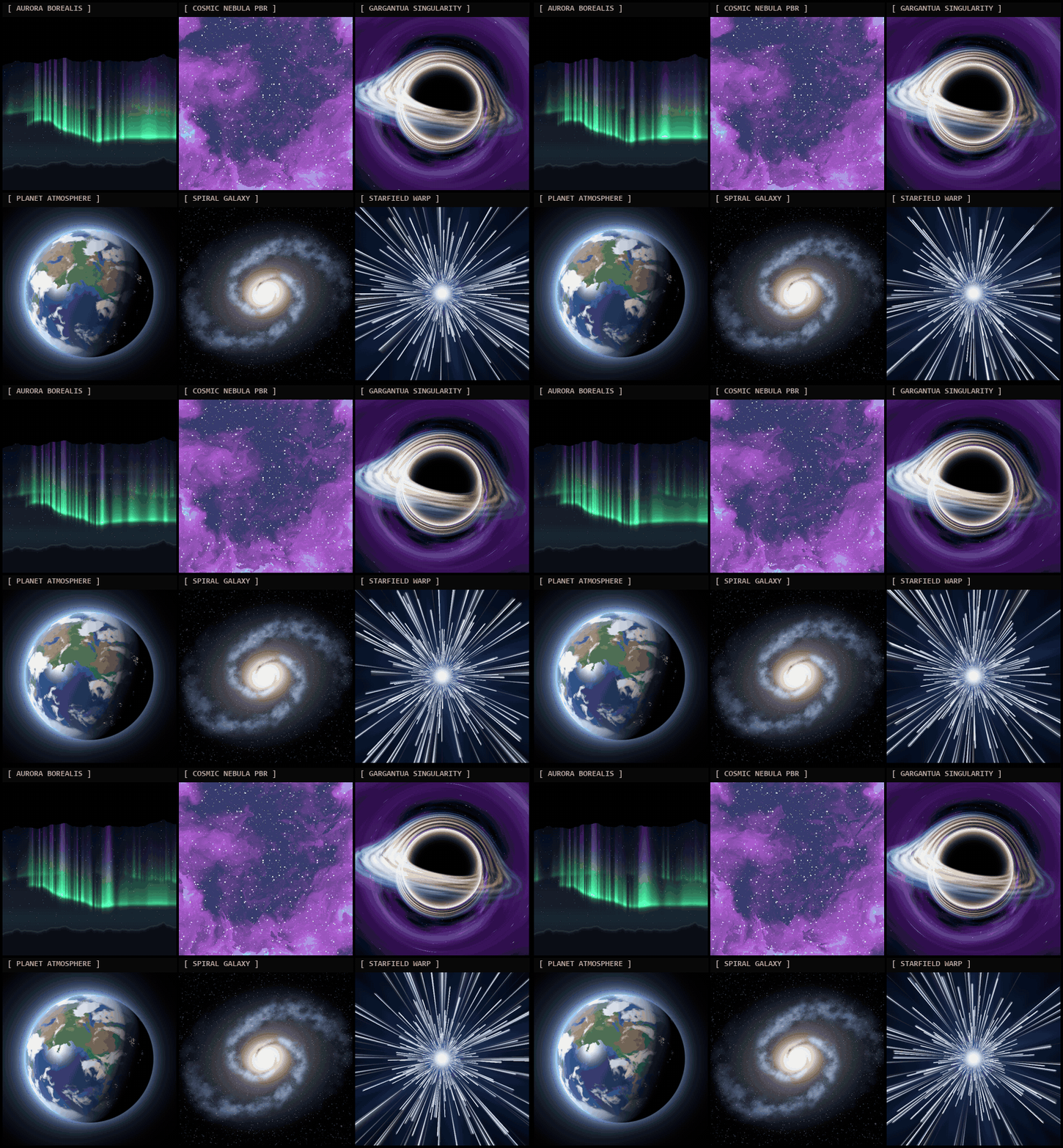
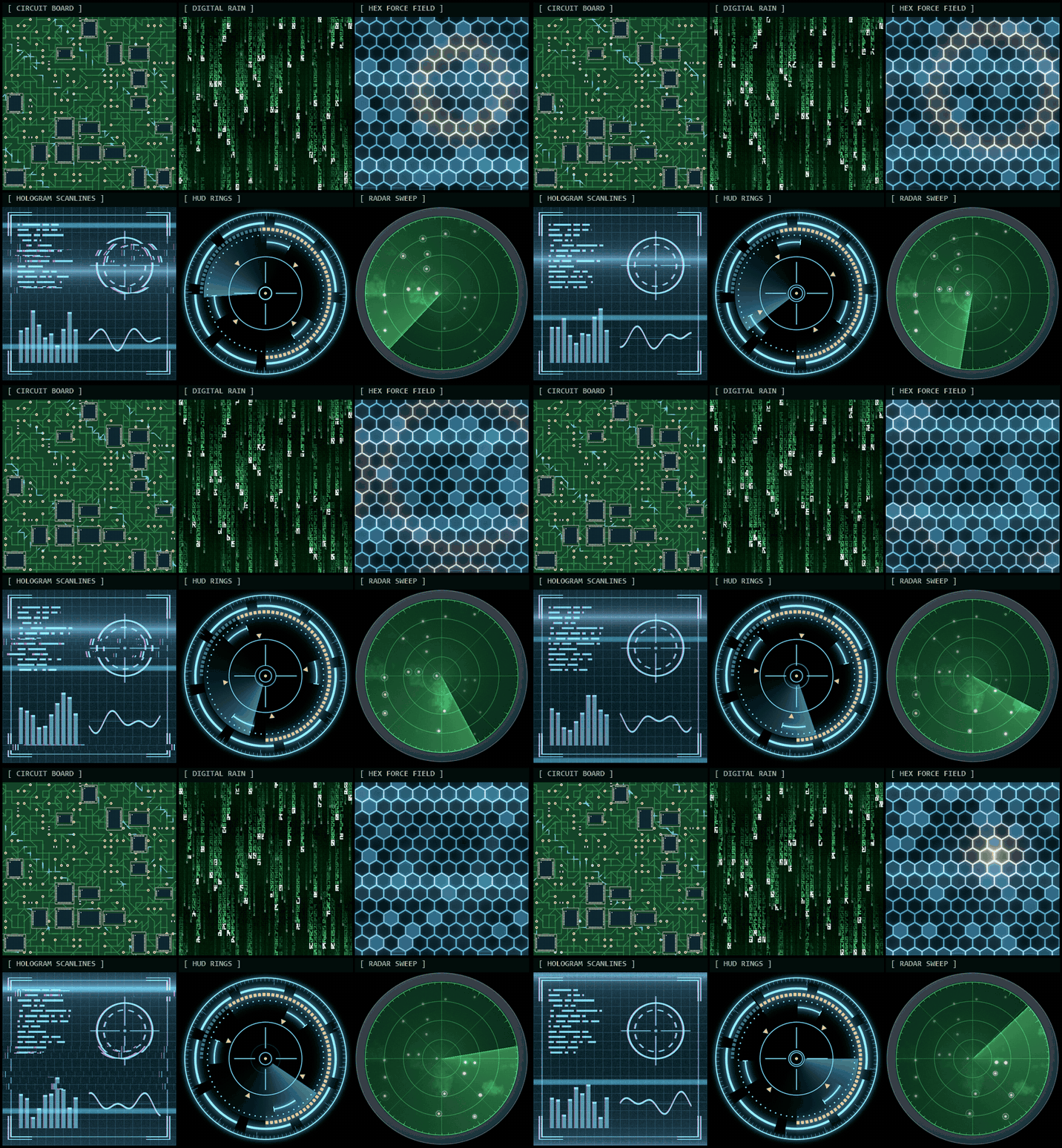
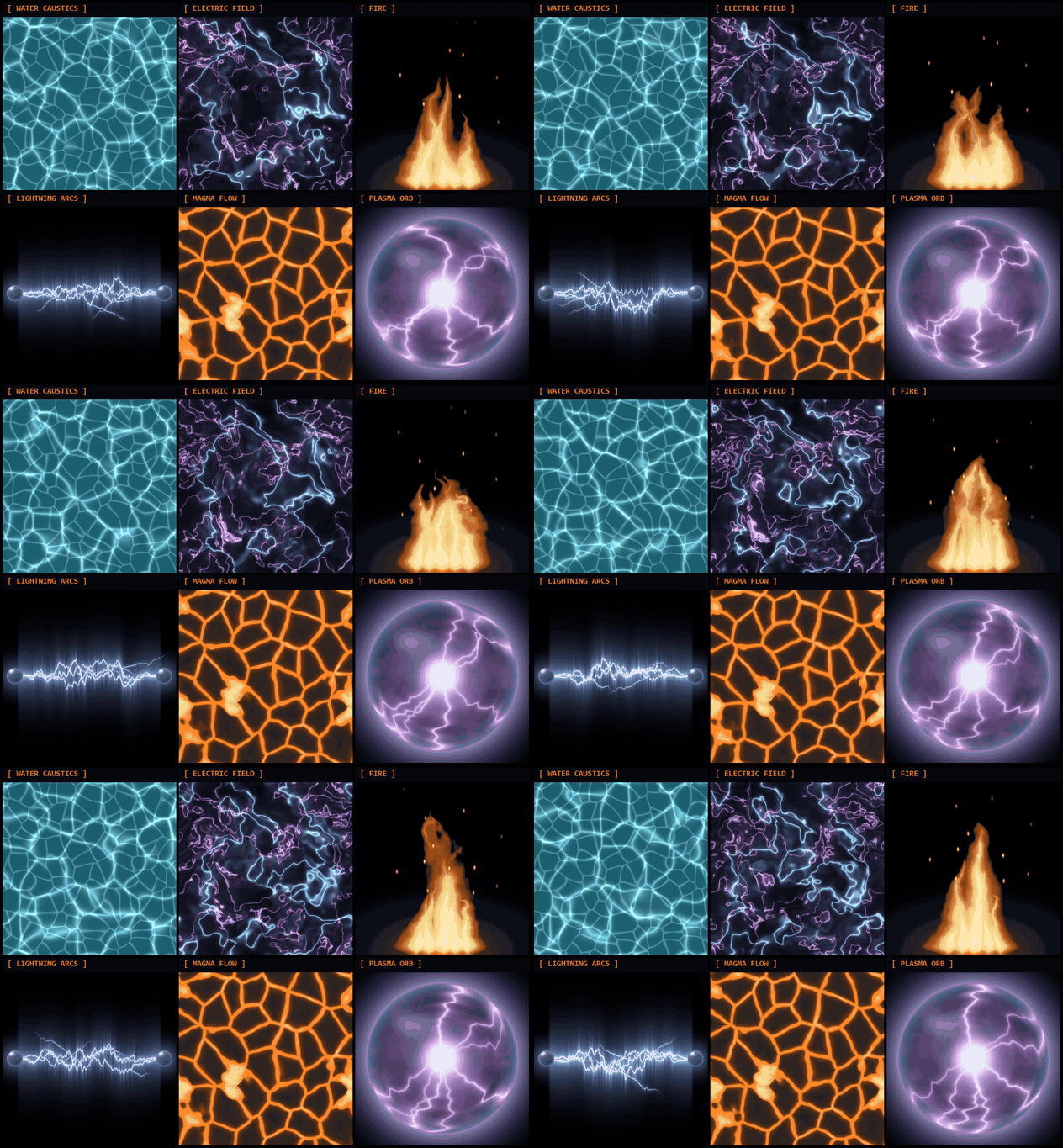
Animated Procedurals for EEVEE & Cycles
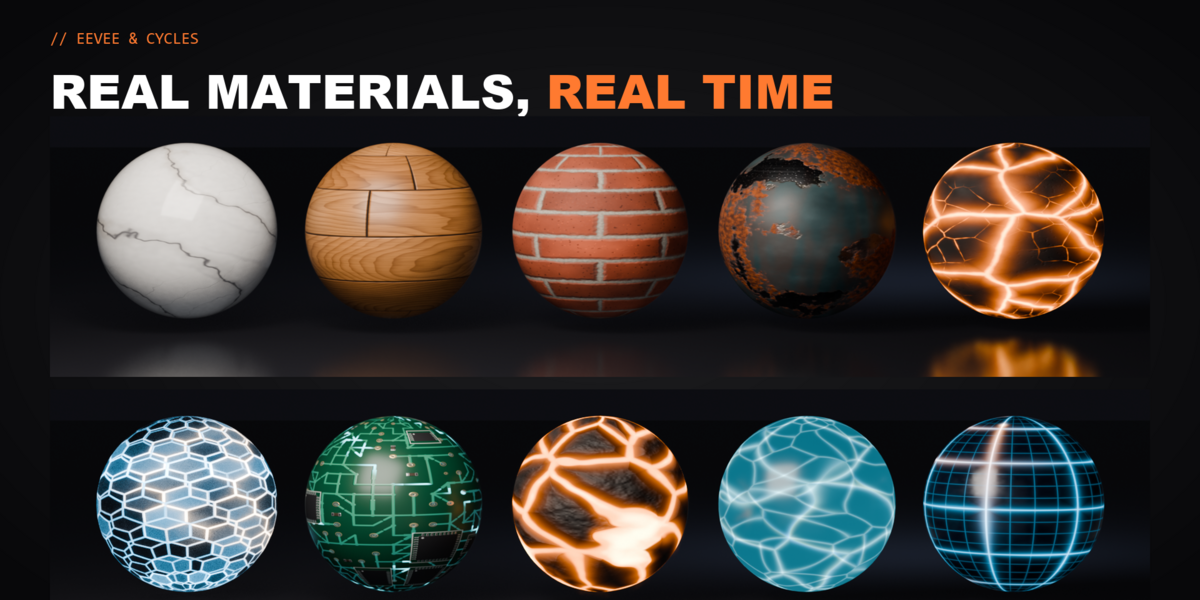
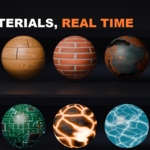
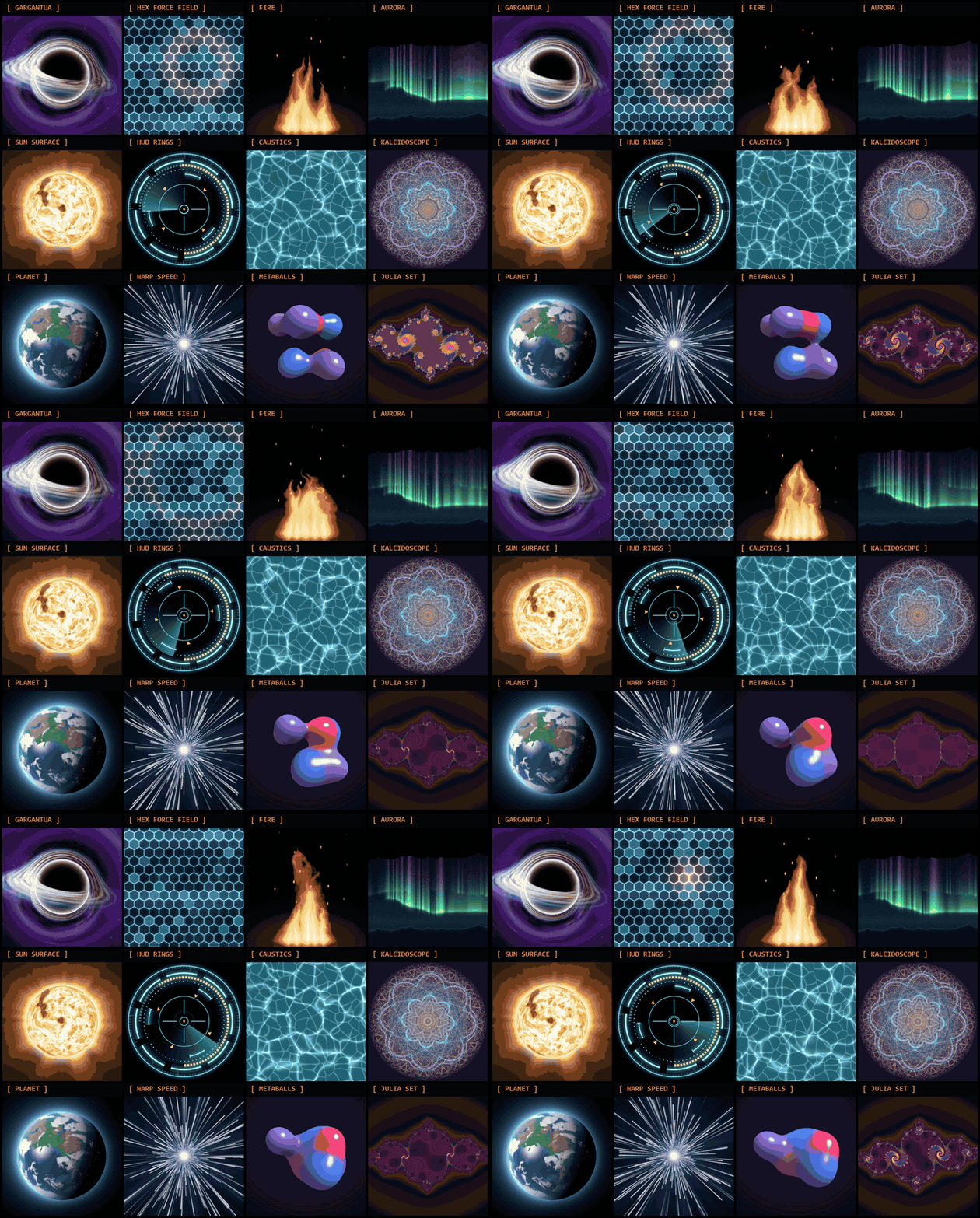
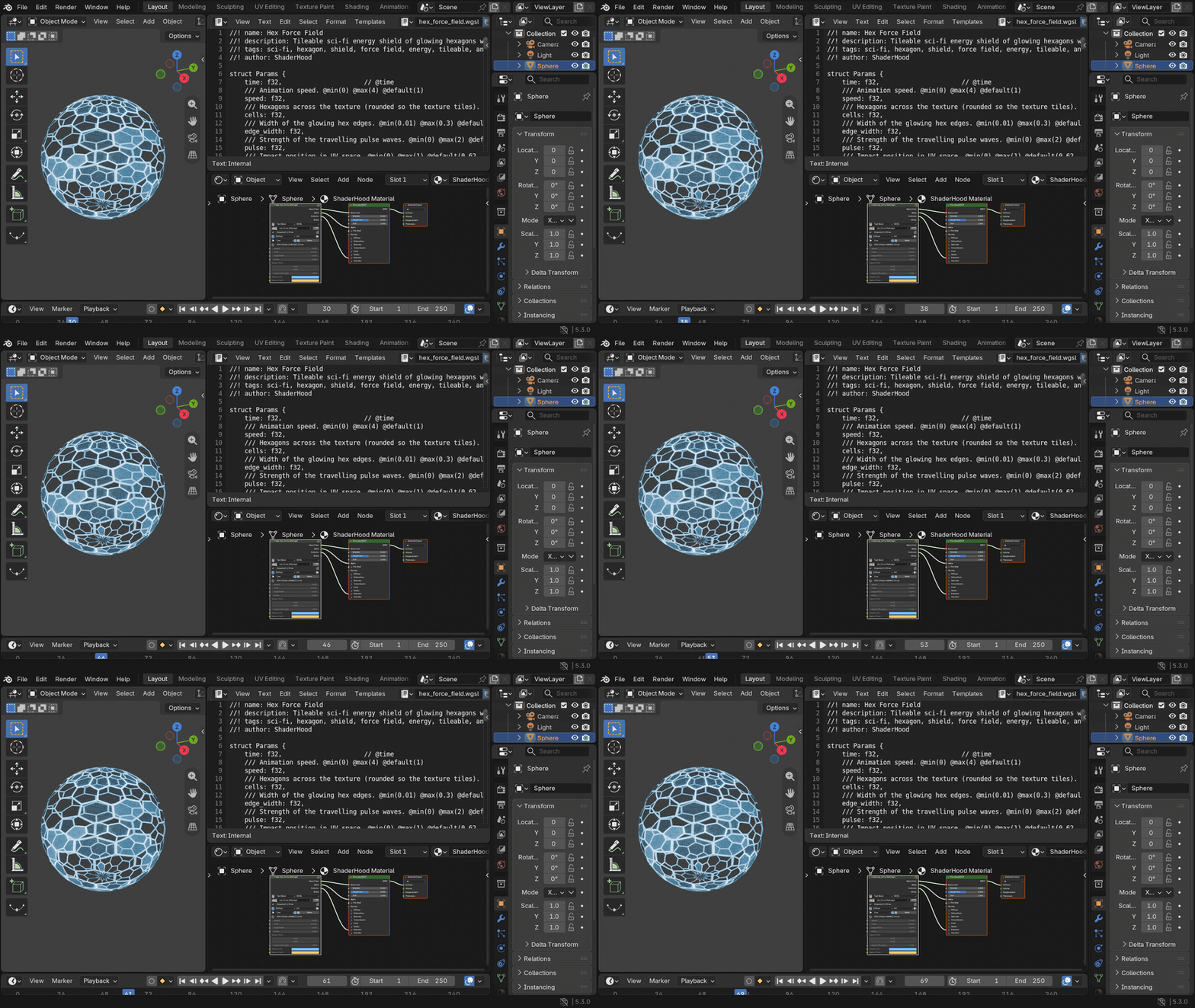
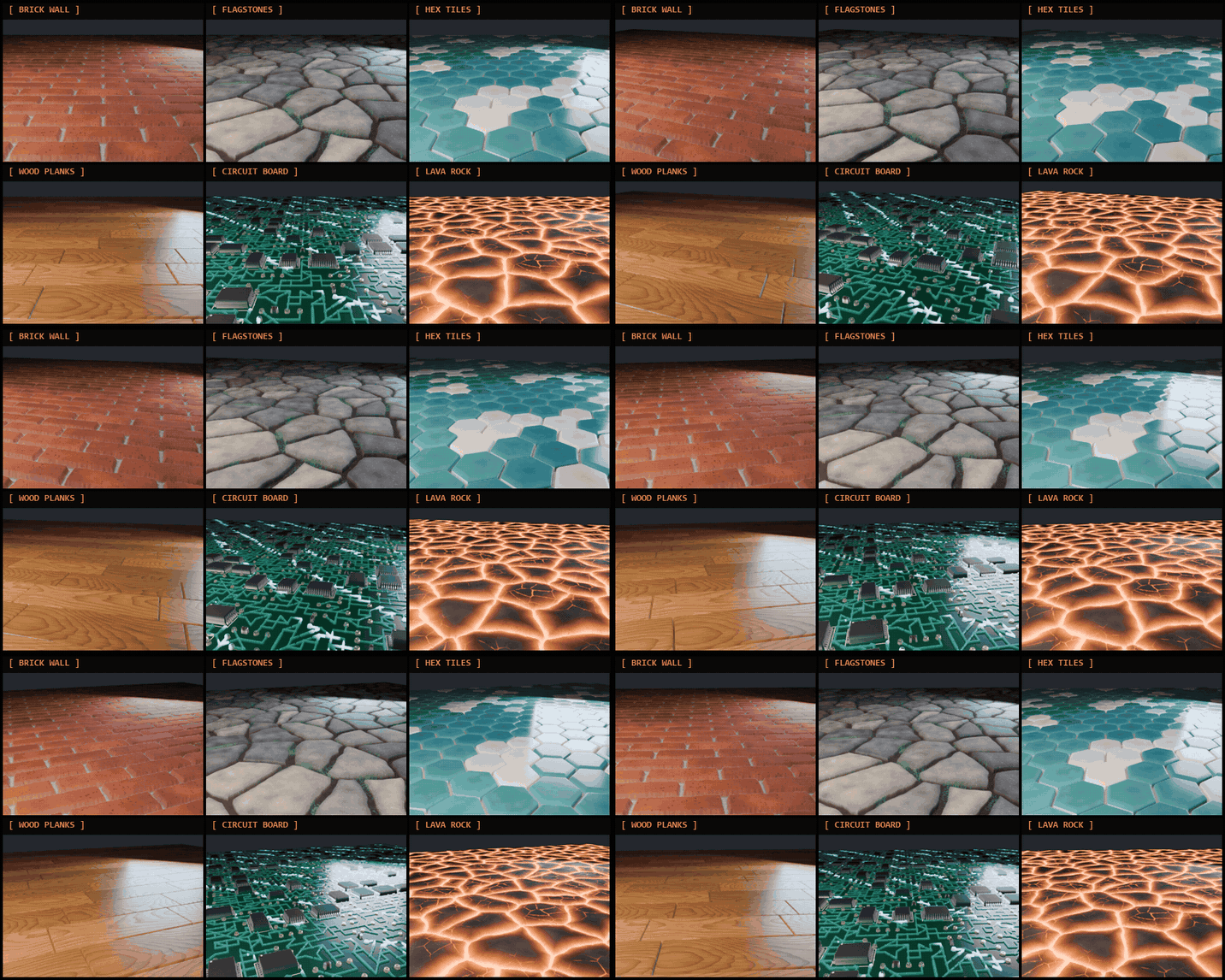
58 shader-editor generators: tileable PBR materials with Normal / Roughness / Metallic outputs, animated sci-fi screens, space, fire, raymarched SDFs. Plug them into Principled BSDF like any texture.
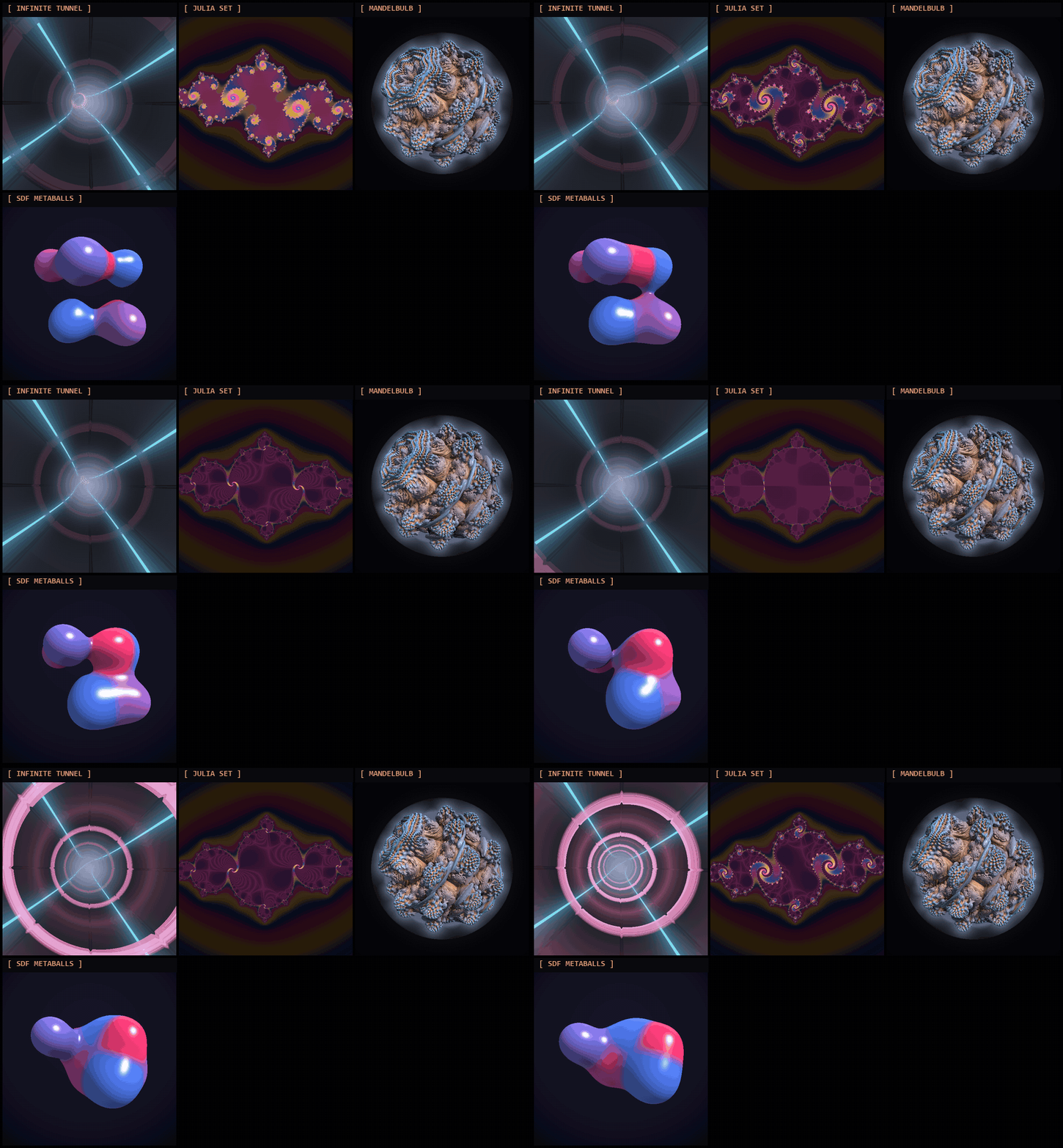
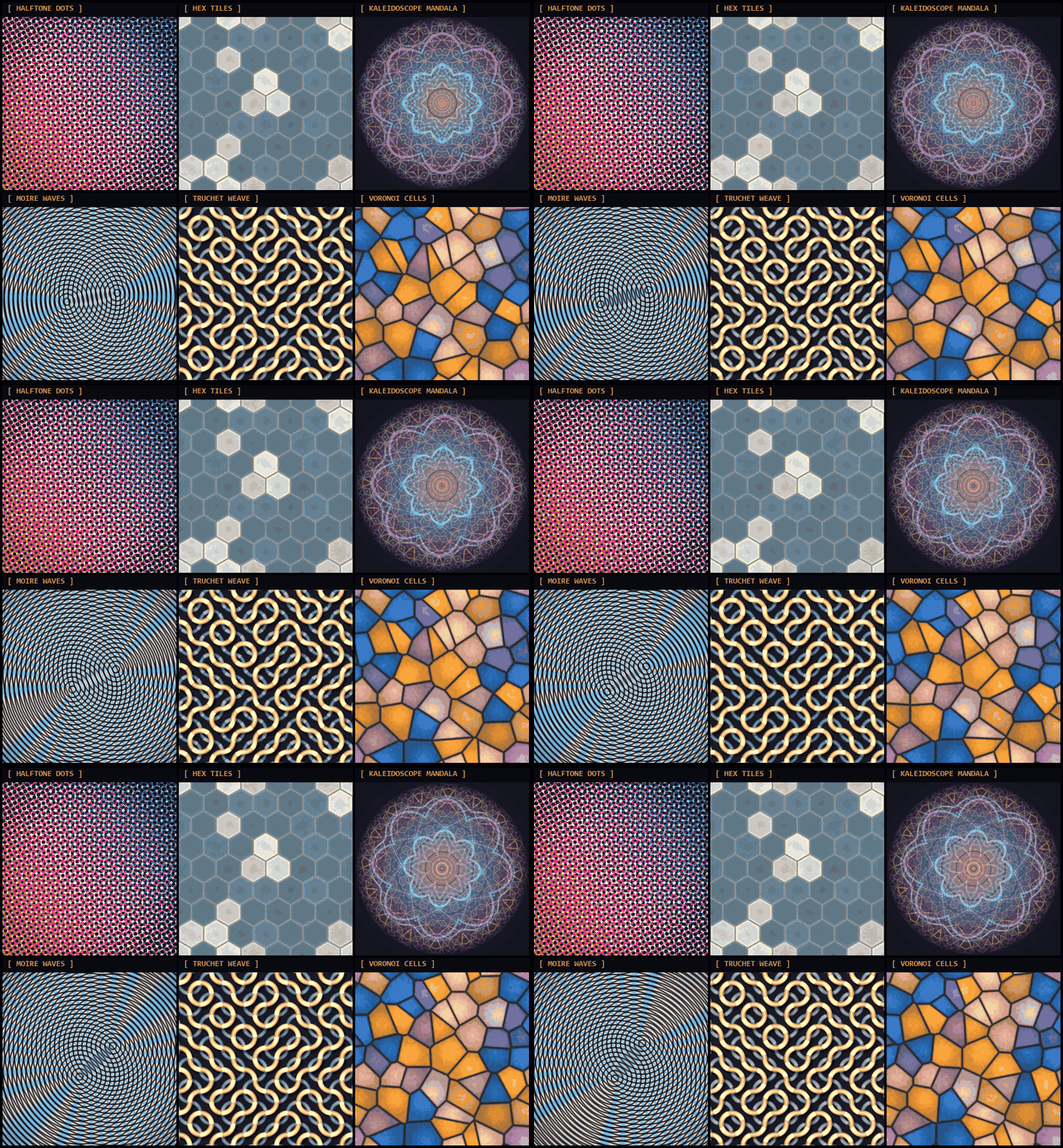
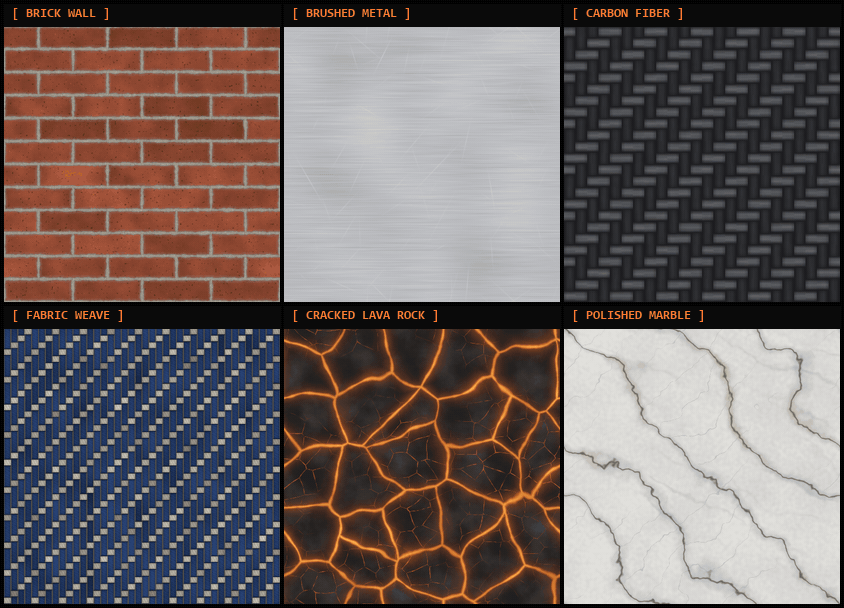
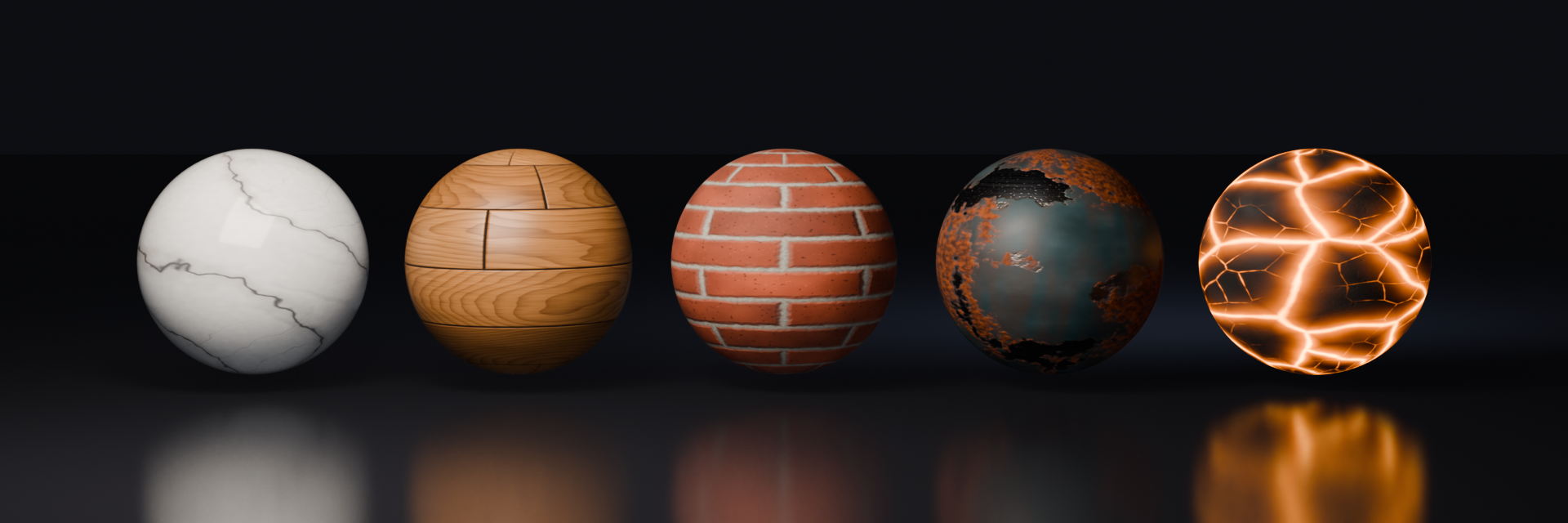
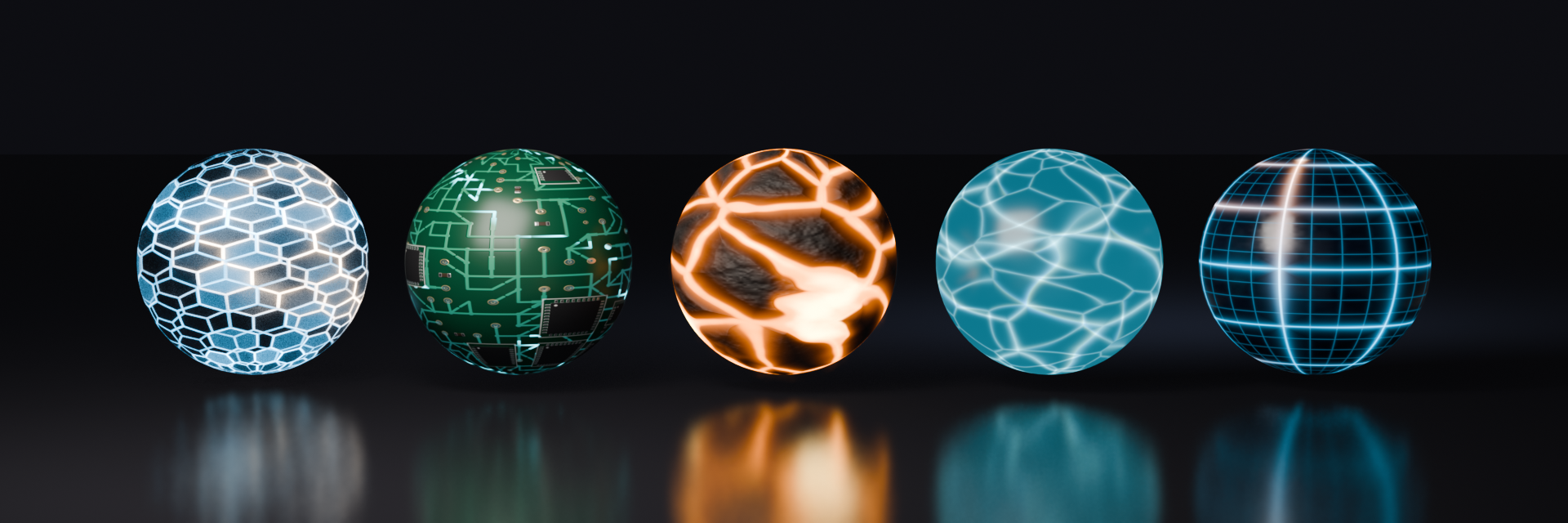
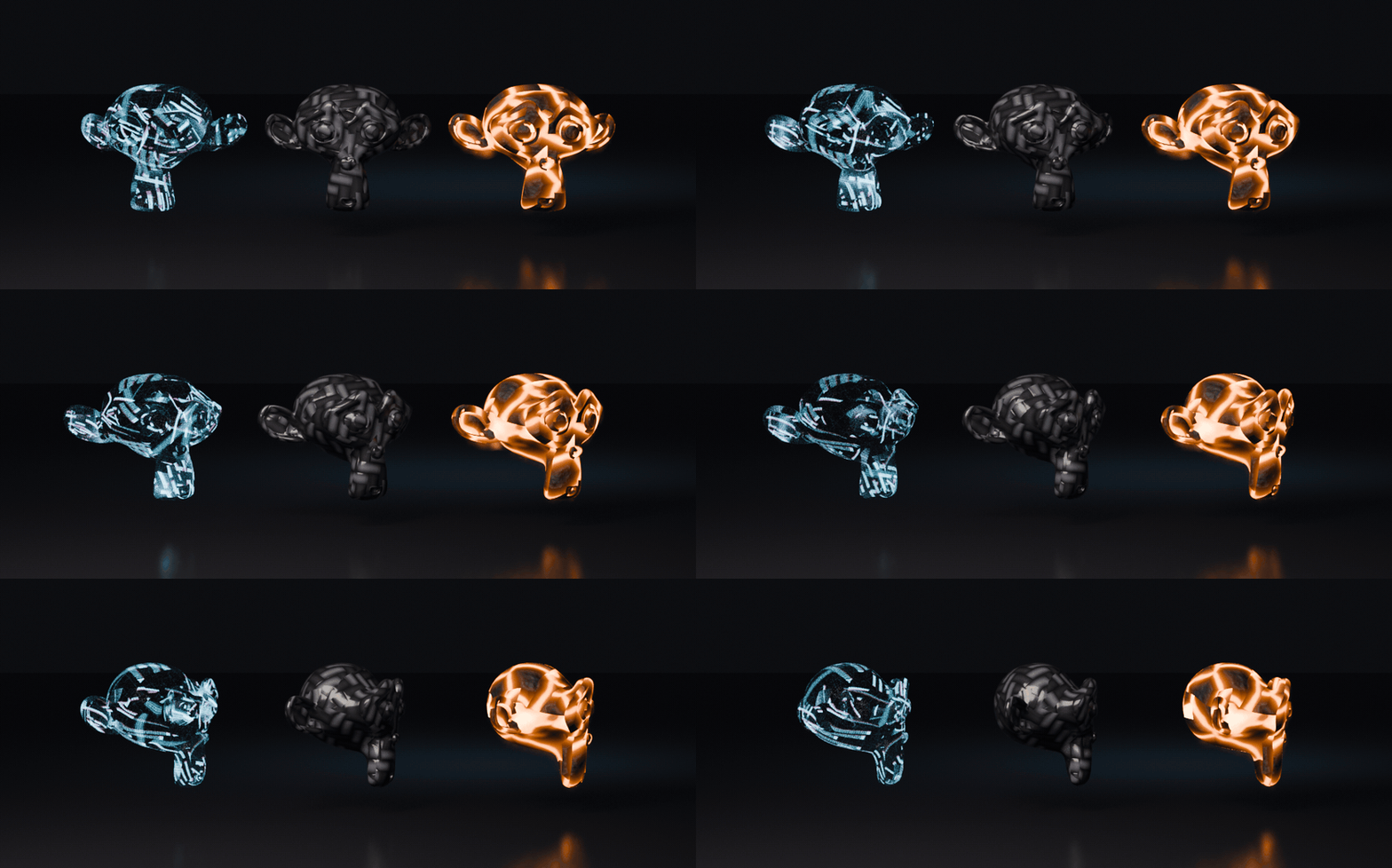
One Click. Real Depth.
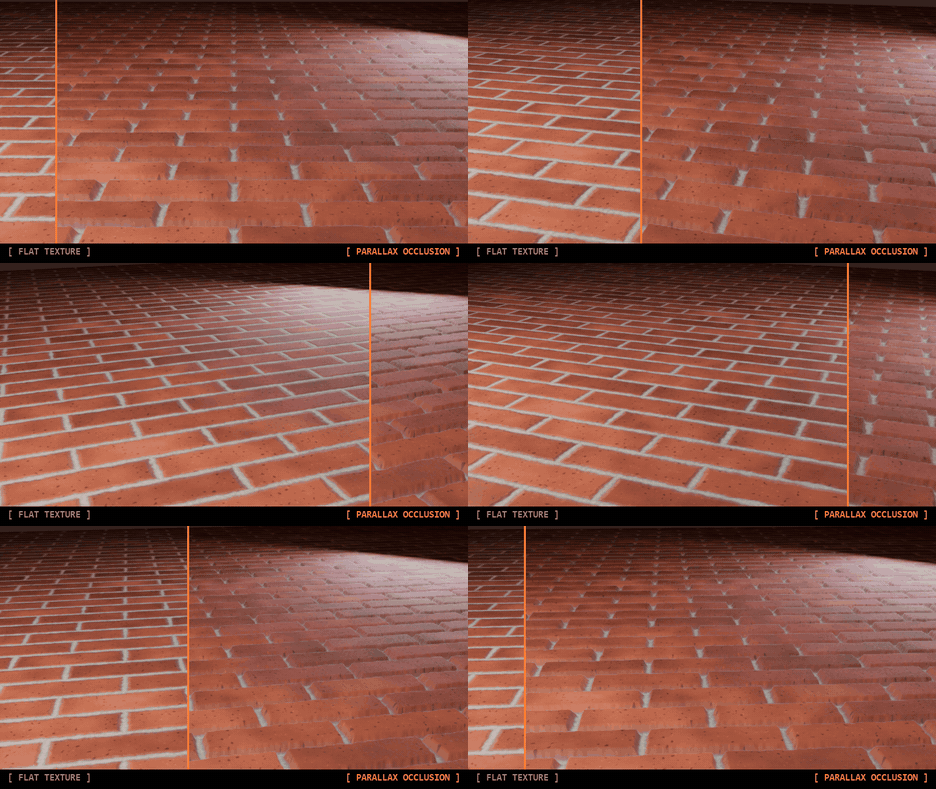
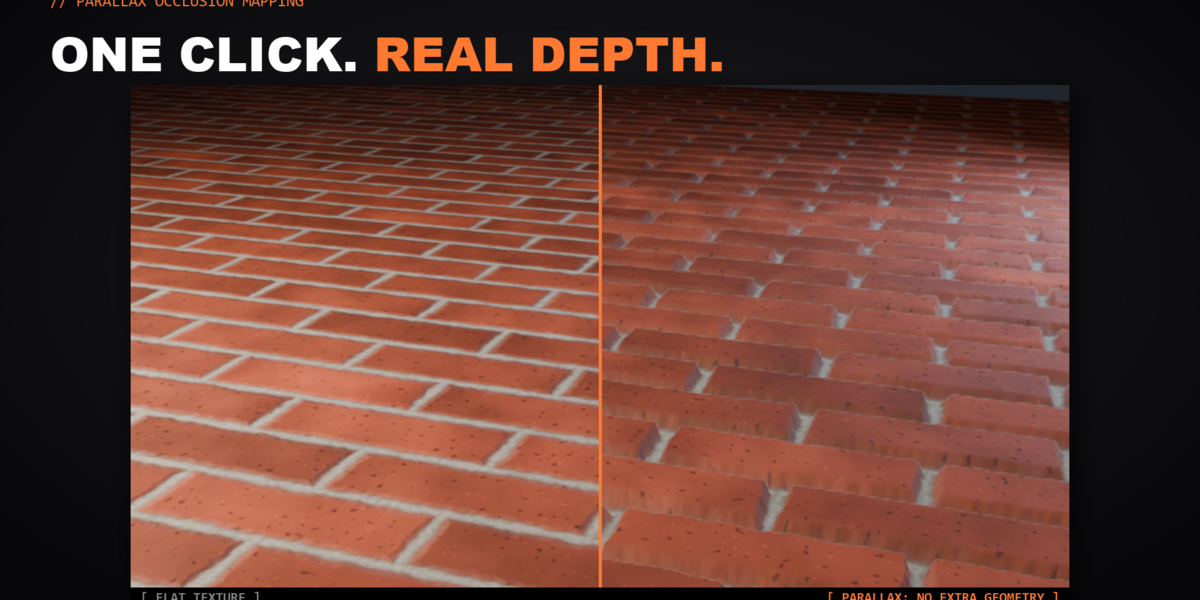
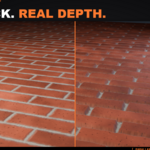
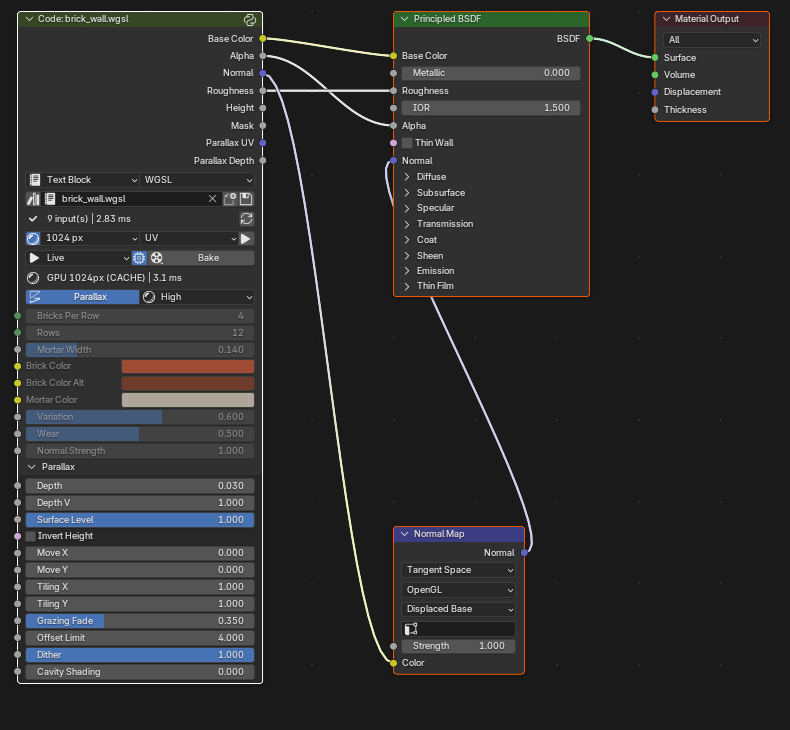
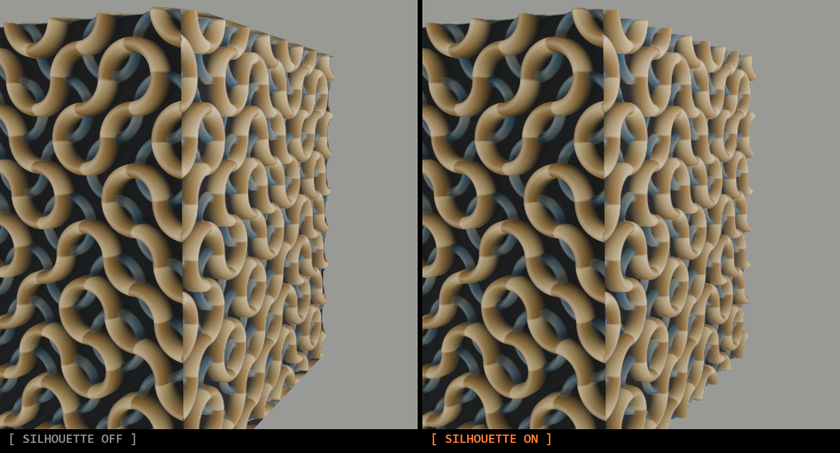
Flip one switch on the node and every material with a Height output gets real-looking depth: mortar sinks, stones stand up, tiles get edges. No subdivision, no displacement, no extra polygons. EEVEE & Cycles.
- > Fast → Ultra presets: Offset, Steep, Occlusion, Relief
- > Depth · Depth V · Surface Level: sink in or pop out
- > Move X/Y · Tiling X/Y: slide & repeat, keyframeable
- > Grazing Fade · Cavity Shading: clean edges, fake AO
- > Dither · Offset Limit · Refinement: no layer slices, no tearing at grazing angles
- > Cubic height filter & Smooth Height for clean close-ups
- > Parallax UV output drives your own image textures
- > Edges: Repeat, Extend or Clip (decals); flip U/V for mirrored UVs
- > Works without UVs: Object-axis or radial tangents for Generated / Object mapping
- > Silhouette: relief cuts a real outline at grazing angles (flat & curved surfaces)
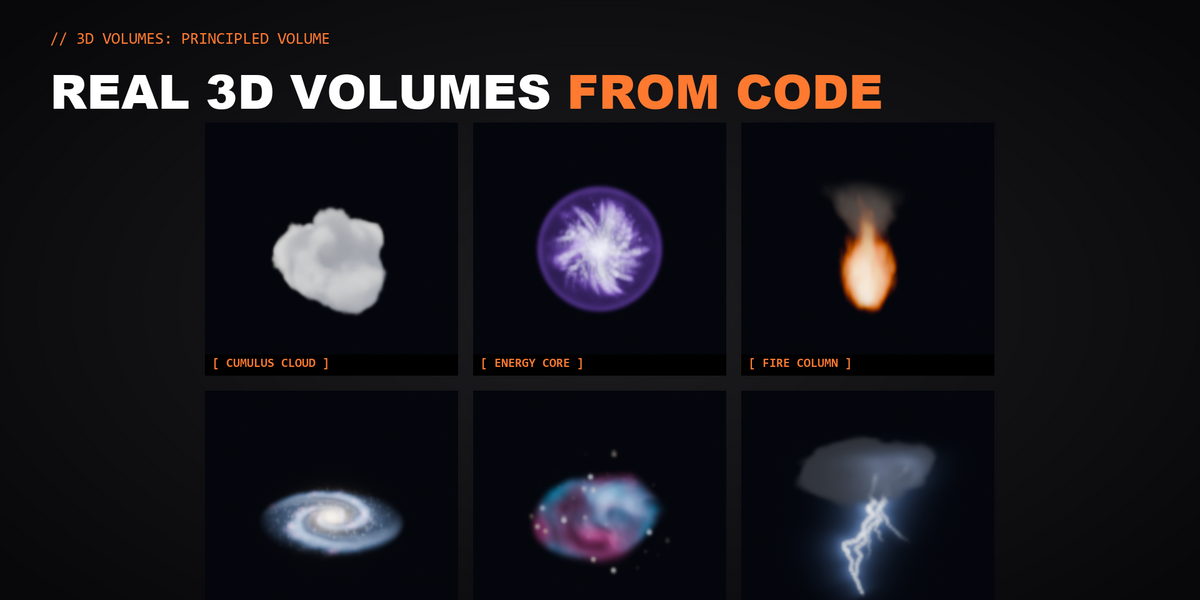
Real 3D Volumes From Code
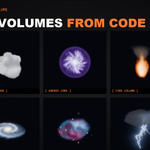
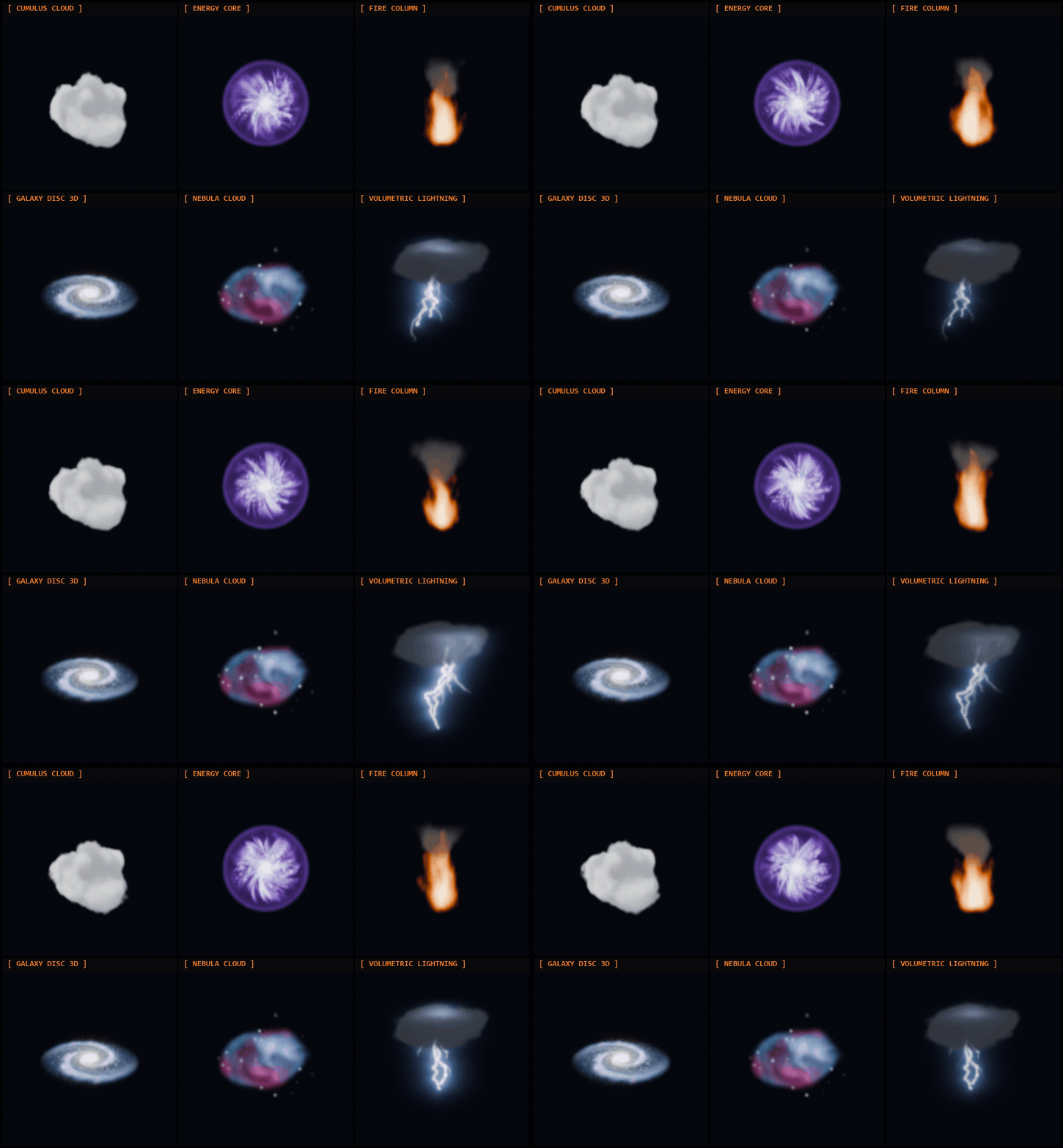
Switch a node to 3D Volume and your shader becomes a real 3D texture for Principled Volume: write vec3(uv, slice), the node renders the depth slices on the GPU and samples them in 3D inside any mesh.
- > Volumetric lightning, clouds, fire columns, energy cores, nebulae
- > Density · Color · Emission outputs, EEVEE & Cycles
- > Up to 512 slices, slice size up to 512 px, smooth trilinear sampling
- > Animated, keyframeable, cached and bakeable like every node
- > Ready-made Volumes library category
Your Shader Knows the Scene
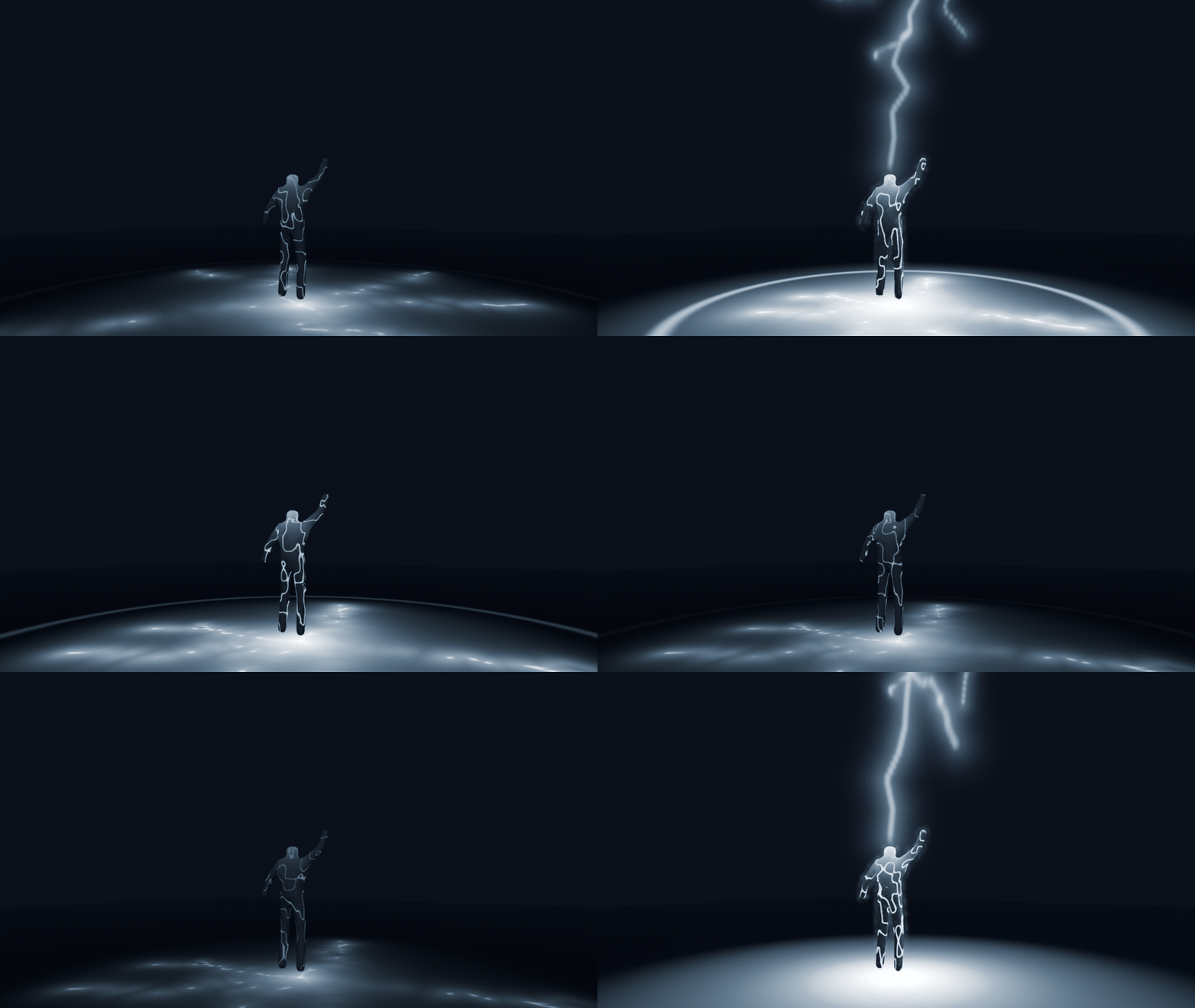
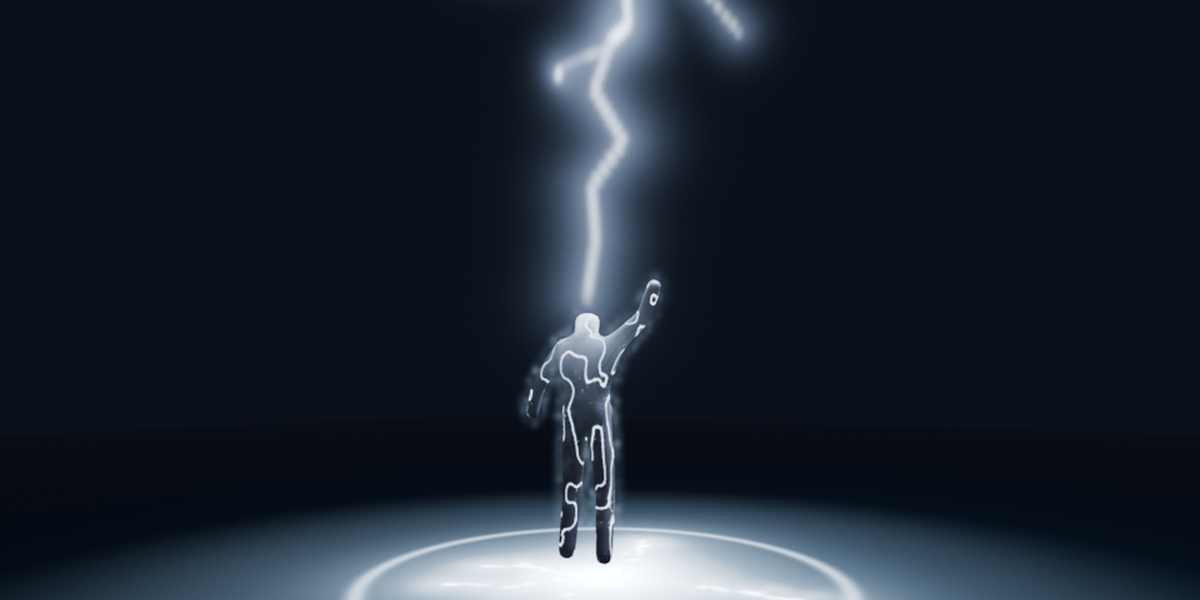
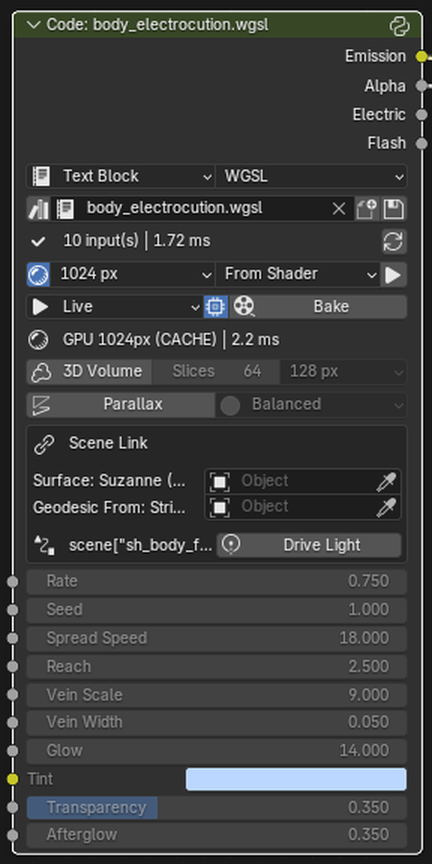
Your code reads the whole Blender scene, every frame: where objects are, the camera, every light with its color and power, any property (keyframed, driven, modifiers), and the surface of the object itself. A strike can hit a character, run down the body along the skin, reach the water and flash the lights, all from shader code, all in sync.
- > @object("Hero"): positions & matrices in world, local, volume, camera or screen space; pick the object on the node
- > @lights · @camera · @rna: every lamp, the camera, any Blender property, incl. drivers & modifiers
- > @geometry: the object's surface as maps: world position, normals, marked edges (Freestyle / Sharp / Seams), curvature, distance along the body
- > Compositor G-buffer: depth, normals, object IDs: no render passes, works live in the viewport
- > @lighting: the real light arriving at every surface point, cast shadows included: Fast (live) or Exact (baked, Cycles-identical)
- > @sdf: any object as a 3D distance field for volumes (auras that hug the body)
- > @export: shader values drive native drivers: the lightning flashes a real light on the same frame
- > #include "sh/lightning": bolts, forks, strike timing shared by every shader
- > Coordinates declared by the shader (From Shader), overridable on the node
struct Params {
time: f32, // @time
from_pos: vec3<f32>, // @object("Cloud")
to_pos: vec3<f32>, // @object("StrikePoint")
};
/// The object's surface, texel by texel. @geometry("position")
@group(0) @binding(1) var pos_map: texture_2d<f32>;
struct Out {
@location(0) emission: vec4<f32>,
/// Drives a real light. @export("flash")
@location(1) flash: f32,
};
- > One strike, five shaders: Strike Bolt (volume), Body Electrocution (surface), Electrified Water, Electric Aura (SDF), Arc Between Objects (compositor)
- > Same Rate + Seed = the same strike everywhere
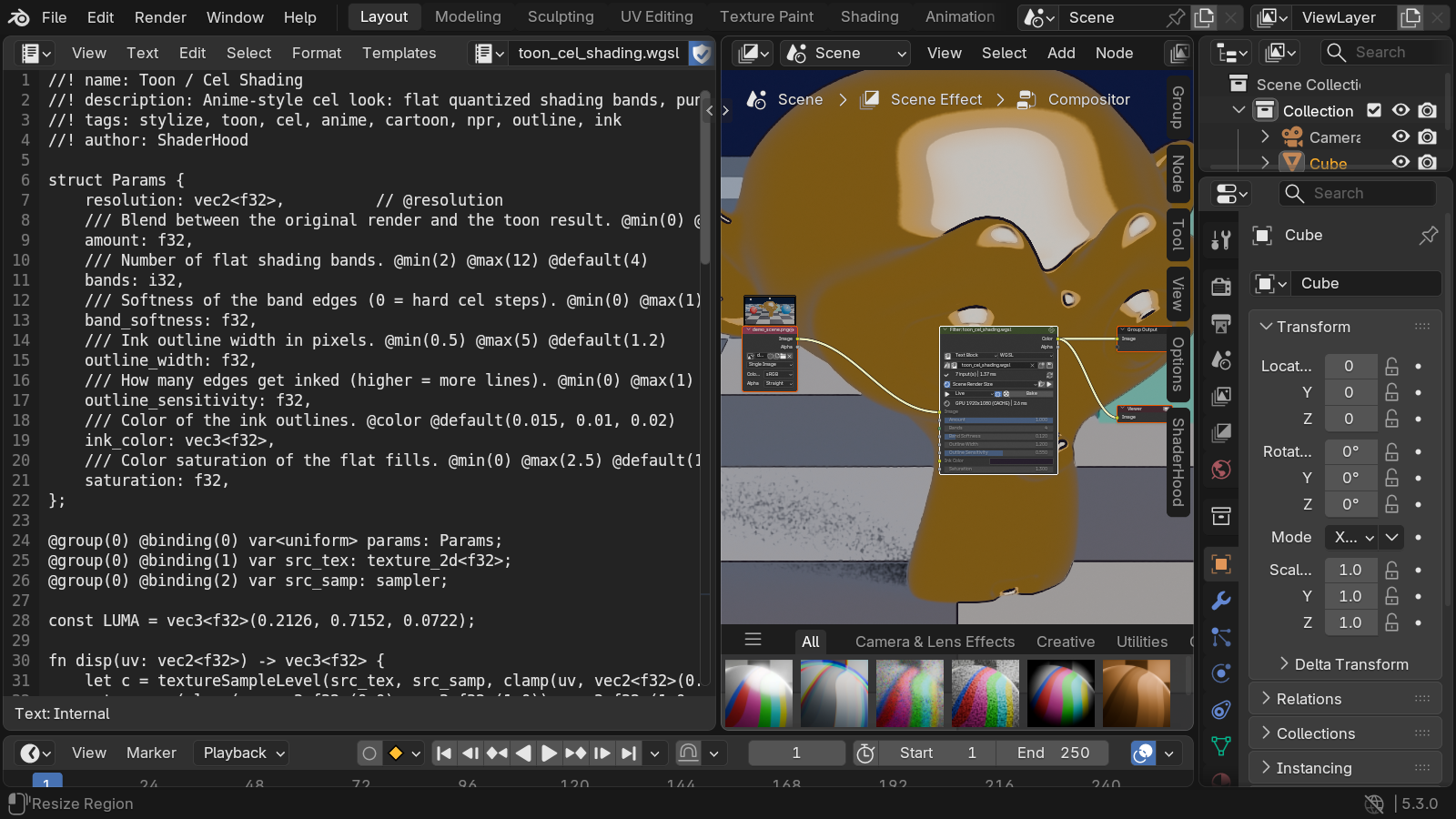
- > Anime: Toon Shading lit by your real lamps, Anime Outlines from the G-buffer
- > Your own effects: just annotate a member
Toon Shading With Real Shadows
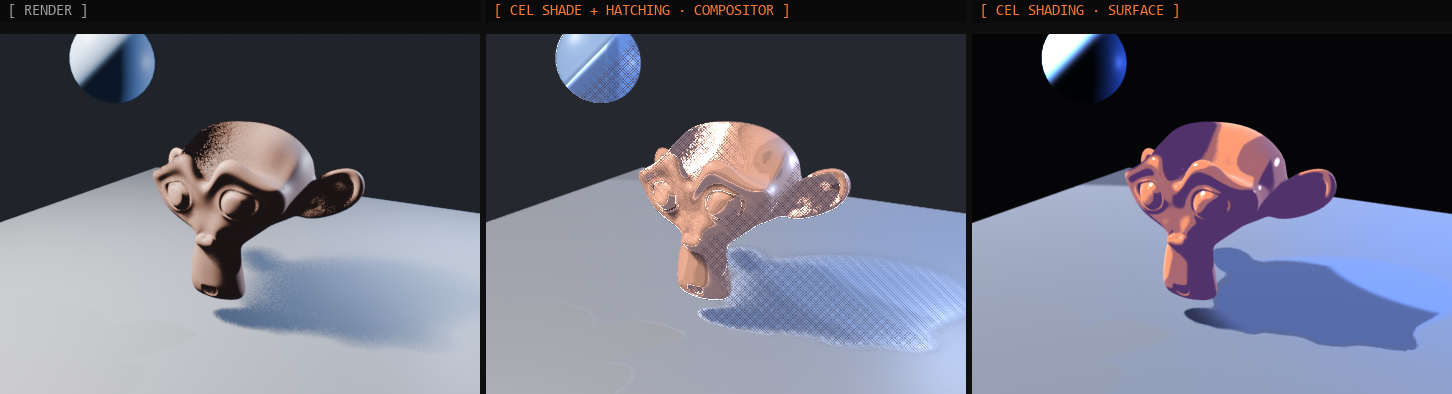
Toon shading usually fakes the light. ShaderHood hands your code the real light that reaches every point: every lamp in Blender's own units, soft cast shadows from every object, world light. Band it, hatch it, ink it.
- > Fast: live GPU shadow maps, every frame, EEVEE & Cycles (matches Cycles' direct light within 1%)
- > Exact: baked per frame with Cycles (surfaces) or your render engine (compositor): bounces, everything
- > Maps: diffuse, direct, ambient, shadow (visibility · N·L · lit), specular
- > Cel Shading (Real Lighting) and Cel Shade + Hatching in the library
Post-FX in a Single Node
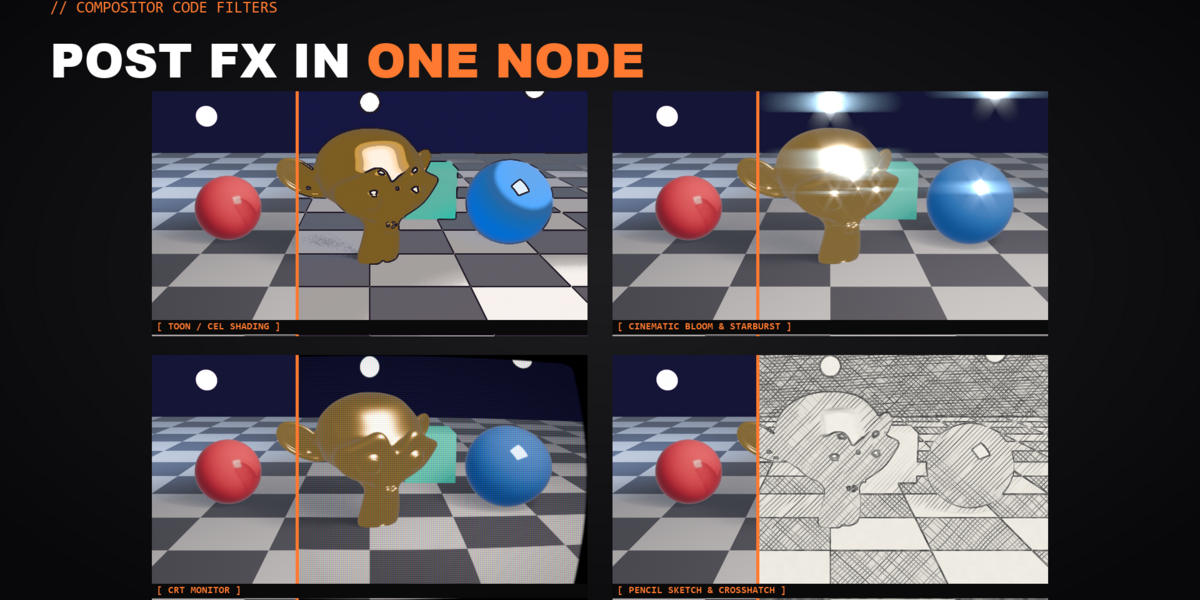
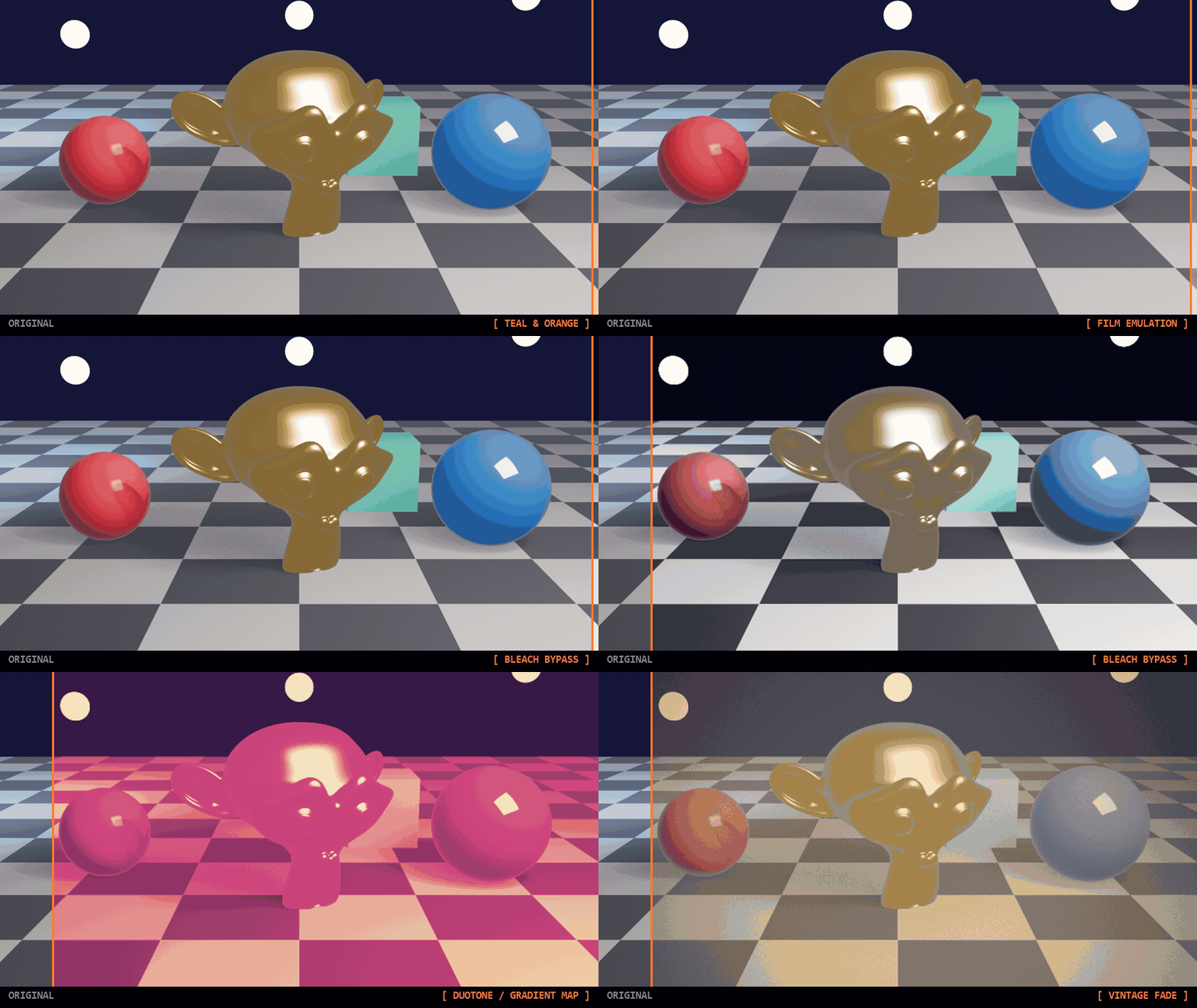
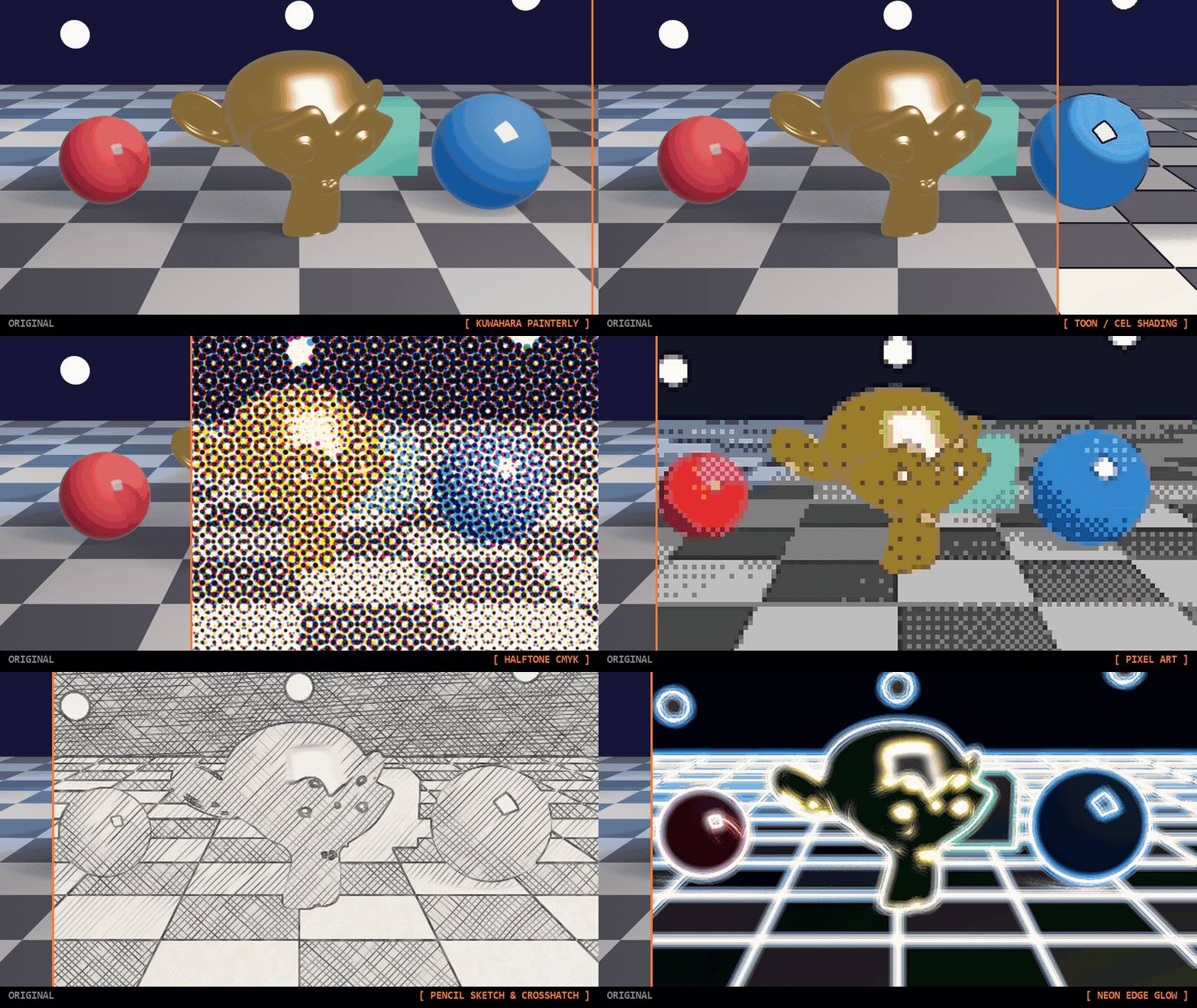
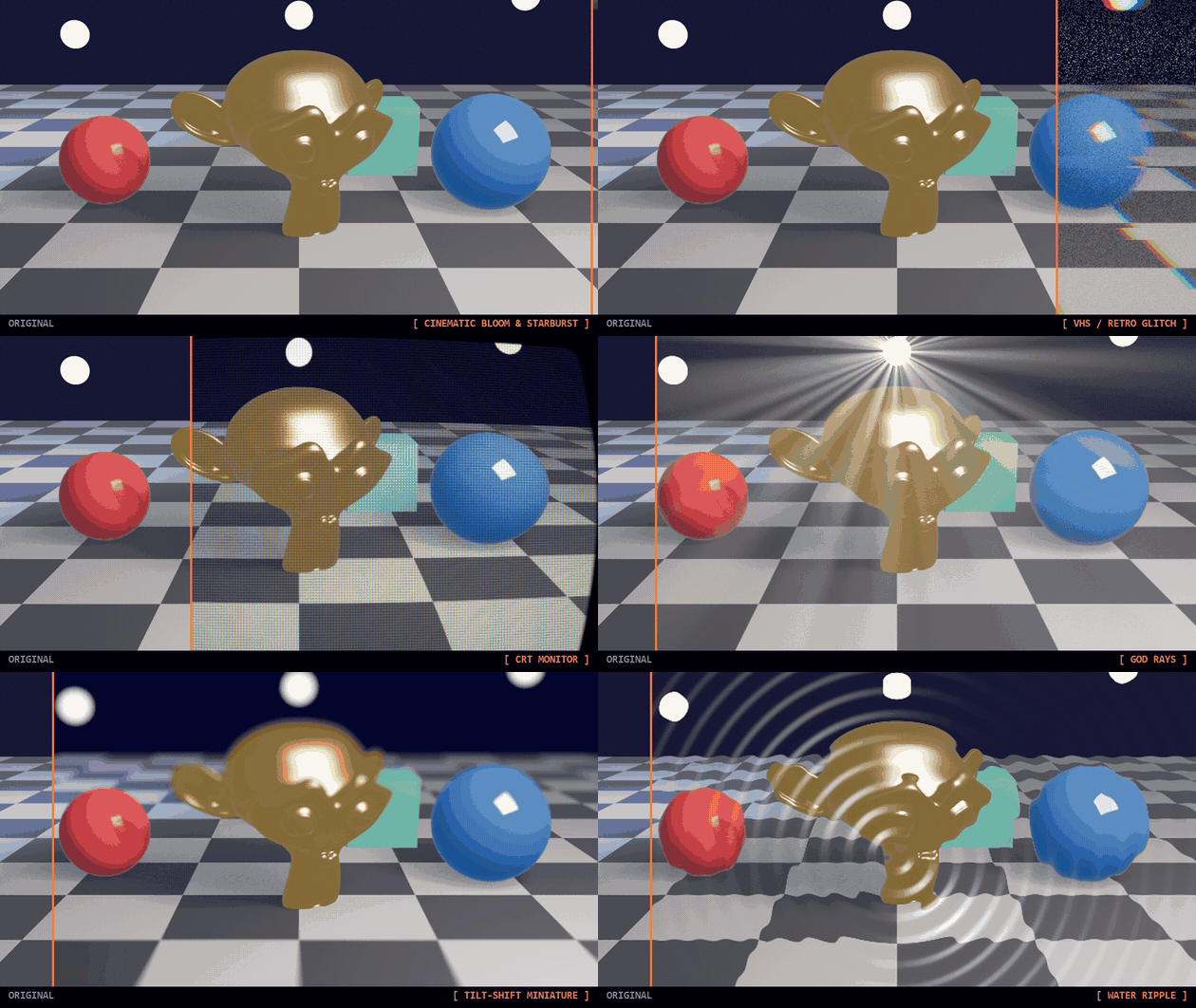
57 Compositor filters at full render resolution: color grading, painterly & NPR, lens effects, blurs, distortion, glitch, keying. Chain them, keyframe them, bake them.
Built Like a Render Engine
Everything Included (115)
Two Editions
Stop Wiring. Start Writing.
// GPU SHADERS AS NATIVE BLENDER NODES
Instant Access • Lifetime Updates • Professional Support
