 codesignprojects
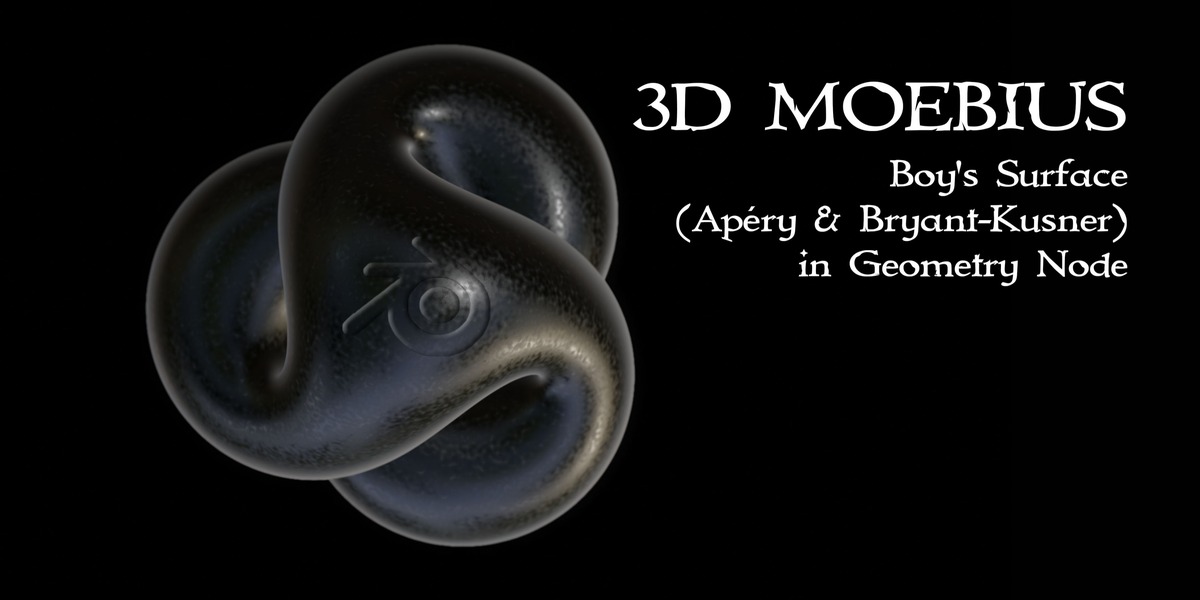
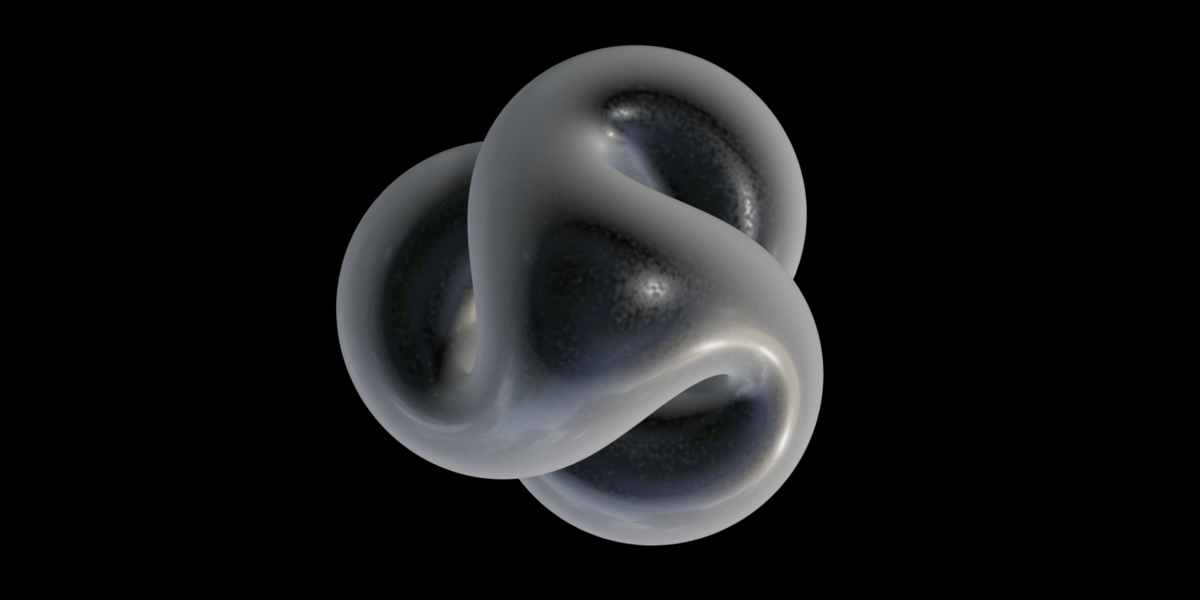
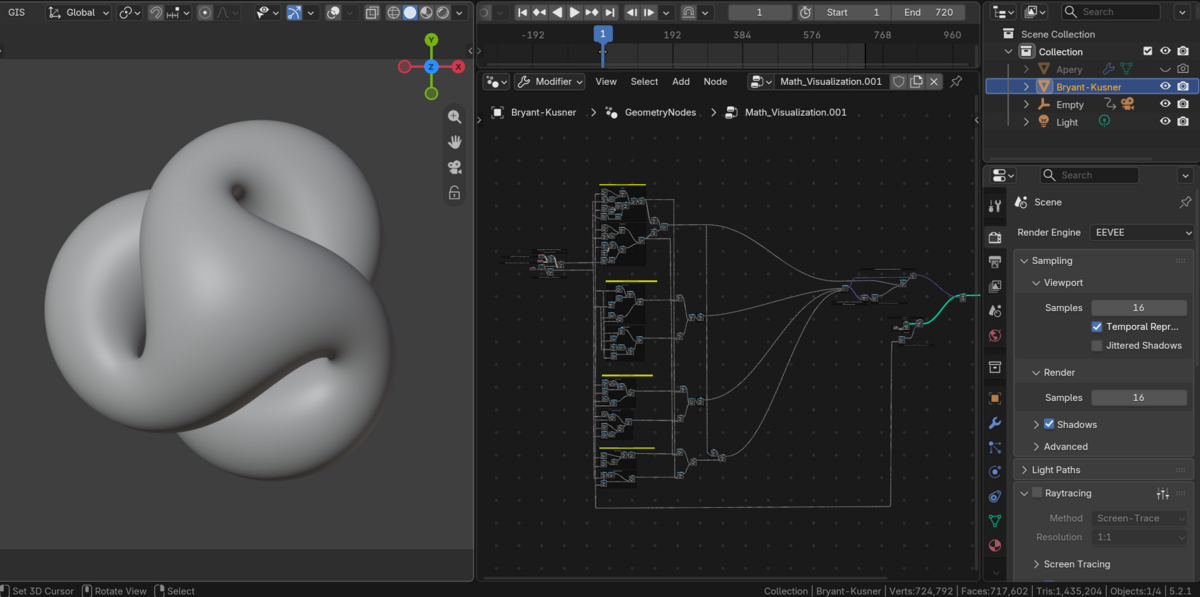
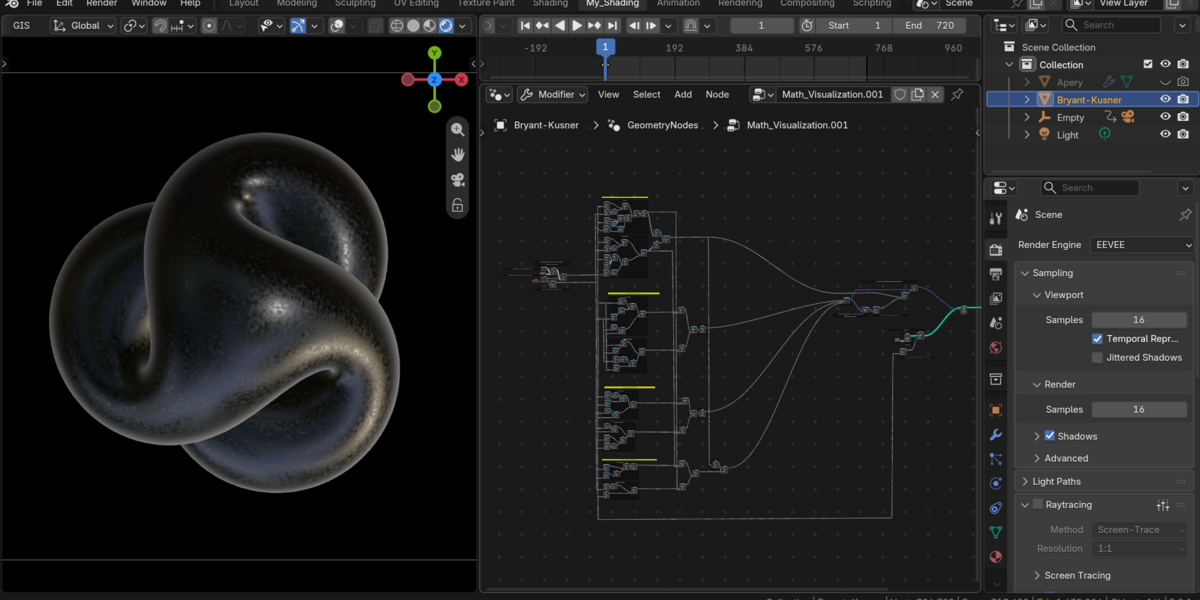
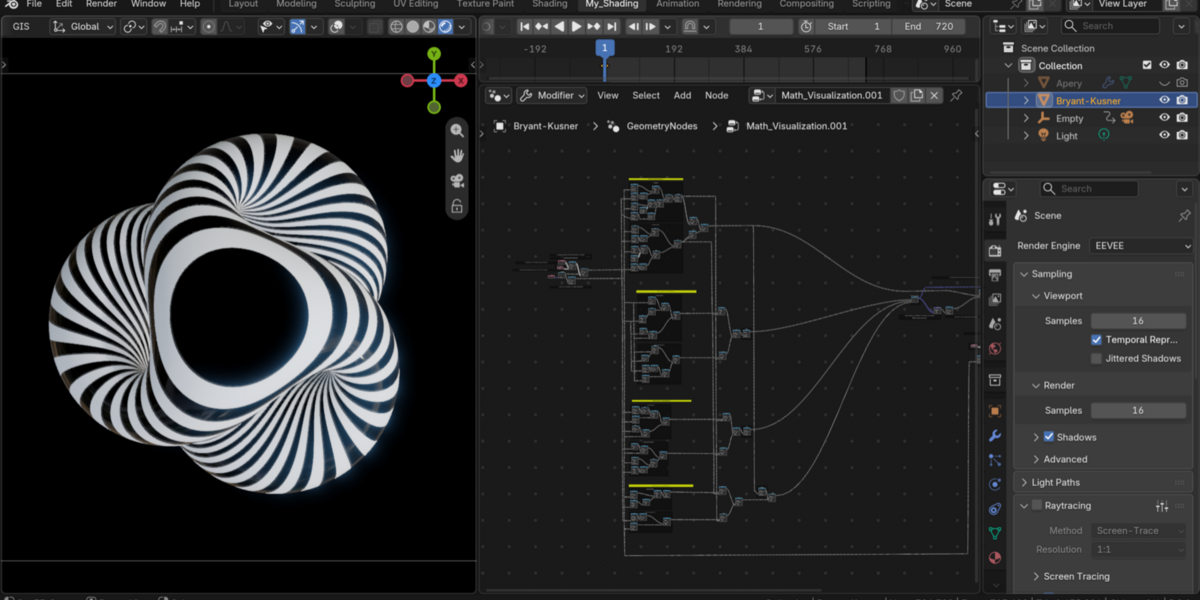
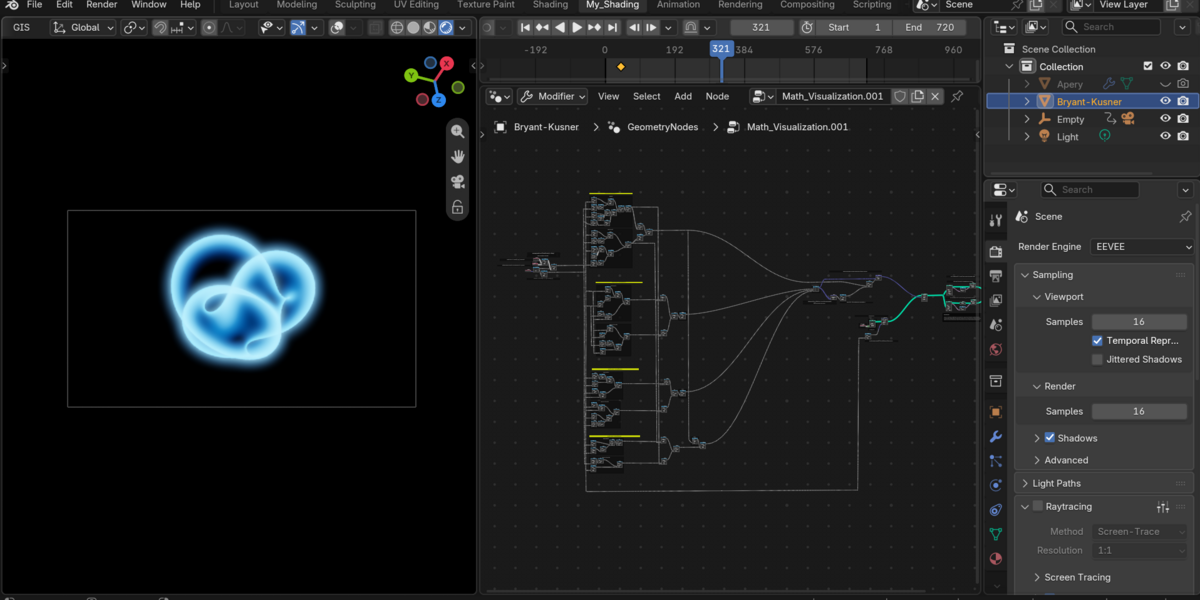

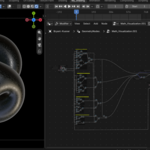
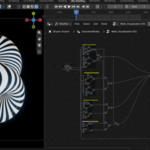
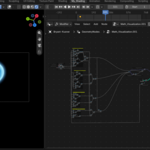
A pure Geometry Nodes implementation of Boy's Surface, featuring both the Apéry and Bryant–Kusner mathematical parameterizations built from the ground up.
Often described as a 3D counterpart to the Möbius strip, Boy's surface is a smooth, single-sided, non-orientable surface in 3D space with three-fold symmetry and a central triple point. Both node trees come fully framed and labeled with clear explanations for every mathematical branch, giving you direct control over resolution, lobe proportions, and animation — as a fully fledged, step-by-step example of mathematical implementations in Geometry Nodes.

▶ Video Demos: Demo (YouTube)
What is Boy's Surface:
Discovered by Werner Boy in 1901, it is an immersion of the real projective plane in 3D space — topologically equivalent to sewing a Möbius strip to the boundary of a disk without any pinch points or sharp singularities. For exact details see the Documentation section !
How it works (Two Complete Implementations Included):
- Apéry Parameterization: Generates the surface from a parametric grid using François Apéry's explicit trigonometric equations.
- Bryant–Kusner Parameterization: Maps a polar grid on the complex unit disk into Robert Bryant and Rob Kusner's Willmore-energy-minimizing immersion.
Workflow Tip:
In the Bryant–Kusner tree, use the framed Scale multipliers at the end of the X, Y, and Z branches to dial in the exact geometry: the Z-branch scale controls the central triangular cap and tunnel openings, while the X and Y branch scales control the thickness of the three outer underbranching lobes. Included PDF equation reference sheets map directly to the node frames.
Developer's Note:
These node trees are kept open and modular for readability and feature detailed frame-by-frame explanations. Everything is built from pure math nodes from the ground up.
The goal is to provide a transparent core of the mathematical concept, node by node, rather than hiding the equations inside locked node groups. You can inspect, modify, and extend every branch to realize your own visualizations.
An animated turntable example with a translucent X-ray Layer Weight shader and FlowUV (r²) attribute is included in the files. Read the internal frame labels and accompanying PDF equation sheets for full structural details!
Blender 5.2 Note:
The setup is configured for Blender 5.2 EEVEE using the Blended render method with Camera Backface Culling and Transparency Overlap enabled for clean, noise-free internal self-intersection rendering. You can tweak the shader colors, emission, or compositor glow to suit your taste.
Support & Contact:
Blendermarket Inbox
[email protected]
See more on Instagram or YouTube
Recommended Tools:
The Wire
Kinetica
The Visitor