 Solaris Core — MHD-INT
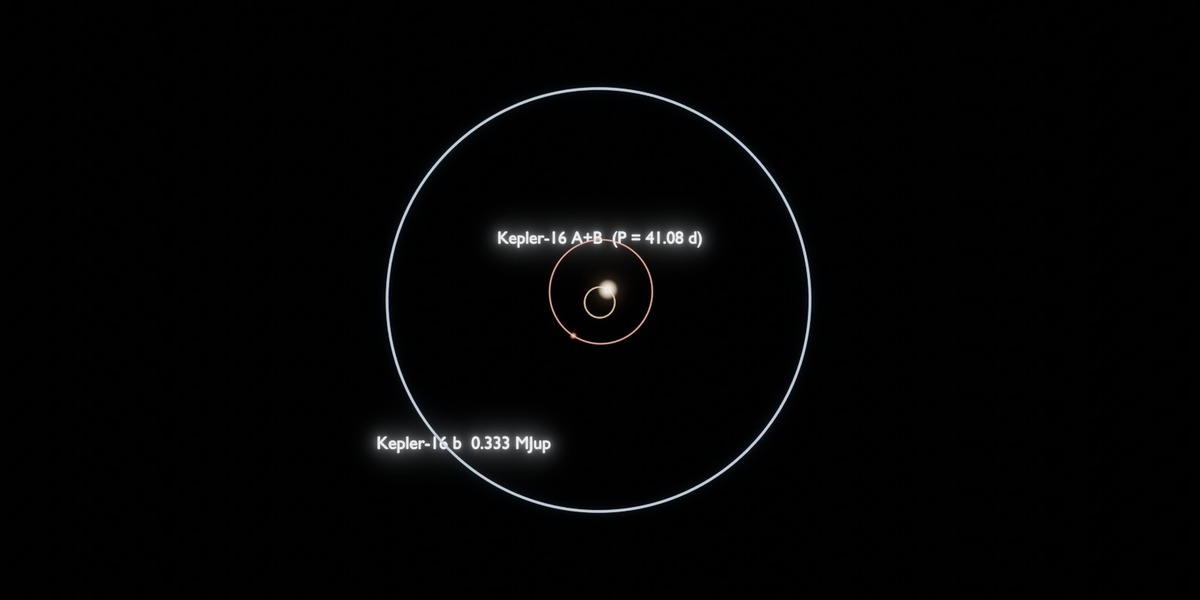
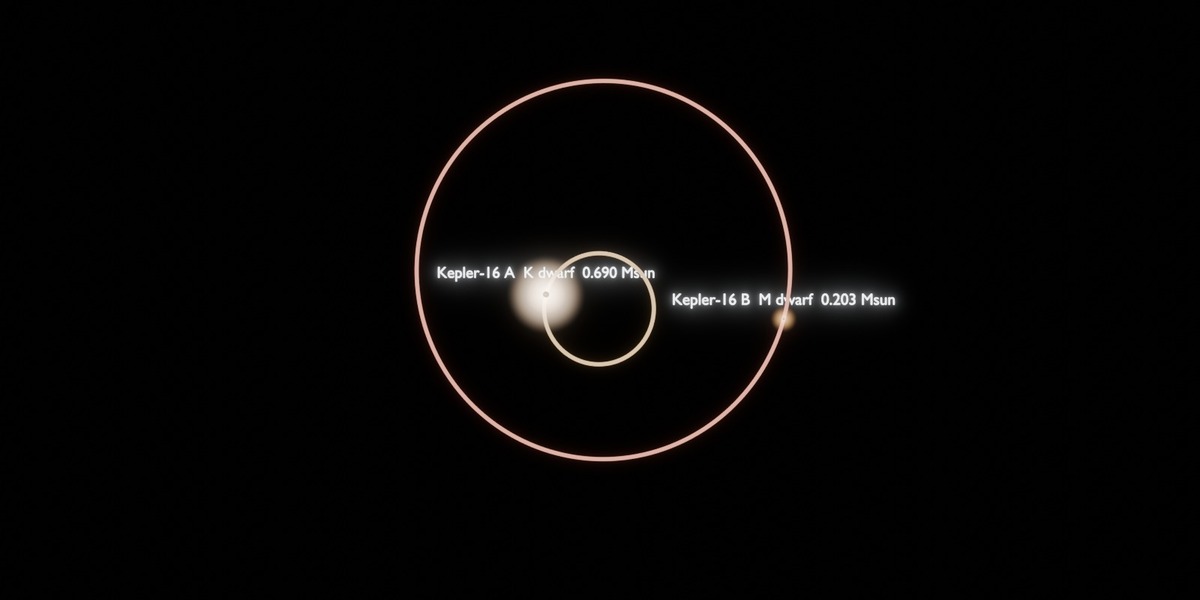
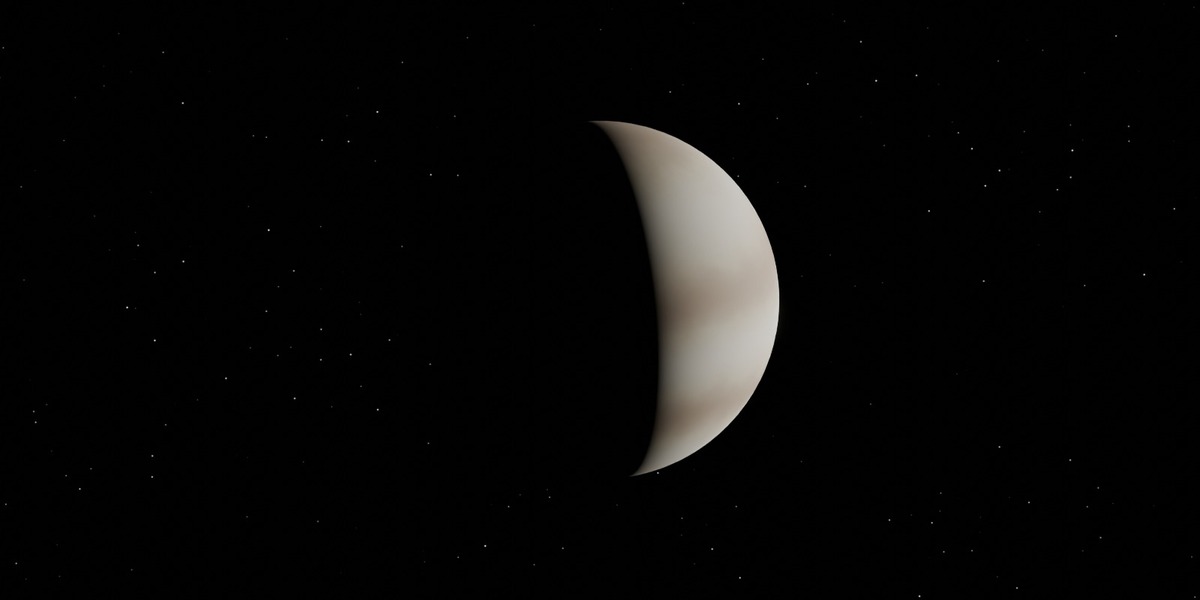
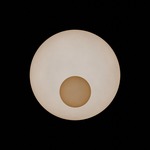
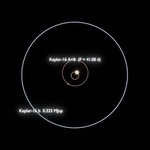
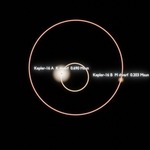
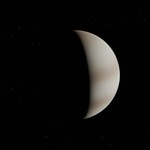
Kepler-16 (AB) b was the first planet found orbiting two stars, the real-life "Tatooine". This product rebuilds the system from the published measurements, at true scale, and lets you watch it work.
What makes it different
- True scale. Stars, planet and orbits at their real sizes (1 Blender unit = 0.05 AU).
- Real orbits. A K dwarf and an M dwarf on the measured eccentric orbit (P = 41.08 d, e = 0.159) and a gas giant circling both (P = 228.8 d). The planet's period recomputed from Kepler's third law gives 228.79 d against 228.776 d published.
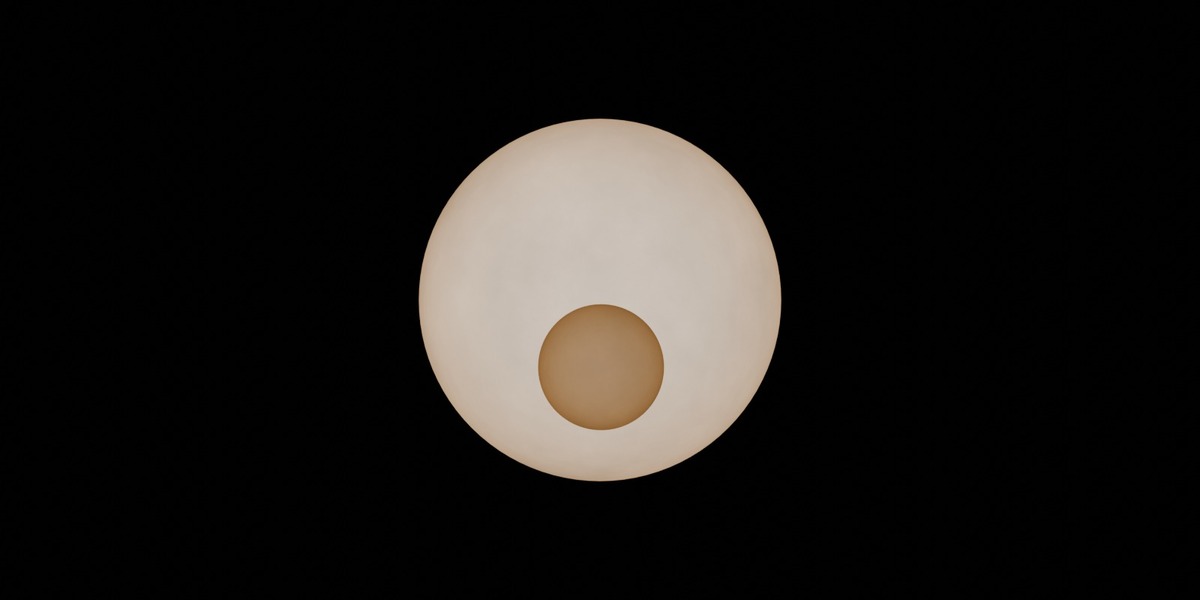
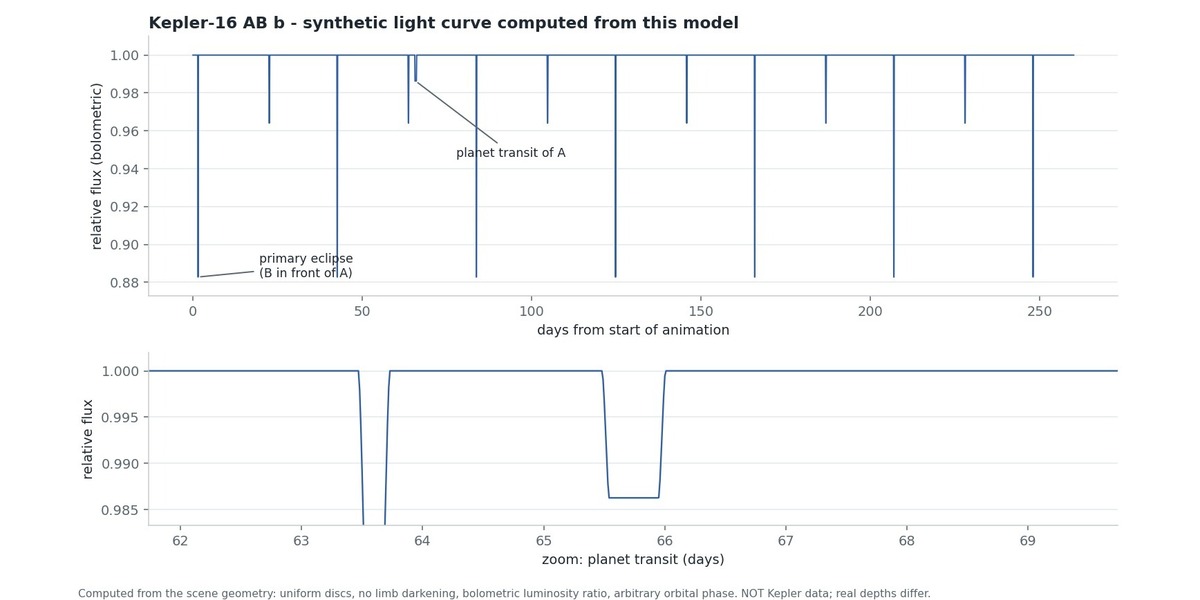
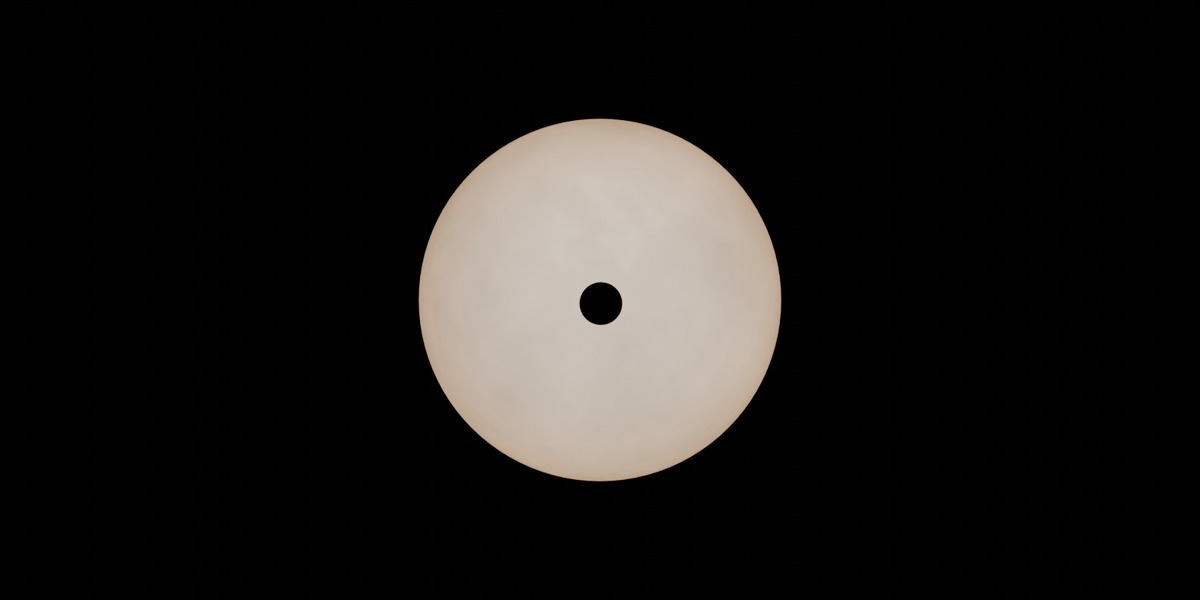
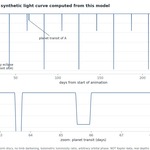
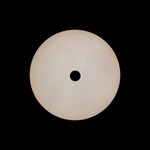
- Real events. Primary and secondary eclipses and planet transits as seen from Earth, with automatic slow motion at each event.
- Honest labels. Masses, radii, orbital elements, the luminosity ratio of the stars and the size of star A seen from the planet (about 0.49°) are stored on the objects with their sources.
What's included
- A ready-to-render .blend (Cycles) with the script embedded, plus the script itself so you can change any setting and rebuild in seconds.
- Two lights with the real luminosity ratio of the stars.
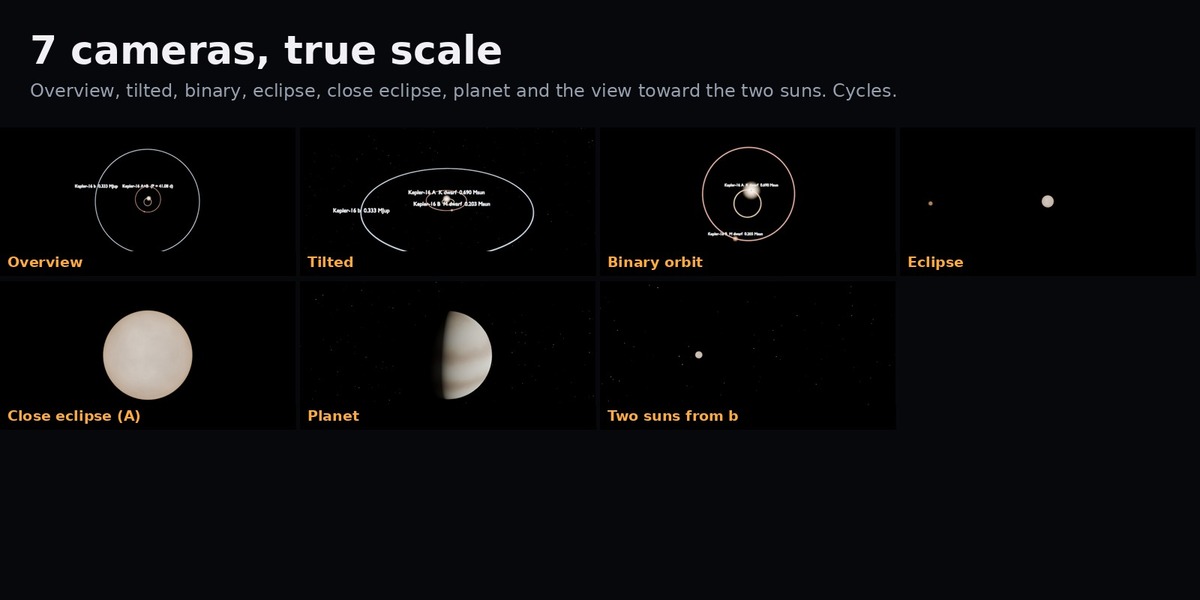
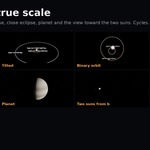
- 7 cameras: overview, tilted, binary, eclipse, close eclipse, planet, and the view toward the two suns.
- A synthetic light-curve image computed from the model (labelled as such).
- README with what is real and what is not, CREDITS with all references.
What is illustrative (we say it up front)
- Orbital phases are chosen for demonstration, not the real epochs. Orbits are two-body Keplerian (no precession).
- Colours, glow, the planet's bands and the star field are illustrative. The planet has no moons or rings.
- The temperature of star B and the distance come from an encyclopedic summary and are flagged in the files to verify.
Who it is for: science communicators, teachers, planetarium and YouTube creators, and anyone who wants the real "Tatooine" instead of the movie one.
Data: Doyle et al. 2011; Triaud et al. 2022 (BEBOP III). Not affiliated with or endorsed by NASA or the Kepler mission.