MHD-Int Milky Way — Galaxy Model With a Computed Rotation Curve
 Solaris Core — MHD-INT
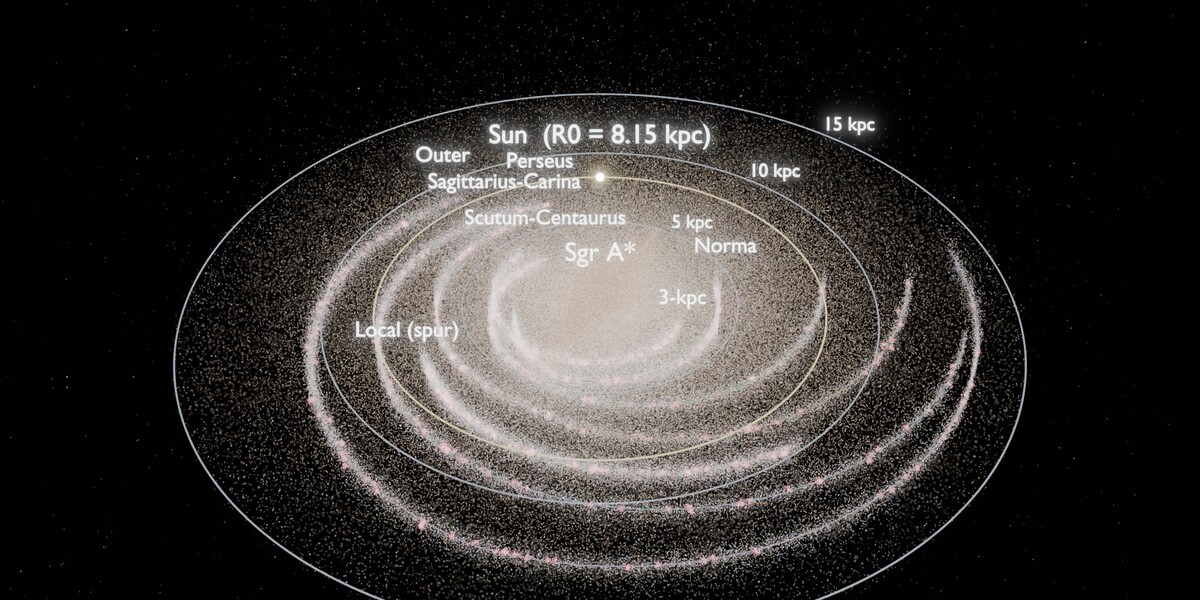
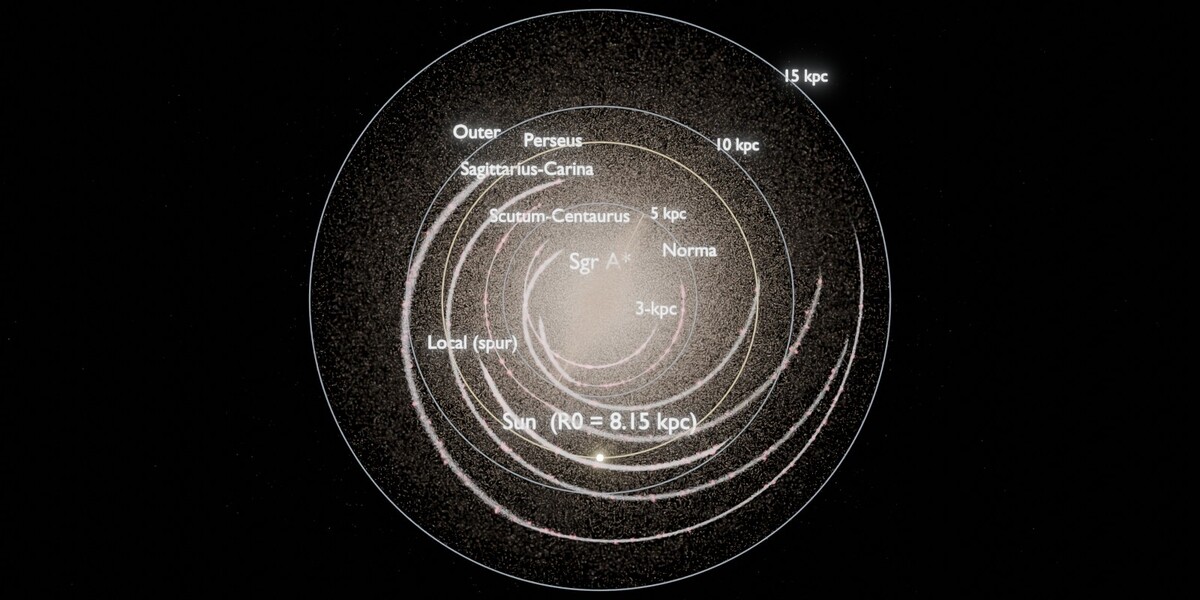
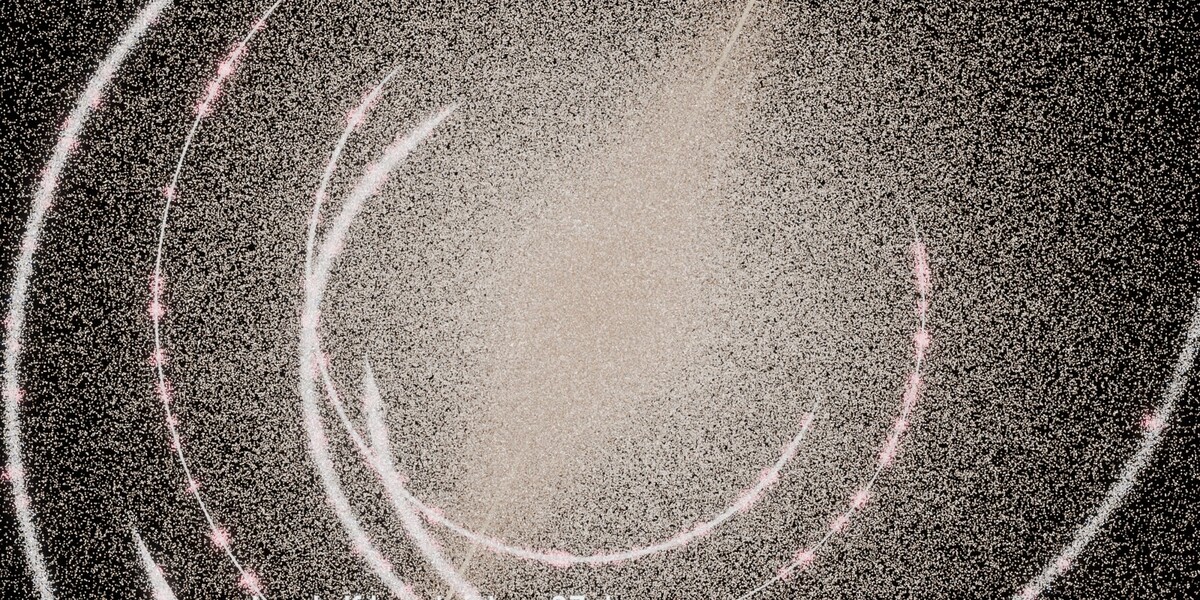
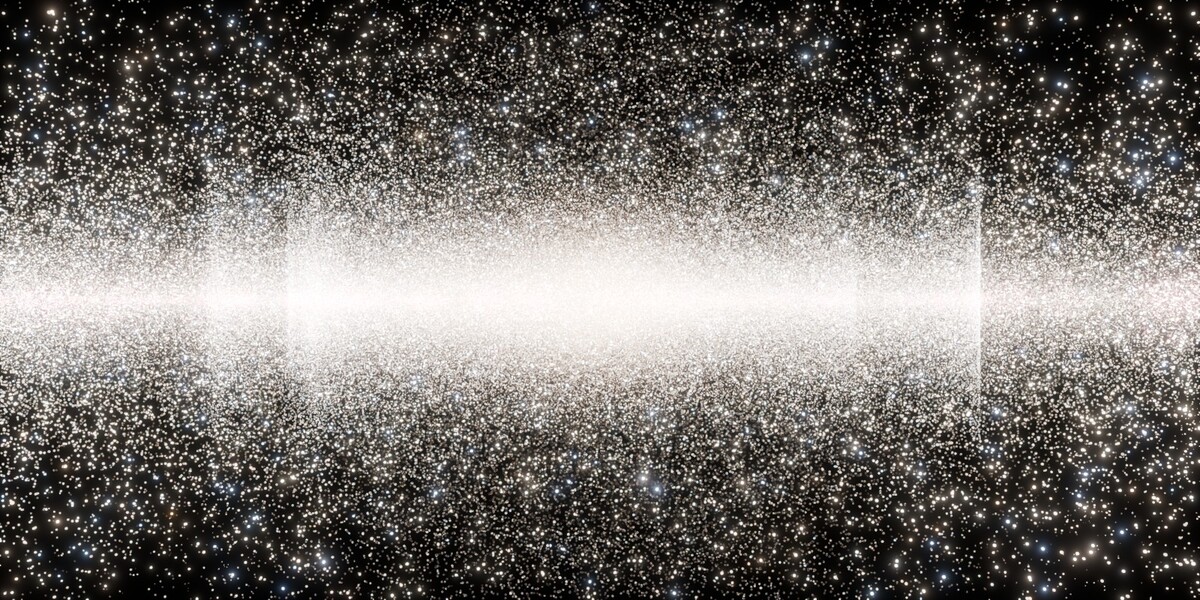
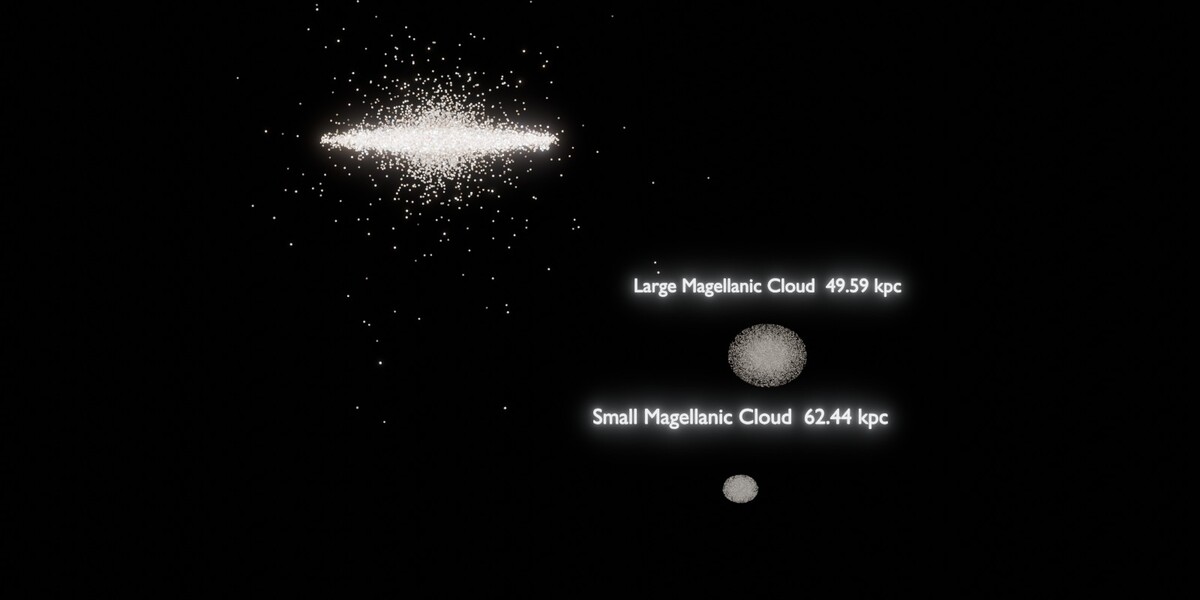
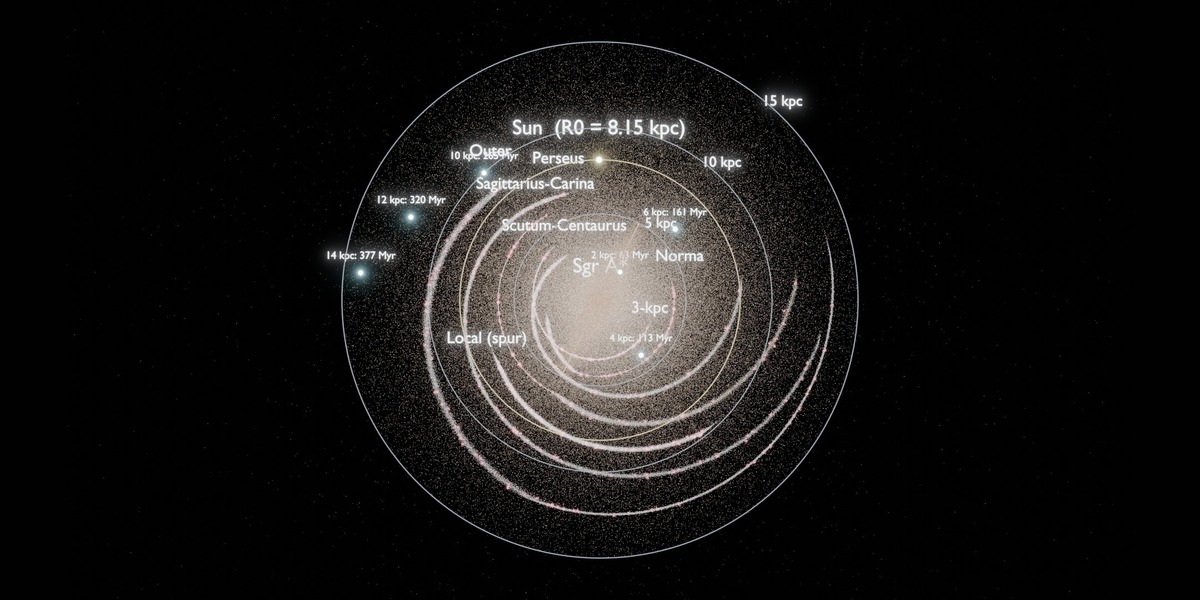
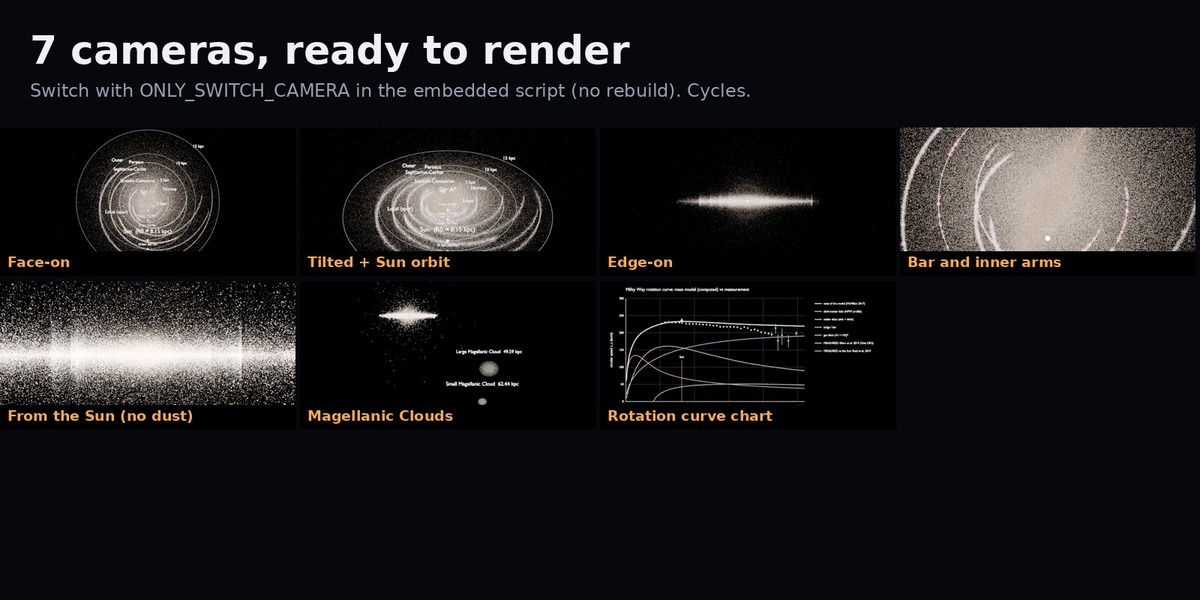
Where do the numbers come from?
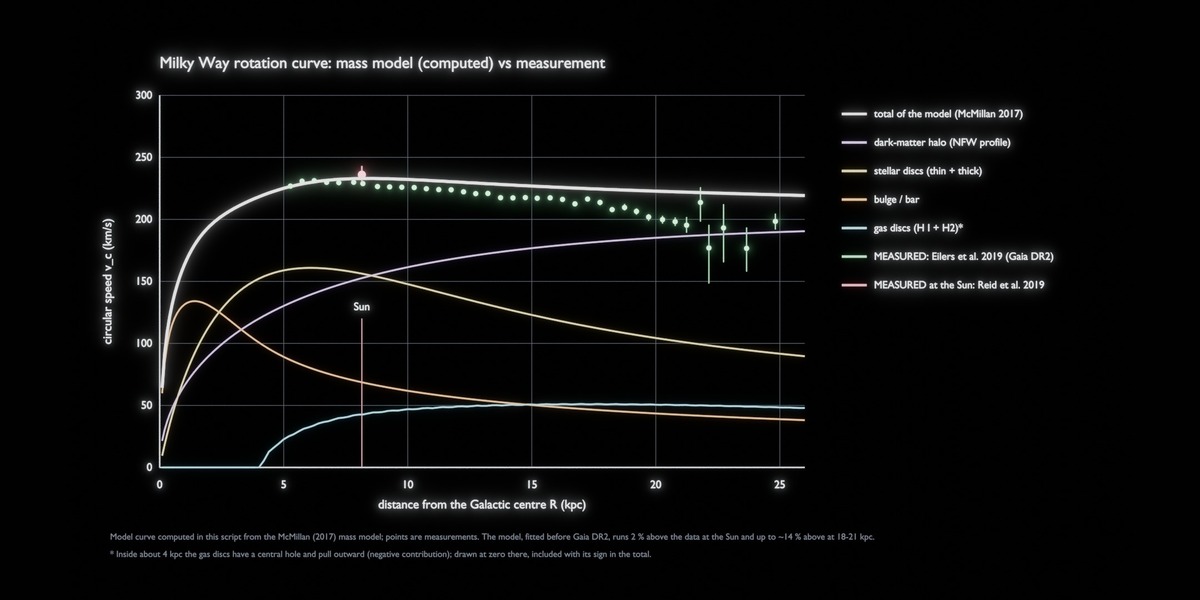
Reid et al. 2019 (ApJ 885, 131), Bland-Hawthorn & Gerhard 2016 (ARA&A 54, 529), McMillan 2017 (MNRAS 465, 76), Eilers et al. 2019 (ApJ 871, 120), Pietrzyński et al. 2019 (Nature 567, 200), Graczyk et al. 2020 (ApJ 904, 13). Full list in CREDITS.md.
Why is there no dust?
Dust is not modelled, so the galaxy looks more transparent than it is. The view from the Sun is therefore not what we see from Earth.
Does it work with EEVEE?
t has only been tested with Cycles. Materials and lighting were tuned for Cycles.
Can I use the renders commercially?
Yes. Images, animations and scenes you create are yours, including for commercial projects. The script itself is GPL-3.0-or-later.
Do I need an add-on?
No. Everything is procedural and generated by the included script; no add-on and no external textures are required.
How accurate is the rotation curve?
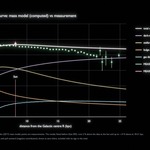
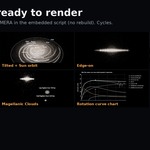
It is computed from the McMillan 2017 mass model and gives 232.9 km/s at 8.2 kpc (232.8 ± 3.0 published). It matches the Gaia measurements of Eilers et al. 2019 within 3 % inside 10 kpc and runs up to about 14 % above them at 18–21 kpc; the chart shows both.
Is this a real map of the Milky Way?
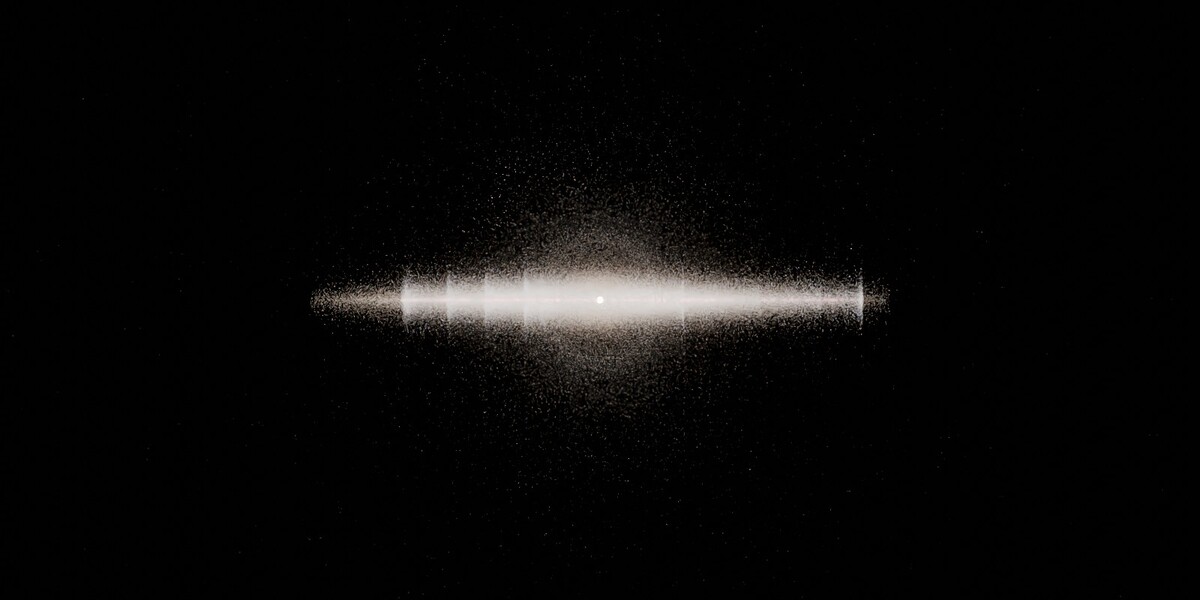
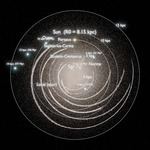
No. It is a statistical model built from published structural parameters (arms, bar, bulge, discs). No individual star or nebula is real, and this is stated in the scene data.
Have questions about this product?
Login to message
| Published | 13 days ago |
| Blender Version | 4.2 - 5.0 |
| Render Engine Used | Cycles |
| License | GPL |
Discover more products like this
space spiral arms education astronomy galactic bar dark matter Science milky way rotation curve galaxy magellanic clouds sagittarius a