Leonid Altman

Hi, I'm Leonid
I develop Reblend as an independent project.
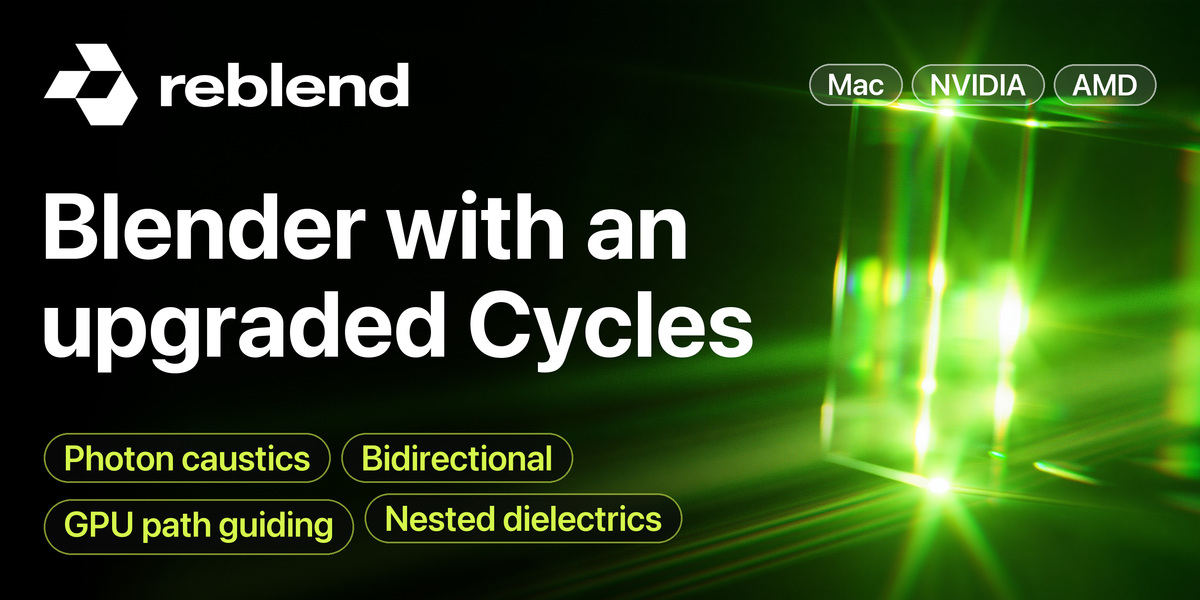
Blender with an upgraded Cycles
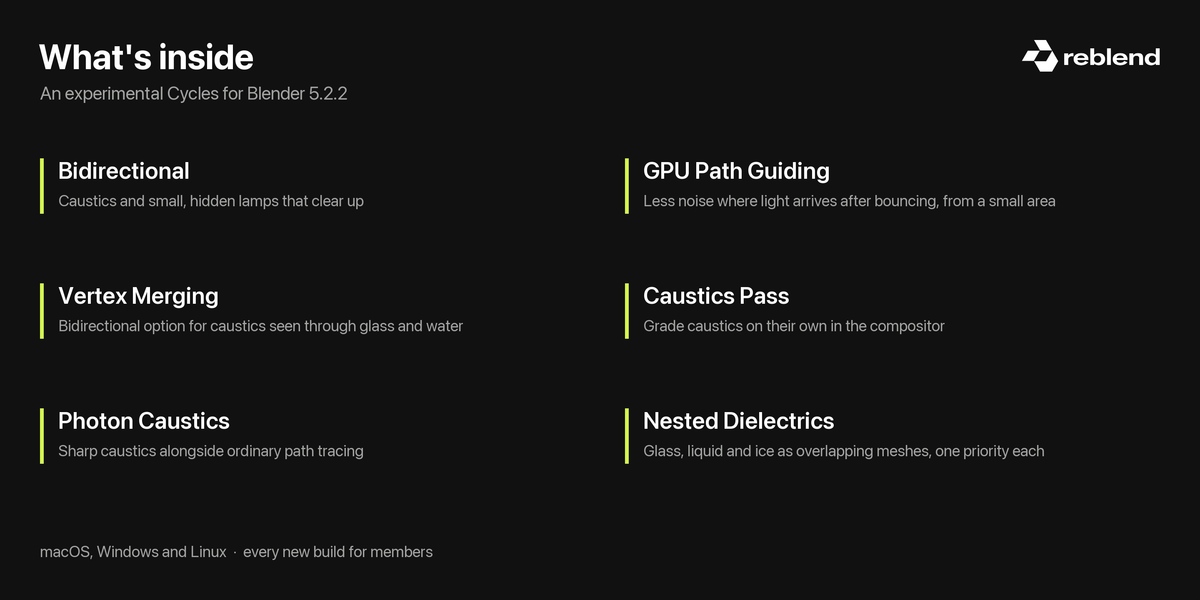
Caustics, bidirectional rendering and GPU path guiding, in a Blender build that opens your usual .blend files.
12 months of builds and support. Builds you download keep working after that.
Caustics from glass, water and metal
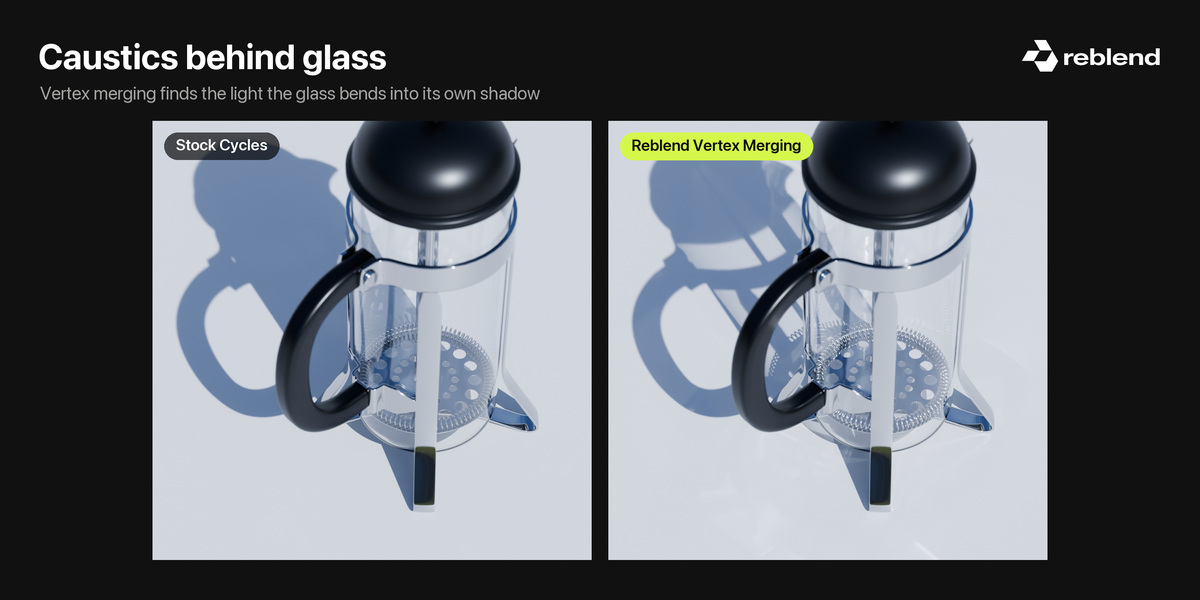
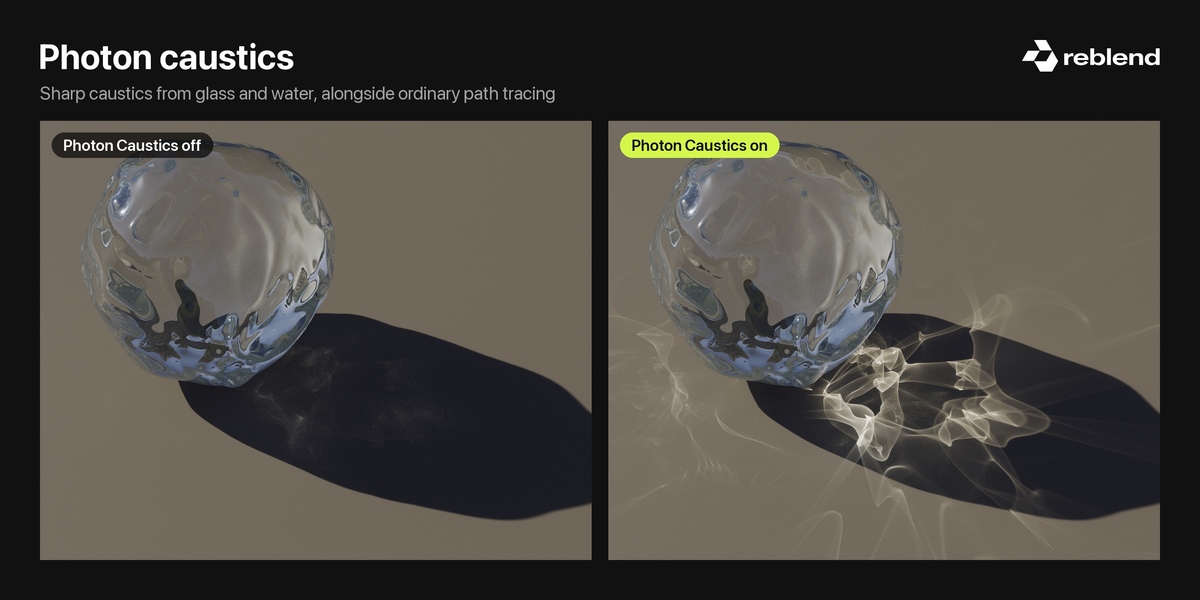
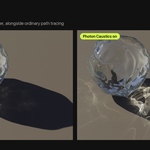
Render the focused light that glass, water and polished metal cast onto surrounding surfaces. Photon Caustics also supports caustic light in volumes, such as light shafts under water. A separate Caustics pass lets you adjust it in the compositor. Caustics also bake into textures.
The comparisons alternate between off and on.
Light seen through glass
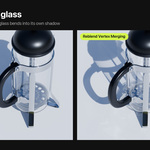
Render caustics visible through another surface: the floor of a pool through its water, or light gathering inside a glass. Reblend's bidirectional methods handle these, and VCM also renders sharp light shafts in water and fog.
The French press scene is by Christopher3D.
Indirect lighting on your GPU
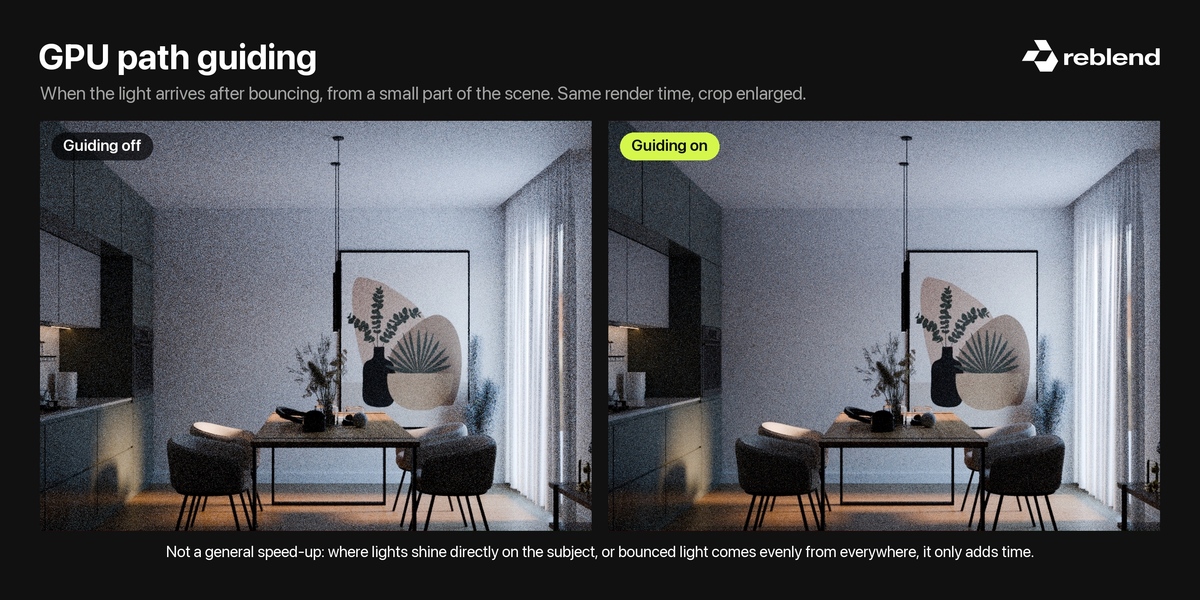
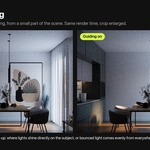
GPU path guiding can produce cleaner images when much of the light arrives after bouncing from a small part of the scene.
It isn't a general speed increase. It's off by default, and can make other scenes slower. Compare your scene with it off and on at equal render time.
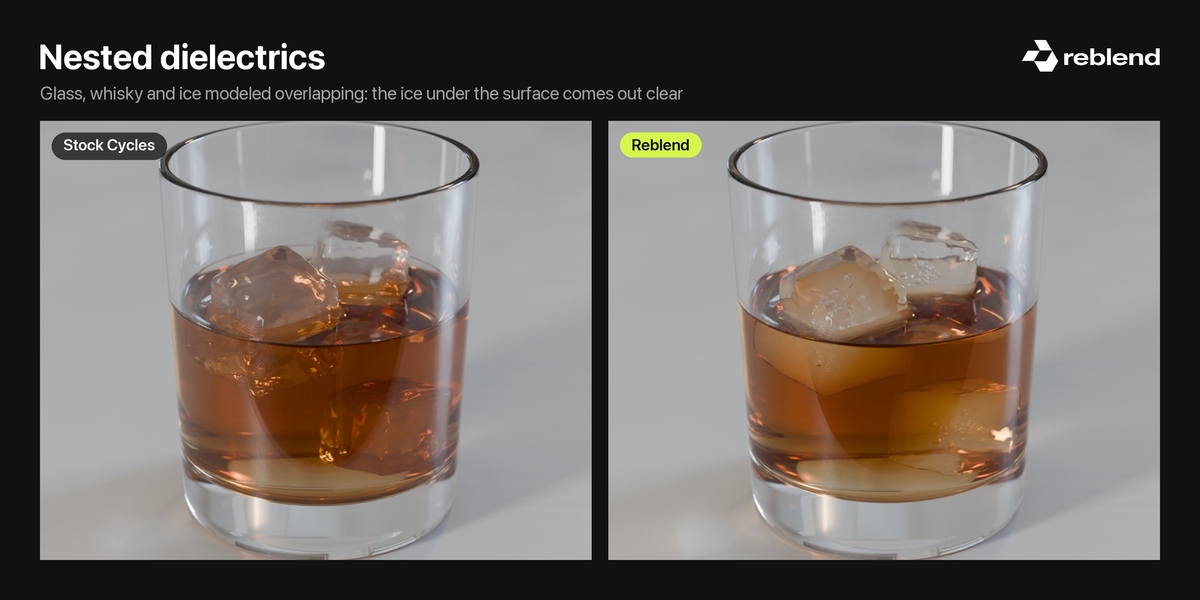
Glass, liquid and ice together
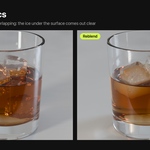
Model glass, liquid and ice as overlapping objects. Reblend handles the boundaries between them without you cutting the meshes apart at each interface. Automatic priorities set their order, with manual control when you need it.
Cutaways at render time
Tick Cutter on any object to cut the scene open at render time, with solid faces where closed objects are cut. Your geometry stays as it is, and Solid mode shows the same cut.
Material library
213 materials in the Asset Browser. The metals come polished, brushed, satin, bead-blasted, hammered, anodised, tarnished, rusted, patinated and knurled, built from measured optical data, with smudges and edge wear you can adjust.
Glass, liquids and gems cover drinks, milk and detergents, soda-lime, tempered, bottle, tinted and frosted glass, acrylic, and cut stones like diamond and ruby. Glass takes smudges and scratches too. Baryta comes with Reblend as a view transform.
Christopher 3D explores Reblend
An ongoing project
Reblend is experimental. I release improvements as they're ready, and membership helps pay for the work.
If you use it, I'd like to hear what happens in your scenes. A problem report, a difficult lighting setup or an example from your workflow helps me decide what to investigate next. You don't need to buy Reblend to send feedback.
Membership gives you access to released builds and support during your paid period. It doesn't promise a particular future feature or release schedule.
Requirements and things to know
Not every rendering method supports every scene feature. Bidirectional rendering has restrictions with shadow catchers and some camera settings; the guide explains the supported combinations.
Keep your normal Blender installation and test Reblend on copies of your scenes before relying on it for deadline work. Settings and defaults can change between releases.
Downloads, guide and support
Download your builds at reblend.app/download with your Superhive order number, the digits after the # at the top of your order page.
The guide and release notes are on reblend.app. For support and feedback, use the contact options on the website. When reporting a problem, include your Reblend version and, if you can, a scene that shows it.
Pairs well with Reblend