Film Projector
 Mountaineer Mediaworks


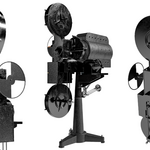
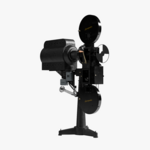
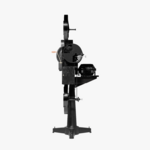
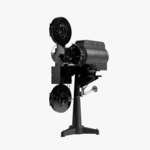
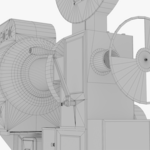
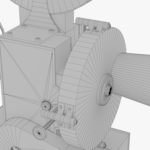
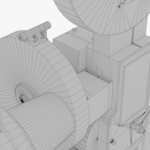
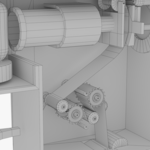
"Film Projector" Documentation
Overview
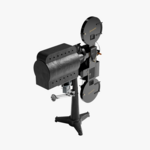
The “Film Projector” asset was built with flexibility and practical usability in mind, especially for animation, customization, and scene integration workflows.
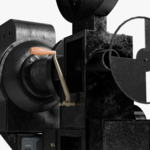
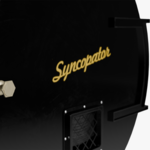
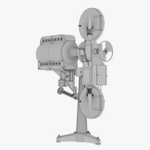
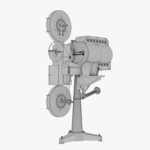
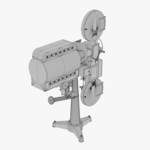
The model is inspired by early sound-on-film cinema projection equipment from the late 1920s and early 1930s and recreates the complex mechanical structure typical of early “talkie” projectors.
Object Structure
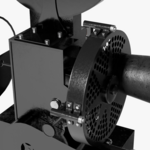
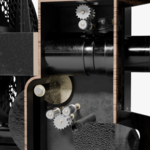
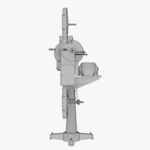
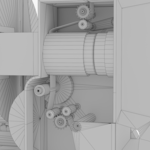
The projector is divided into multiple individual objects rather than a single combined mesh. Major assemblies such as the lamp house, projector body, reels, sound head, and mechanical controls are separated and hierarchically organized.
This allows for easier scene management, animation, visibility control, and modification.
Animation Setup
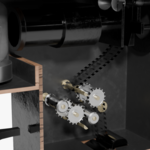
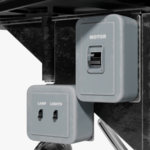
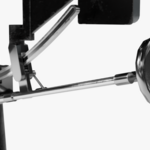
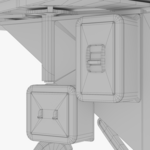
Movable elements such as switches, cranks, levers, doors, reels, and access panels are individually parented and can be animated, hidden, replaced, or modified as needed.
The lamp house is mounted on a swiveling tray and parented accordingly. Rotation constraints are included so the lamp house aligns correctly with the projector shutter when moved into operating position.
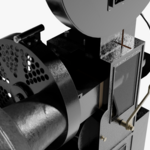
The film strip is also animation-friendly. Its material uses a simple alpha-mapped image texture, and the illusion of film movement can be created easily by animating the texture coordinates in the material settings.
Materials & Texturing
The asset uses two primary materials:
- Projector material
- Film strip material
Textures are organized on a single UV layout for easier material management. All objects are fully UV unwrapped and packed efficiently on the UV grid, making it straightforward to create custom textures or adapt the asset to different rendering styles and workflows.
The film strip material uses an alpha-mapped image texture designed to simulate exposed film frames.
Vertex Color ID Map
The asset includes vertex color ID masks to simplify material selection, masking, and custom texturing workflows in applications such as Substance Painter or Blender.
These ID colors can be used to quickly isolate individual surface groups during the texturing process.
Have questions about this product?
Login to message
| Published | 6 months ago |
| Blender Version | 5.1 |
| Render Engine Used | Cycles |
| Misc Data | Uvs-Unwrapped, Normal-Mapped, Textured |
| License | Royalty Free |
