 KacaDev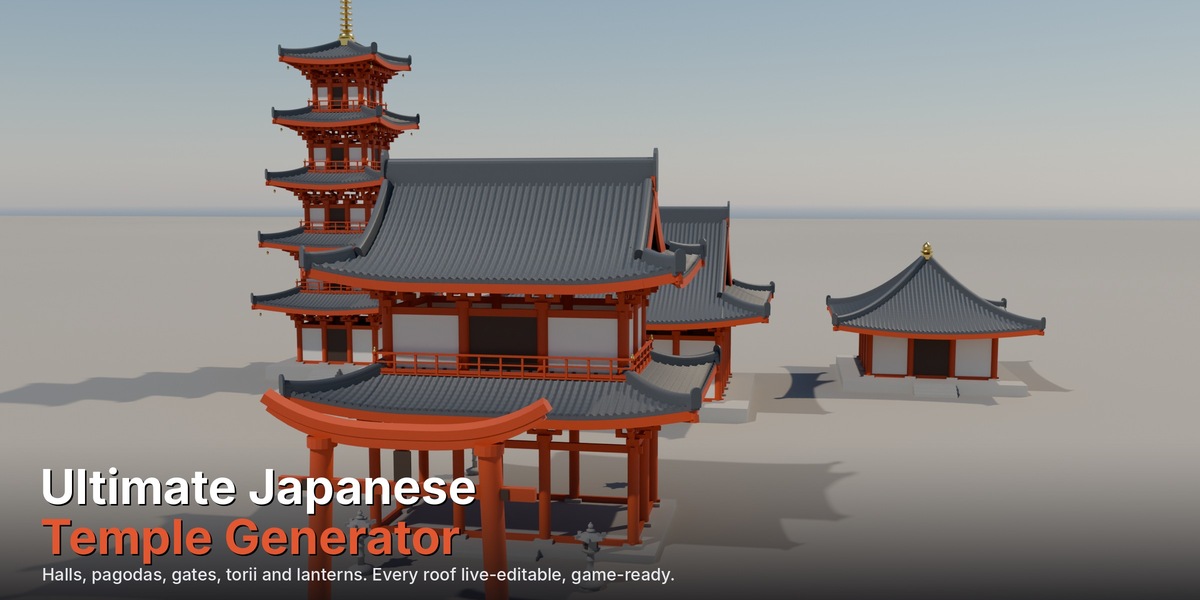
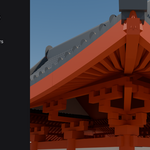
Every temple roof you have ever tried to model by hand, in one click.
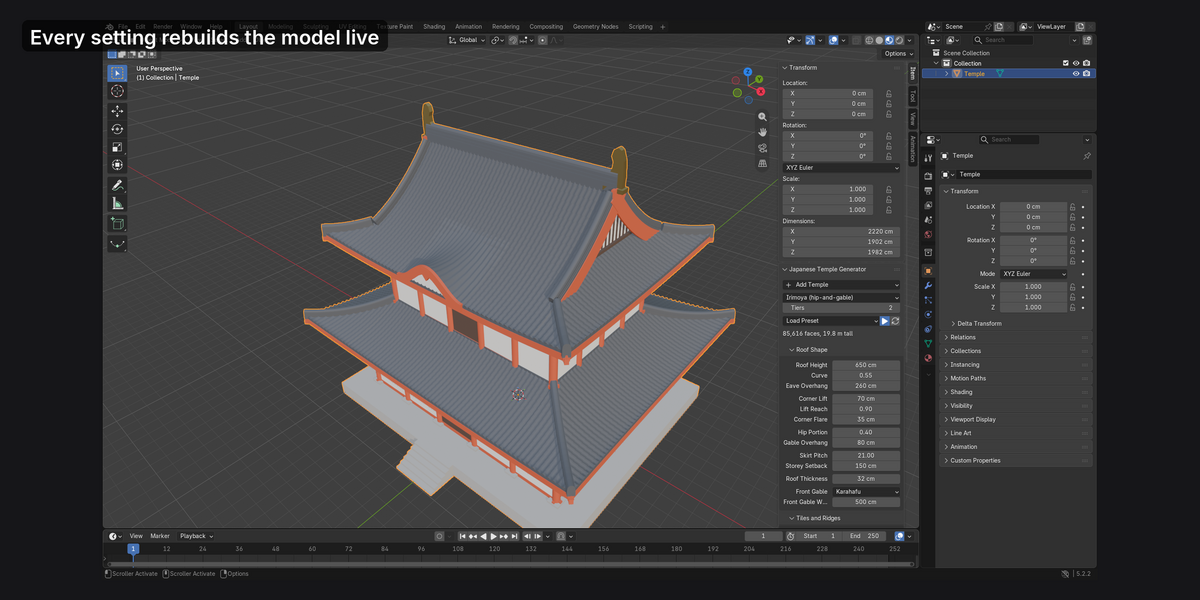
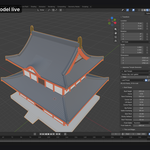
Japanese temple roofs are hard. The eaves curve, the corners sweep up and flare out, the tiles have to follow all of it, and under the eave there are rafters and bracket clusters that take a weekend on their own. The Ultimate Japanese Temple Generator builds the whole building from a handful of settings, and every slider rebuilds it live in your viewport.
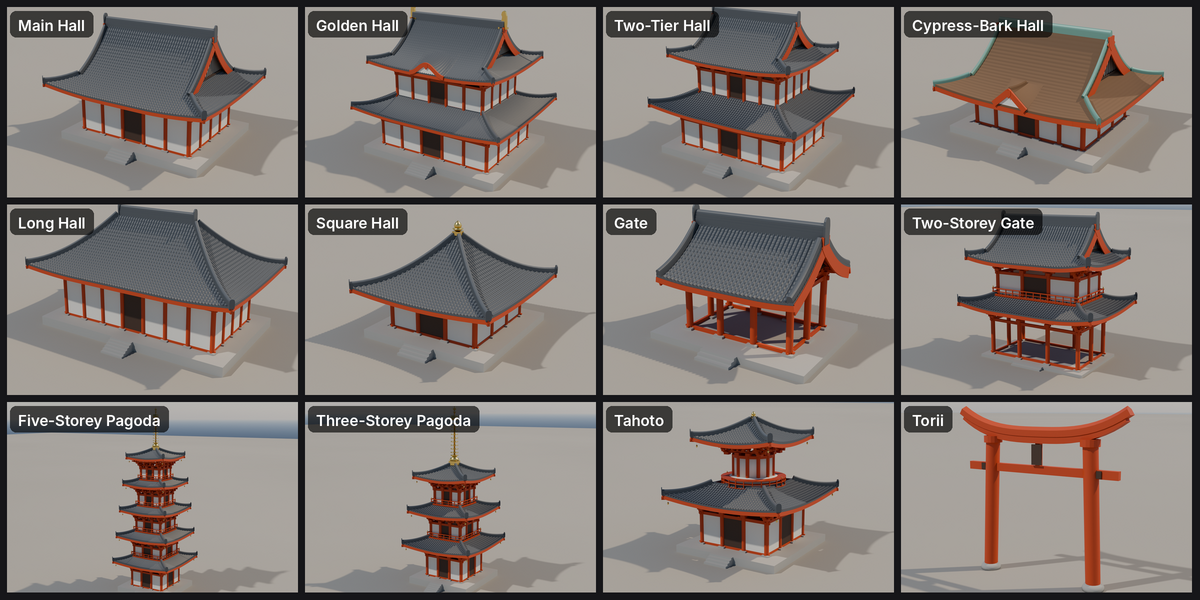
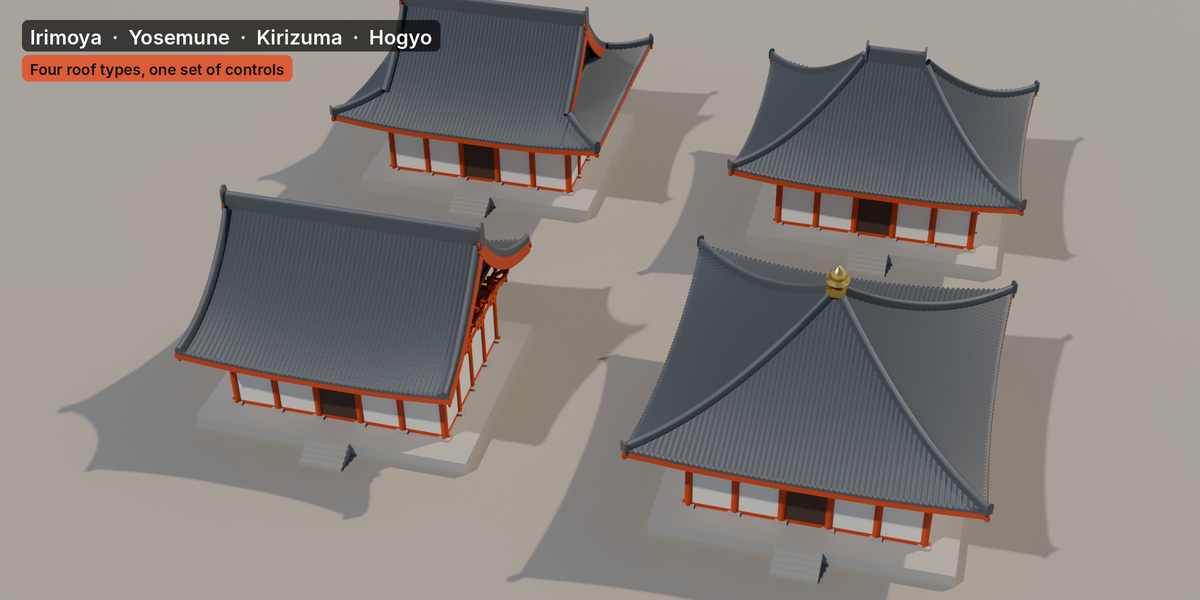
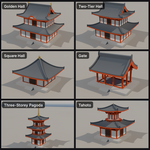
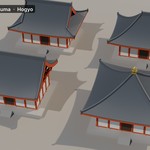
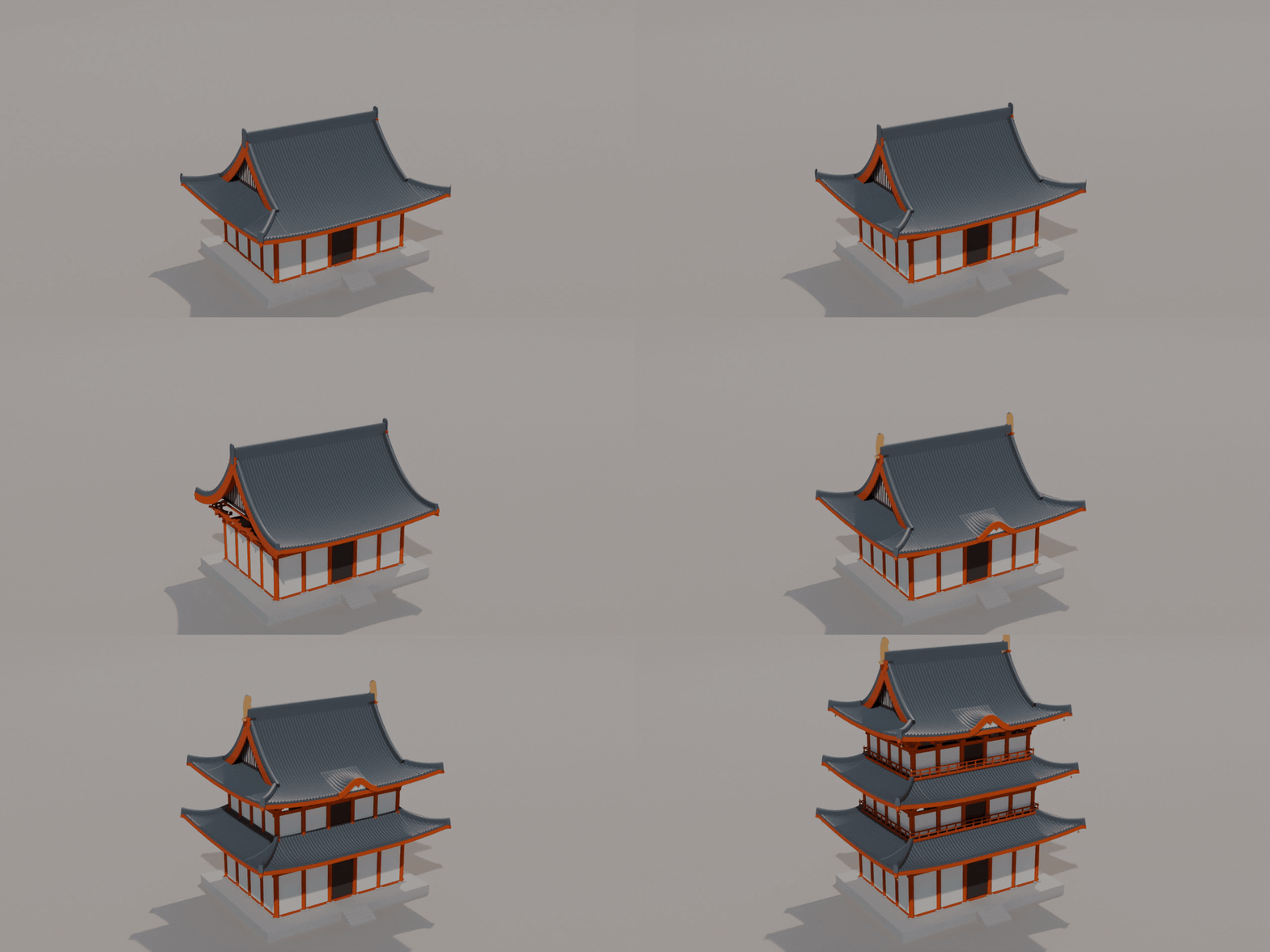
Fourteen presets, four roof types
- Irimoya hip-and-gable, yosemune hipped, kirizuma gable and hōgyō pyramid roofs, each with the correct ridge, hip and gable details.
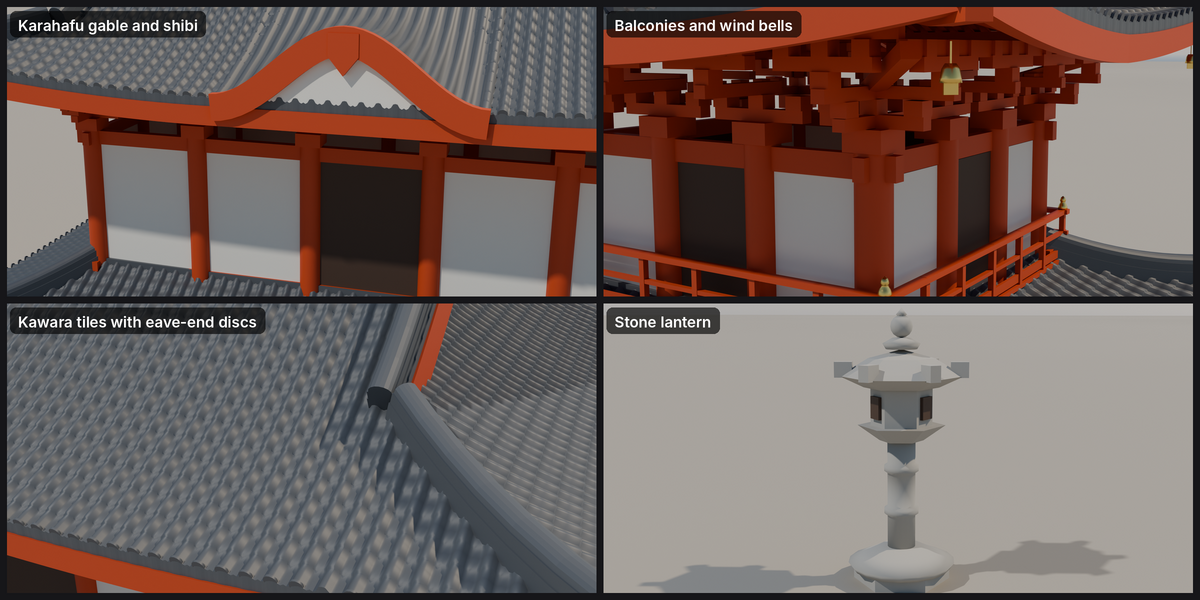
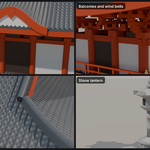
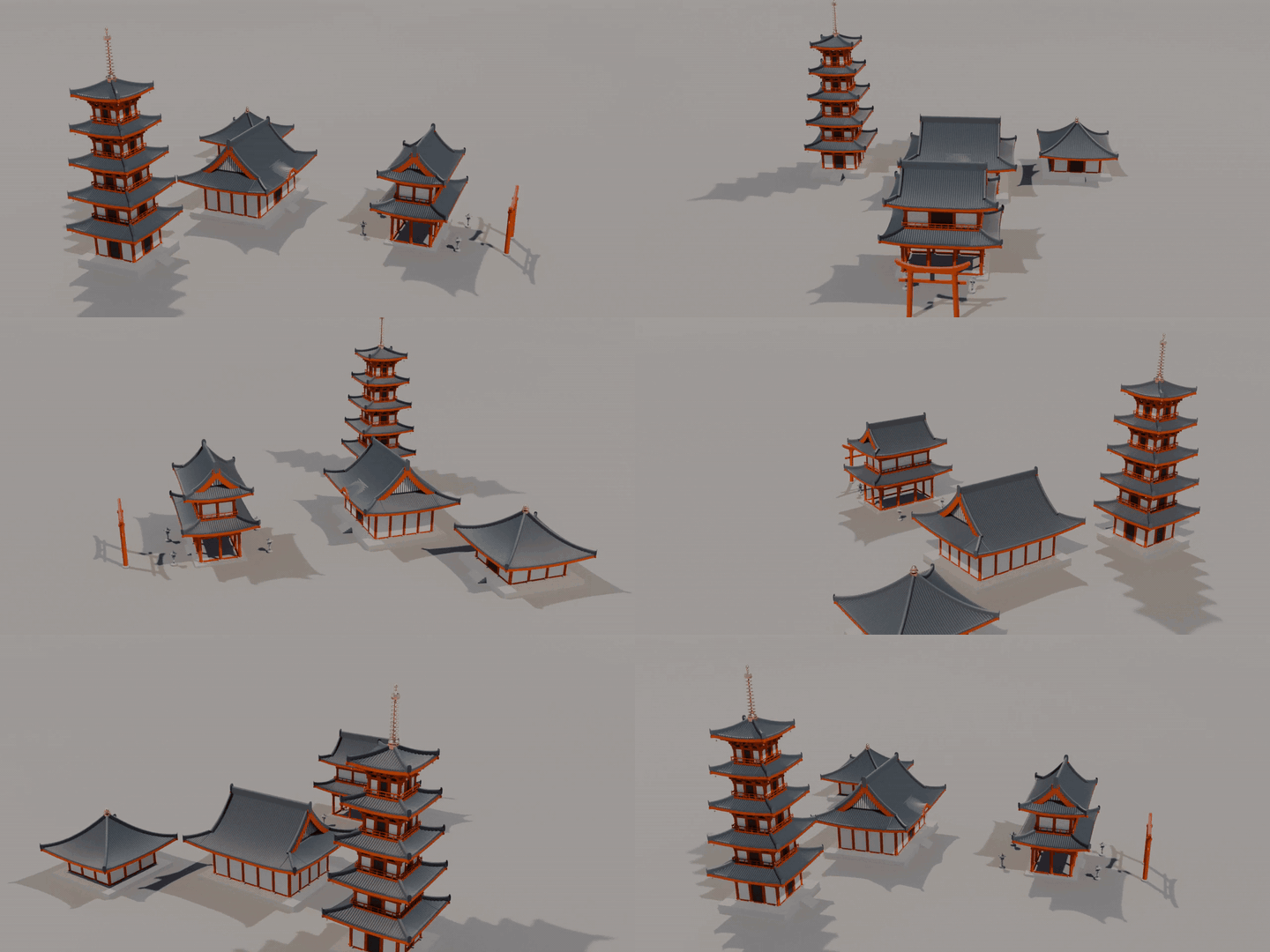
- Stack them into three- and five-storey pagodas with skirt roofs, balconies, wind bells and a full spire (sōrin) with its nine rings, water flame and jewel.
- A tahōtō, the round-bodied pagoda with its white kamebara dome.
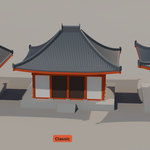
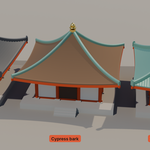
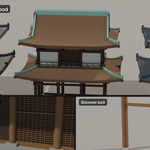
- A two-storey gate (rōmon) with an open ground floor, a two-tier hall with a skirt roof (mokoshi), a Golden Hall with every ornament on, and a cypress-bark hall.
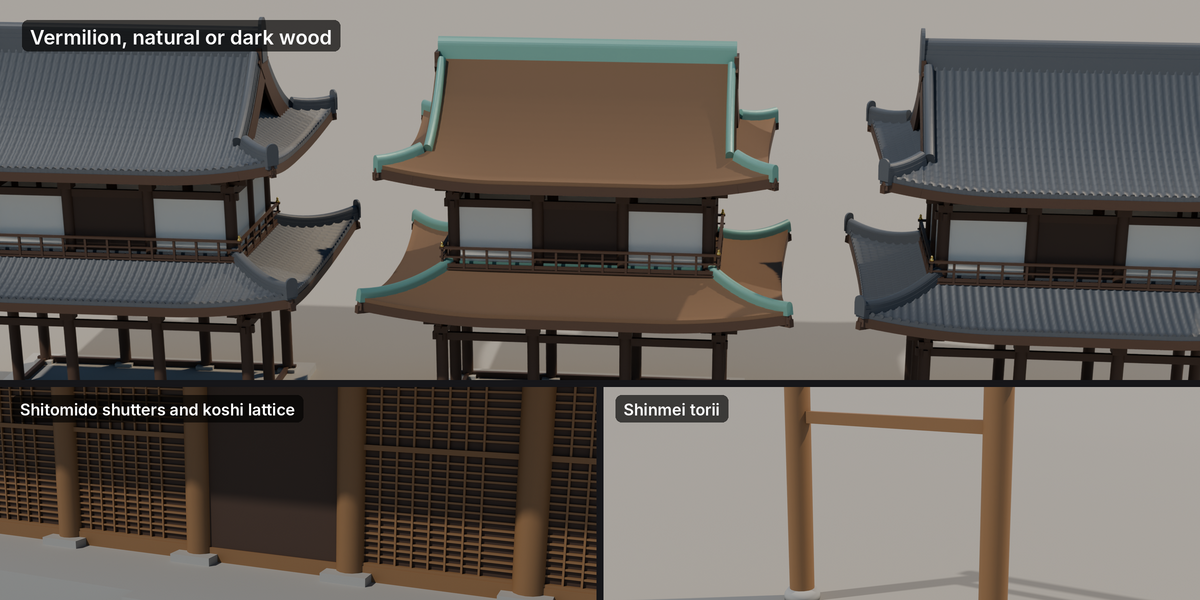
- Torii gates in Myōjin and Shinmei style, and a Kasuga-style stone lantern.
The roof is the point
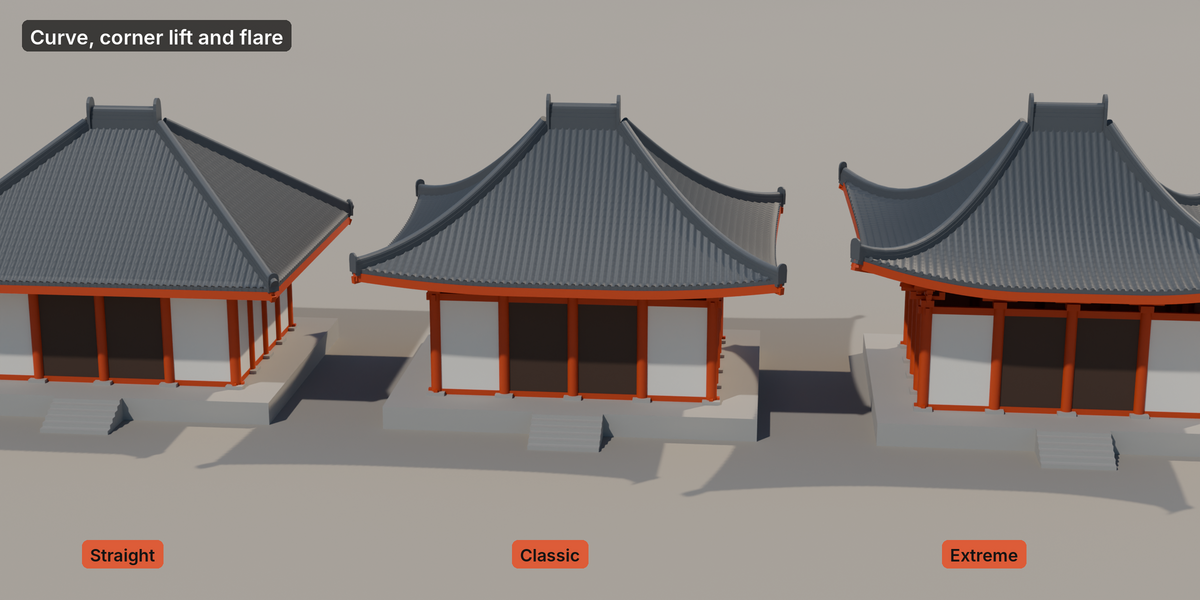
- Concave temple curve (teri) or convex (mukuri), with separate control of how far the eave corners lift and flare out (sori).
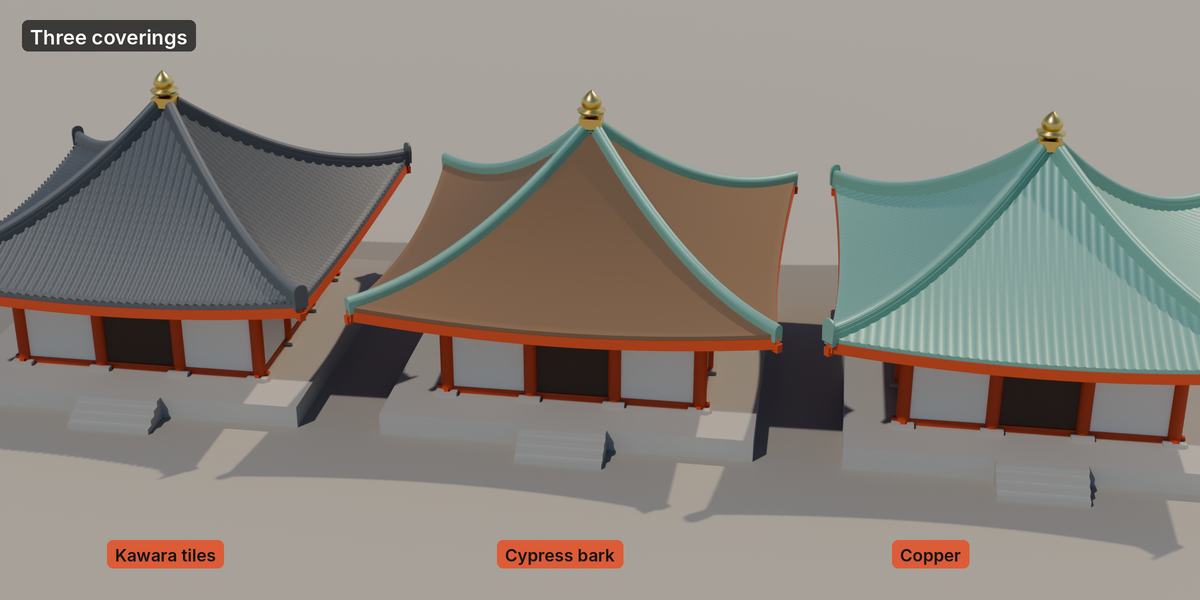
- Three coverings: kawara clay tiles with their round and flat courses and eave-end discs, layered cypress bark (hiwadabuki) with smooth copper ridge caps, or standing-seam copper with a green patina.
- Ridge ends: stacked ridge tiles with onigawara, gilded shibi fish-tails, or plain.
- Front gables: a cusped karahafu or a triangular chidori-hafu over the front eave, with their own bargeboards and pendant.
- Multi-tier roofs where every tier keeps the same curve family, so a pagoda reads as one building.
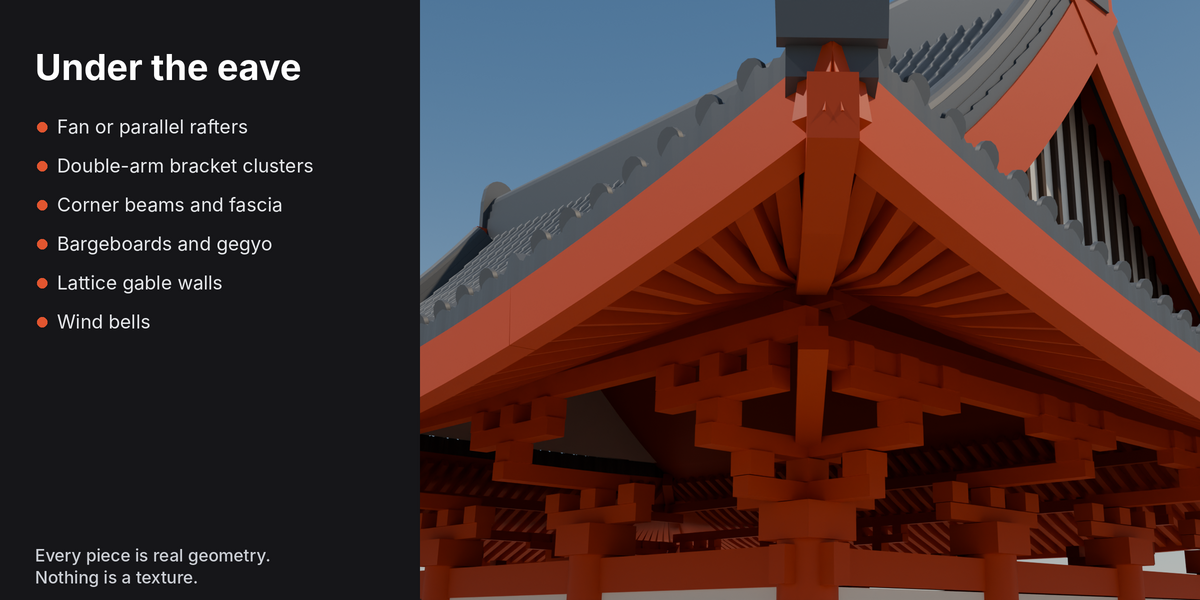
Under the eave
- Rafters in a parallel layout or fanning out towards each corner (ōgi-daruki), corner beams, fascia, bargeboards and the gegyo pendant.
- Bracket sets: none, simple bearing blocks, or projecting double-arm clusters that reach out under the eave and turn the corner on a diagonal arm.
- Lattice gable walls, plus shitomido shutters or kōshi slats in place of plaster.
Built for production
- Real-world scale. Presets are in metres and adapt to your scene units, so a hall is 14 m tall in a metre scene and 1400 cm in a centimetre scene.
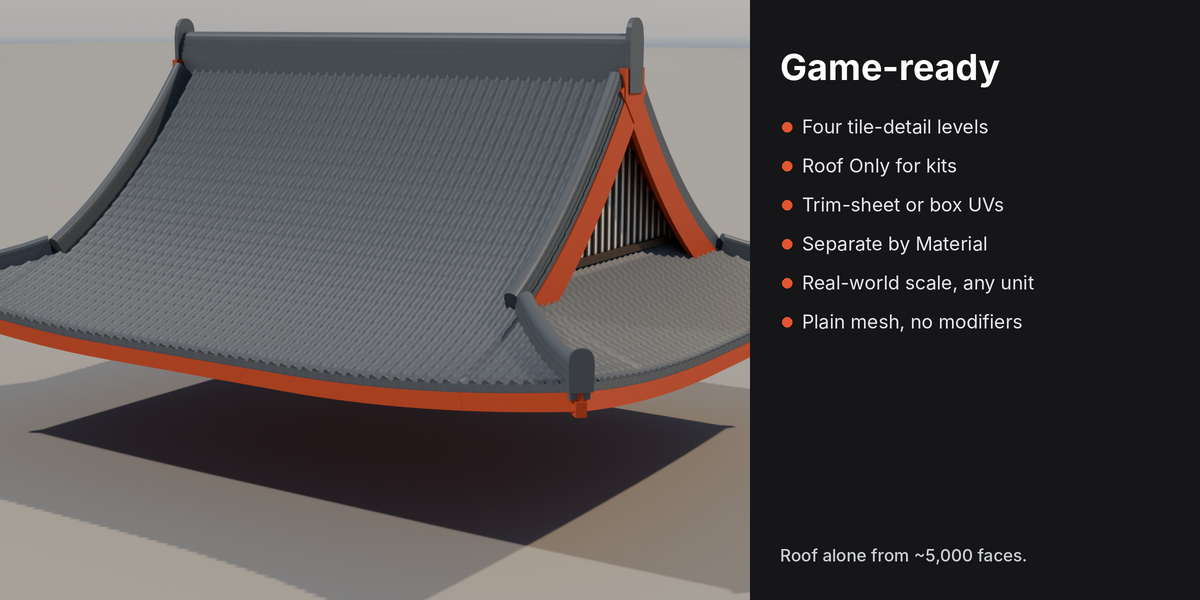
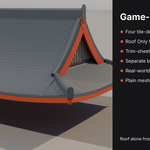
- Game-ready options. Four tile-detail levels (the roof alone drops to about 5,000 faces), a Roof Only switch for kits, Separate by Material, and two UV modes: world-scale box projection for tiling textures, or a trim-sheet layout where timber, plaster, stone and metal each get their own strip with U in world units. Tile UVs tile per course so one kawara texture lines up with the geometry.
- Seven material slots (tiles, wood, dark wood, plaster, stone, gilt metal, copper) with three wood colours: vermilion, natural or dark.
- Live Update toggle for heavy models: pause, change ten things, rebuild once.
- Convert to plain mesh whenever you want to take over by hand. Nothing is locked behind modifiers or node groups.
Built and tested on Blender 5.1 and 5.2 LTS, compatible with 4.2 and newer. Pure Python and numpy; a full hall generates in well under a second.