A fully procedural biological material library, for artists who need biology that holds up when the camera gets close.
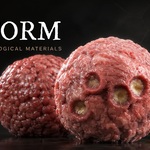
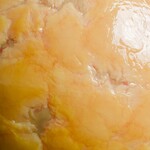
The library, rendered. Every surface here is procedural: no textures, no UVs, nothing baked.

Believable biological material is a losing battle with texture packs. Skin tiles visibly, tissue falls apart the moment the camera moves or the mesh changes, and a downloaded tumour is the same tumour in everyone else's render. Bioform takes the other road: every material is a procedural system with real controls, so you turn parameters until the biology reads exactly the way you need.
The texture pack way
Hunt for the right map, unwrap, tile, hide the seams, and re-bake whenever the mesh changes. Accept whatever look the pack froze in. Every close-up is a gamble.
The Bioform way
Apply a material and turn the dials. No UVs, no baking, no resolution ceiling. The look is yours to direct, and it holds from wide shot to macro.

Beyond the two engines, Bioform is a growing library of ready to use biological materials. Apply, tweak, render. A sample of what is inside:
40 materials (more coming)
Tissue, organs, bone, fluids and a deep bench of pathology, all fully procedural
2 Engines
Parametric skin and tumour systems for the biology that never works as a static texture
0 UVs
Nothing to unwrap, nothing to bake; detail is computed at render time at any distance
Tissue and organs 11 materials
Bone and joint 3 materials
Fluids 4 materials
Pathology 22 materials
The library keeps growing, with new materials added regularly.

In addition to the materials, Bioform ships with two novel procedural engines built for the parts of biology that never work as static textures: living skin, and pathological growth. Each is fully parametric. So you basically have infinite variations.

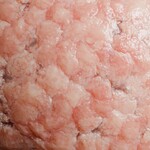
Skin built from the ground up as a procedural system: subsurface depth, pore structure, vascularity, tone and undertone, imperfections. Every parameter exposed, resolution independent at any scale.
Subsurface, Pores, Vascularity, Tone, Undertone, Blemishes. The Dermaform Engine.

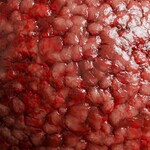
Powered by Teraform, Bioform's integrated tumour generator. Grow pathological forms procedurally and control their character: size, spread, surface irregularity, vascularisation and necrosis.
Growth, Spread, Irregularity, Vascularisation, Necrosis, Scale. The Teraform Engine.

Every material is vetted by a medical professional and checked against real anatomy, so the biology reads true.

A material that survives a macro shot is a different animal from one that looks fine across the room. Bioform is engineered for the micro details.
Fully procedural. No baked textures, no UV headaches. Detail is computed, not stored, so it never runs out of resolution.
Real controls, not presets. Every material is parametric. Push it toward exactly the look your shot needs.
Clinically grounded. Vetted by a doctor, so the biology reads true.
True displacement. Real surface relief from displacement, not just a normal map painted on.
Eevee and Cycles. Works in both engines and drops straight into your existing pipeline.
Grows with Blender. Kept current with new Blender versions.

| Requirements |
Blender 5.x on Windows, macOS or Linux |
| Render engines |
Eevee and Cycles |
| Material type |
Fully procedural, displacement based shaders, resolution independent |
| What ships |
The Bioform addon as a .zip, with the material library and both engines built in |
| Library |
40 materials at early access, with new materials added regularly |
| Updates |
Supported and updated with newer Blender versions |
| Support |
Readily available through your Superhive purchase |

Do I need to know shading to use it? No. Apply a material and it just works. The controls are there when you want to push a look further, but nothing is required.
What is the difference between Bioform, Teraform and Dermaform? Bioform is the full library with both engines built in. Teraform is the tumour engine and Dermaform is the skin engine.
How do I get the full surface detail? Give the object enough geometry with a Subdivision Surface modifier and set the material's displacement mode to Displacement and Bump. The documentation page walks through it step by step.
Which Blender versions are supported? Built for Blender 5.x, and compatible with both Eevee and Cycles.
Can I use it for commercial work? Yes. Your renders are yours, personal or commercial.
Will the library keep growing? Yes. The library is expanding, with new materials in the pipeline.
Bioform, procedural biological materials for Blender. Blender is a trademark of the Blender Foundation. Bioform is an independent product and is not affiliated with the Blender Foundation.
 Limitless Creative