 Salman Naseem



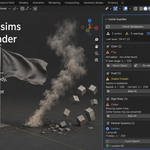
Every simulation-heavy Blender project eventually hits the same failure: a shot renders perfectly at your desk, then comes back broken from the farm, from a collaborator's machine, or from your own file three weeks later. The cause is almost always invisible in the viewport: a cloth sim that never got baked, a fluid domain whose cache files quietly went missing, a rigid body cache left stale after a mass or collision-margin tweak. Blender doesn't warn you. You find out after the render.
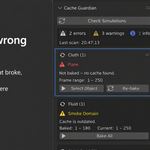
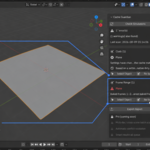
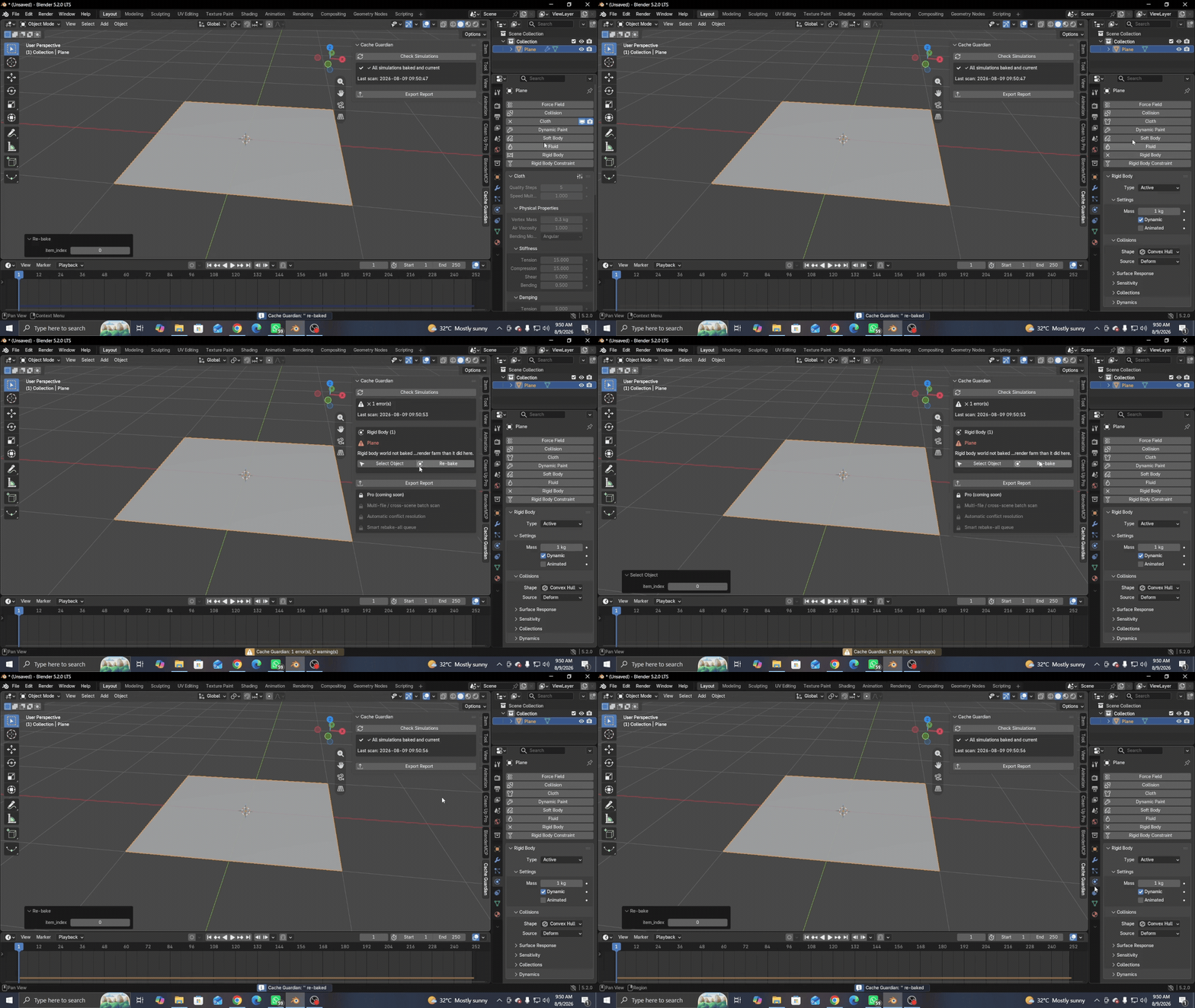
Cache Guardian is a standalone add-on built to close that gap. It scans every physics and simulation system in the active scene Cloth, Fluid/Smoke (Mantaflow), Rigid Body World, Soft Body, Particle systems, and Geometry Nodes simulation zones and answers three questions for each one: Is it baked? Does the cache actually exist on disk? Is it stale relative to the settings it was baked with? Results land in a single N-panel dashboard with plain-language explanations and one-click fixes, so cache problems get caught in the viewport instead of in dailies.
It does not depend on, modify, or share code with any other add-on. It reads local simulation settings and local disk cache files only; no network access, no external services, nothing phoning home.
Key Benefits
Eliminate farm-vs-desktop render mismatches. Know before you submit whether every sim in the scene will reproduce on another machine.
Cut QC time from scene-by-scene manual inspection to one click. No more opening every object's Physics tab by hand.
Catch missing cache files before they cost a render. A "baked" flag in Blender doesn't guarantee the cache files are actually there Cache Guardian checks disk, not just the flag.
Protect against silent setting drift. A fingerprint-based staleness heuristic flags when mass, stiffness, resolution, or frame range changed since the last bake.
Avoid cache-path handoff failures. Flags absolute disk paths that won't travel with the .blend to another artist or render node.
Prevent cross-simulation cache collisions. Warns when two sims point at the same custom cache directory — a documented cause of one bake silently overwriting another.
Avoid cloud-sync corruption. Flags cache directories sitting inside Dropbox, Google Drive, OneDrive, or iCloud folders, where sync clients touching files mid-write is a known source of corrupted playback.
Fix issues without leaving the panel. Select Object and Re-bake buttons resolve most flagged items in place.
Get an audit trail. Export Report writes a plain-text report next to the .blend for QC logs, client sign-off, or pipeline records.
-
Optional pre-render safety net. An auto-check-before-render preference throws a non-blocking warning if unresolved cache errors exist — heads-up, not a gate, so it never interrupts your workflow.
Professional Use Cases
VFX and animation studios running nightly farm renders where a single unbaked or stale cache can cost hours of wasted render time across a render wall.
Freelance 3D artists delivering .blend files to clients or collaborators who need the caches to actually travel with the file.
Technical directors and pipeline TDs building QC gates before shots go to the farm or to publish.
Motion design studios with cloth and particle-heavy scenes where iteration speed depends on knowing which sims still need a rebake.
Archviz and simulation-driven visualization teams using fluid or rigid body sims for hero shots, where a broken cache means a broken client presentation.
Game cinematics and previz teams handing sim-heavy scenes between artists on different machines.
Educators and studio leads onboarding junior artists, using Export Report as a teaching and review tool for simulation hygiene.
Multi-artist collaborative projects where one artist bakes a sim and another opens the file later — Cache Guardian catches the staleness that happens in between.
Workflow Advantages
Replaces a manual, error-prone routine — opening every object, checking the Physics tab, eyeballing bake ranges — with a single scan.
Groups results by simulation type, so a scene with a dozen cloth objects and a fluid domain reads as an organized checklist, not a fishing expedition.
Spot-checks disk cache files across a sampled set of frames (start, end, and interior frames) instead of exhaustively reading every frame, keeping scans fast even on long bakes.
Surfaces frame-range coverage gaps automatically — a bake that stops five frames short of the render range is a common, hard-to-spot cause of last-frame render failures.
Reduces back-and-forth with render wranglers and pipeline support by catching path portability and shared-directory issues before a submission, not after a failed job.
-
Keeps QC inside Blender's native UI — no external tool, no separate license server, no round-trip to another application.
Feature Breakdown
Six simulation types, three checks each
Baked status — is the simulation actually baked, or will it simulate live (and potentially differently) elsewhere?
On-disk verification — do the cache files the scene points to actually exist and contain data?
Staleness detection — have the simulation's settings changed since the cache was last baked, based on a settings fingerprint captured at bake time (mass, stiffness, resolution, frame range, and other sim-specific parameters)?
Two cross-cutting scene checks
Frame Range Coverage — flags any baked simulation whose bake doesn't cover the full render frame range.
Cache Path Portability — flags absolute, non-blend-relative disk cache paths that won't survive a move to another machine.
Two pipeline edge-case checks
Shared Cache Directory — warns when two different simulations write to the same custom cache location, where baking one can silently overwrite the other.
Cloud-Synced Cache Path — warns when a cache directory lives inside a Dropbox/Google Drive/OneDrive/iCloud folder.
Results dashboard
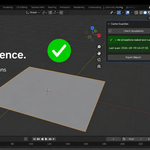
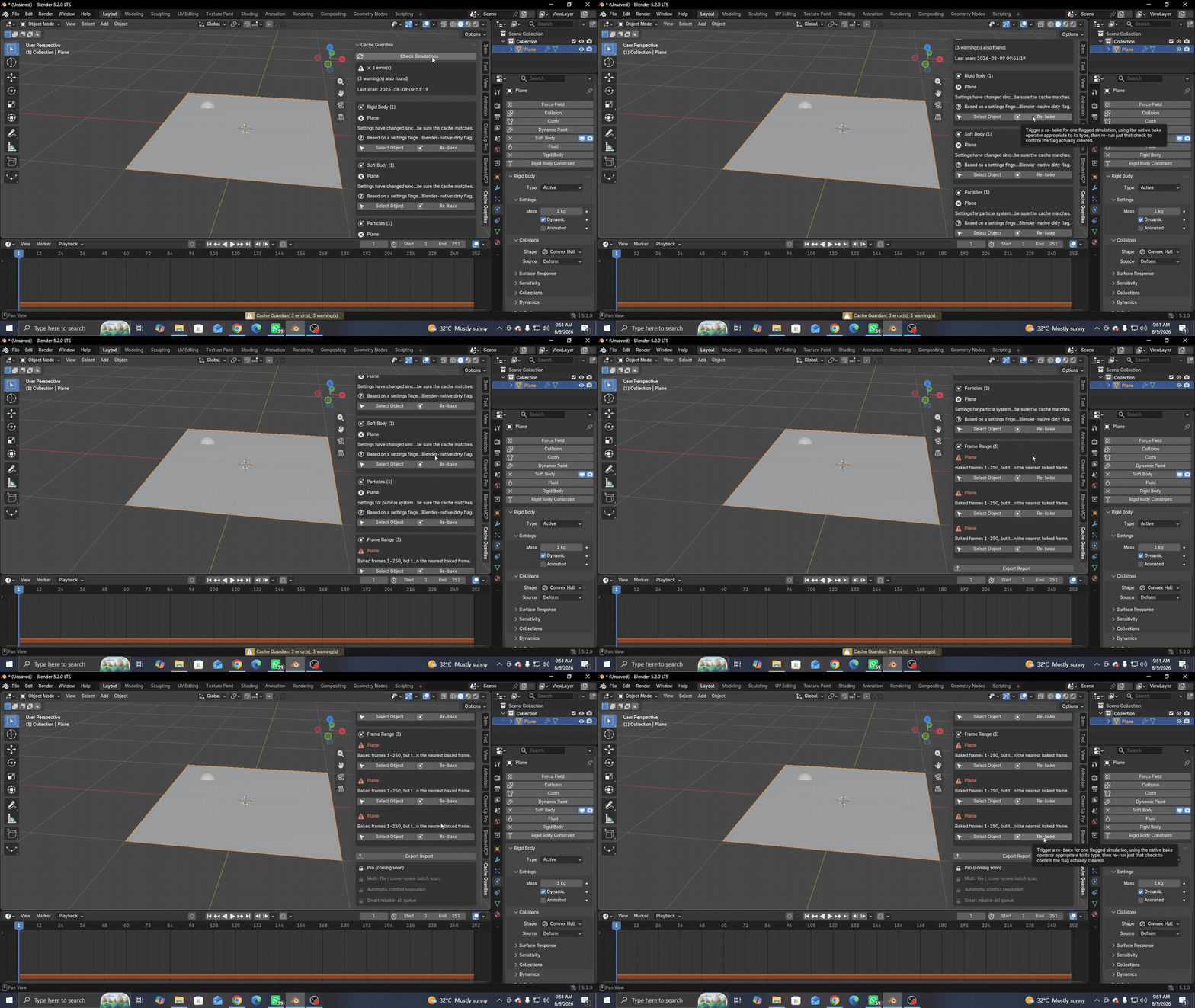
N-panel tab grouped by simulation category, with a top-level status badge (all clear / warnings / errors) and last-scan timestamp.
Per-item plain-language detail text, a Select Object button that jumps to the object and opens its Physics tab, and a Re-bake button on anything fixable in place.
Export Report
Writes a plain-text report next to the saved .blend file — useful for QC logs, farm submission checklists, or client hand-off documentation.
Auto-check-before-render preference
Runs every check automatically right before rendering starts and shows a non-blocking warning popup if unresolved errors exist. Never blocks or cancels the render.
Honest staleness model
Blender has no single native "this cache is dirty" flag across all six simulation types. Cache Guardian's fingerprint heuristic is documented in the UI as a heuristic, not a guarantee — the kind of transparency pipeline leads expect from a tool they're going to trust with QC.
Who Is This For?
Blender artists and pipelines with any meaningful amount of simulation work: cloth, fluid, smoke, rigid body, soft body, particles, or Geometry Nodes simulation zones. If your scenes ever leave the machine they were baked on — to a render farm, a collaborator, a client delivery, or just your own future self reopening the file — Cache Guardian is built for that exact handoff moment. Solo freelancers get a fast pre-delivery check; studios get a repeatable QC step that scales across artists and shots.
Why Choose This Addon?
Most simulation cache problems get caught by convention — a wrangler script, a spreadsheet checklist, or an artist's memory of "did I bake that?" Cache Guardian replaces that with an actual scan of Blender's simulation state and disk cache, run from inside the file, in the same session where the fix happens. It's scoped narrowly and deliberately: six simulation types, done thoroughly, rather than a shallow pass across everything. It's transparent about its own limitations — sampled rather than exhaustive disk checks, a documented heuristic rather than a claimed guarantee for staleness — which is what separates a tool built by someone who has shipped simulation work from one built to look good in a demo video.
Production-Ready Benefits
Runs entirely offline — no network requests, no external dependencies, safe for locked-down studio and farm environments.
Standalone architecture — installs and runs independently of any other add-on, with no shared code or hidden coupling.
Fast on long simulations — sampled disk verification keeps scan times low even on multi-thousand-frame bakes.
Non-destructive by default — flags and reports; fixes (Re-bake) are explicit, one-click, and reversible through Blender's normal bake workflow.
Respects linked/library data — flags issues on linked simulations without attempting unsafe writes to data it doesn't own.
Built and verified against real Blender internals, not just documentation — several of the trickier detection paths (Geometry Nodes bake state, Mantaflow domain bake properties) were confirmed against live Blender 4.5.5 behavior, including cases where the bundled API reference was wrong.
