 Mars0hod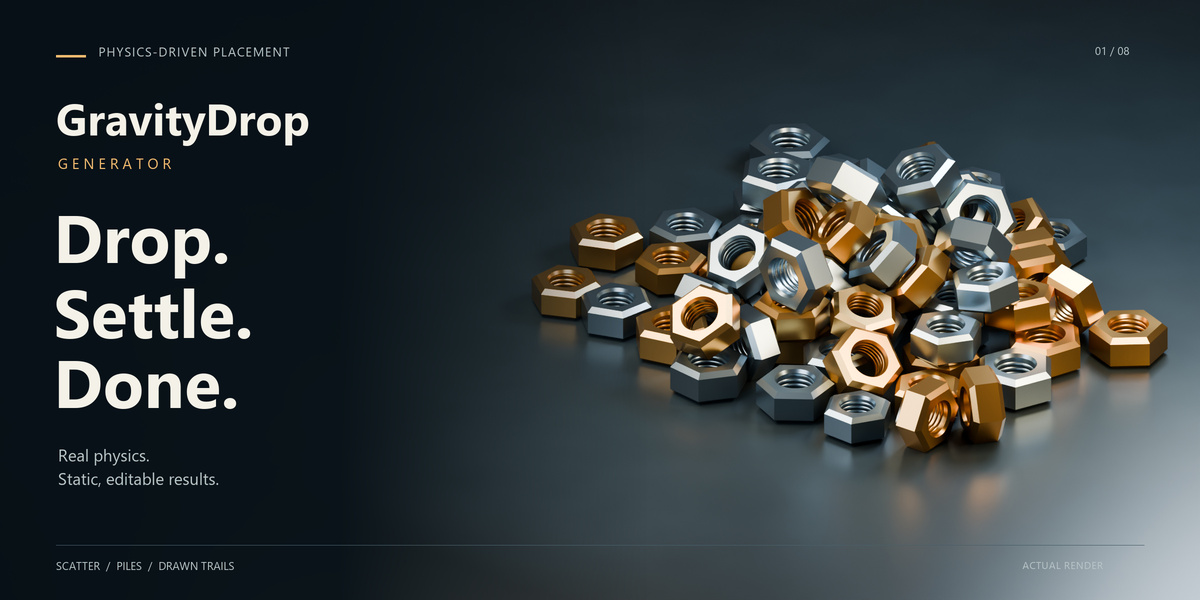




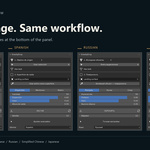
Real physics. Natural arrangements. Editable results.
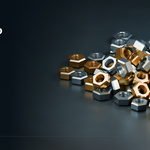
Scatter bolts across a workbench, build a pile of stones or draw a trail of props directly on a surface. GravityDrop Generator uses real rigid-body simulation to settle your objects, then leaves you with ordinary, editable meshes.
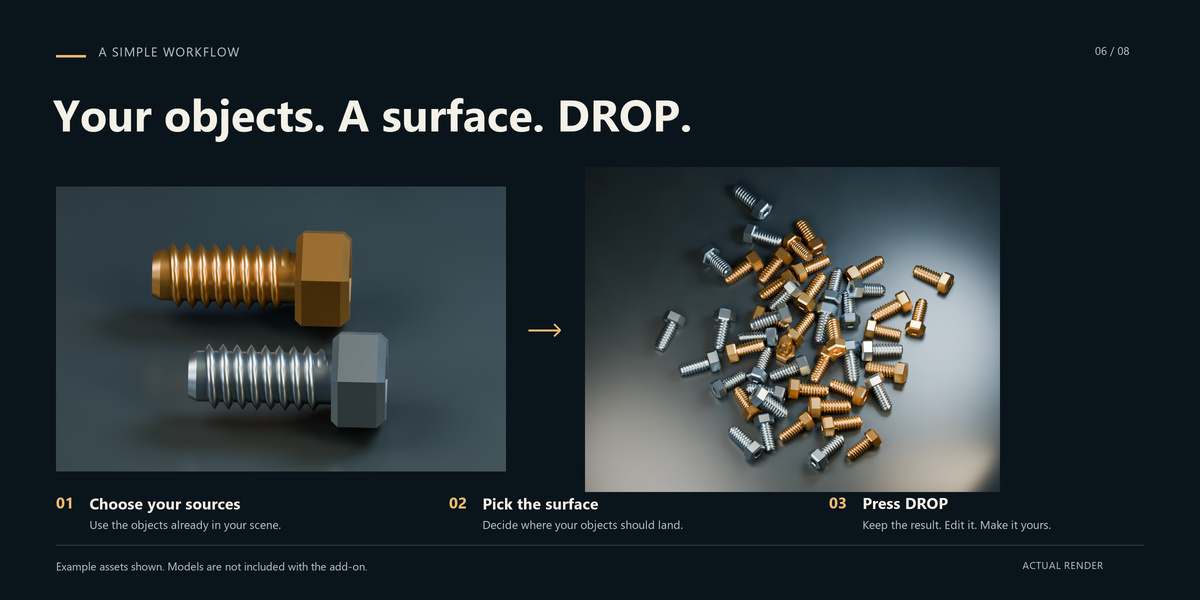
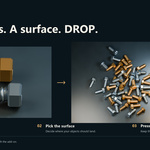
Choose your objects. Pick a surface. Press DROP.
Three ways to build your arrangement
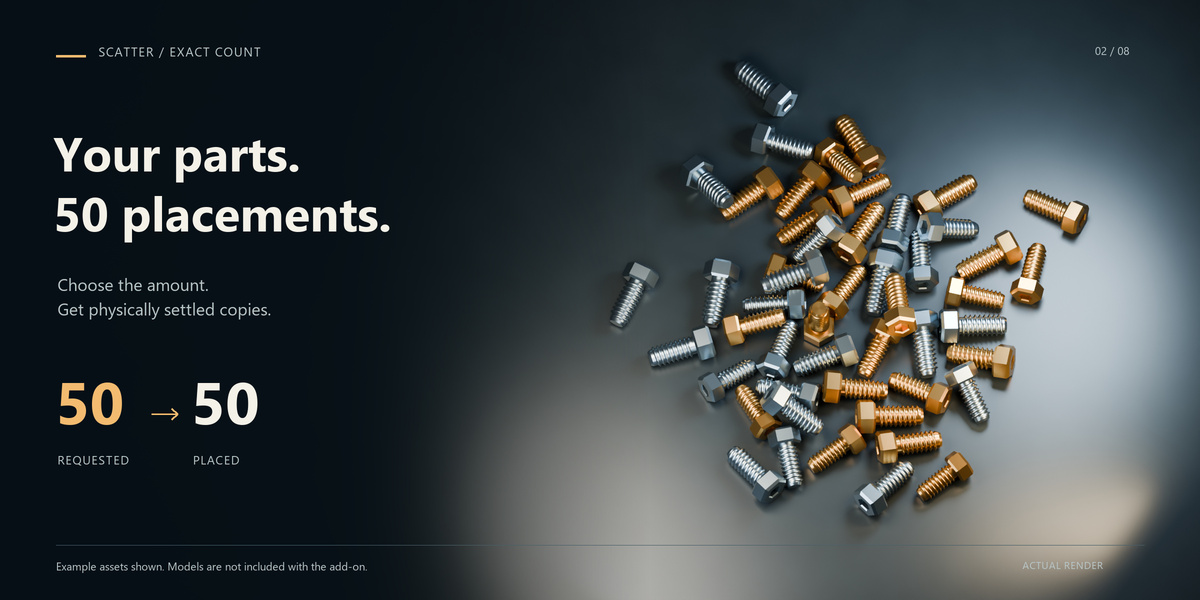
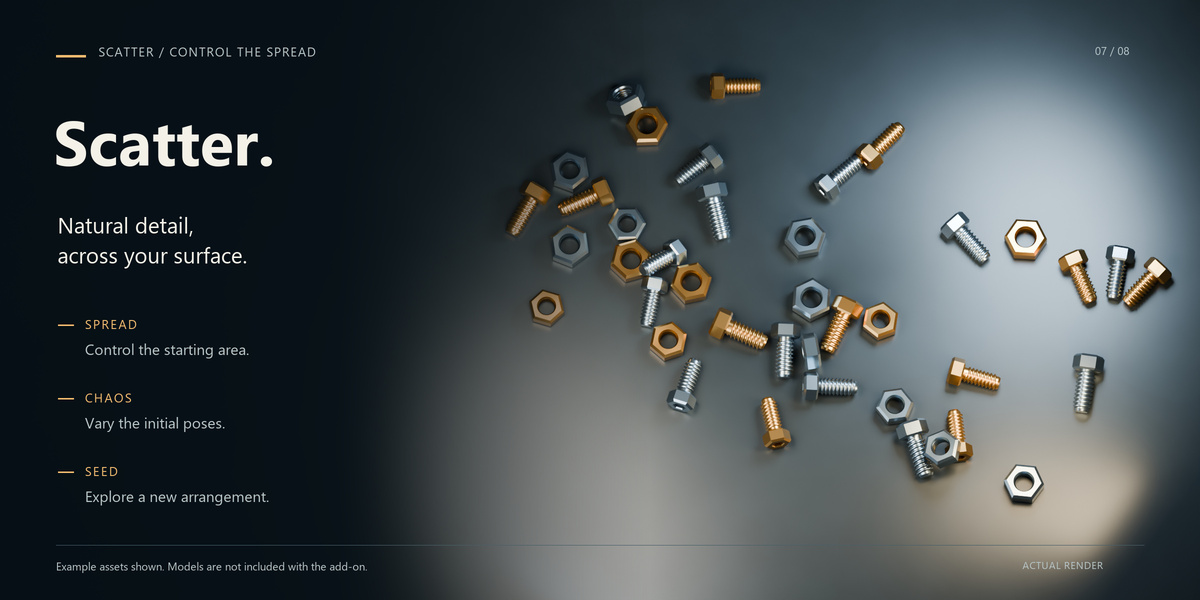
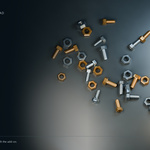
Scatter — spread objects across a surface with varied positions, rotations and scales.
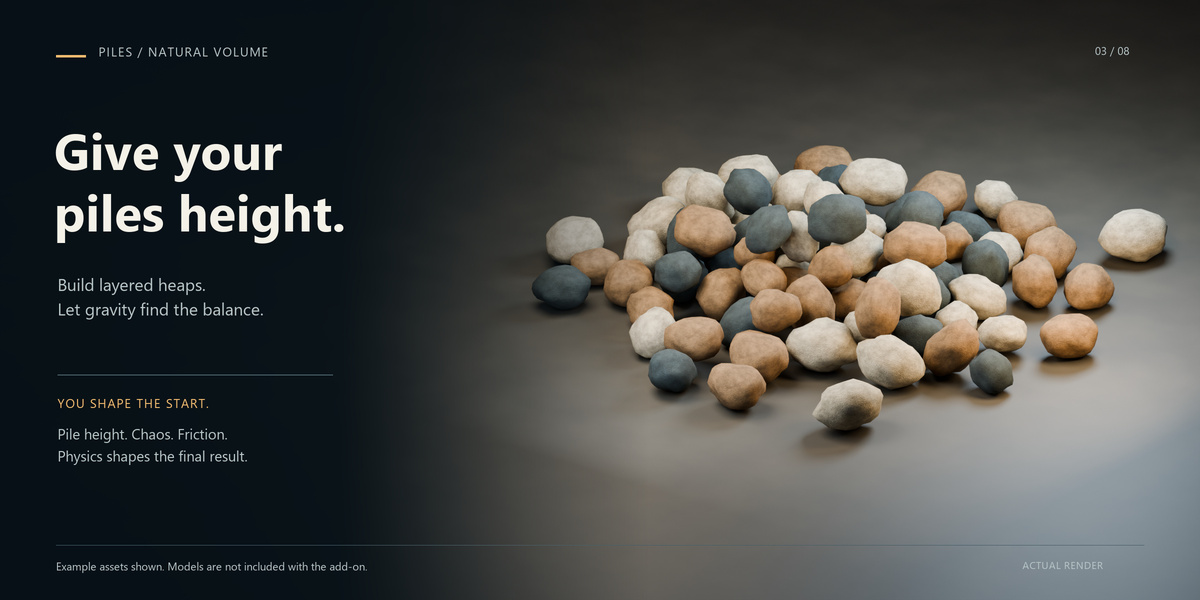
Piles — create layered heaps with controls for concentration and pile height. Gravity and object shape determine the final balance.
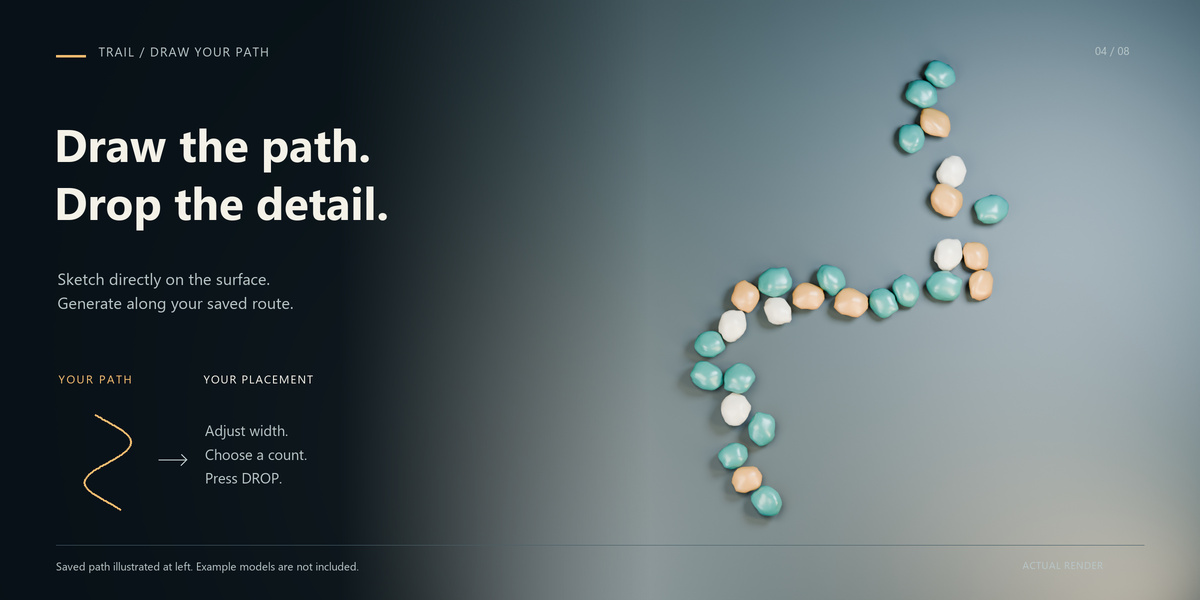
Trail — draw a path on the selected surface and generate objects along it. Adjust the path width to suit your composition.
Control the result
Adjust object count, chaos, scale, drop height, fall direction, friction and bounce. Change the seed to explore another arrangement.
Successful generation preserves the exact requested count: ask for 50 objects and receive 50 objects. If a complete arrangement cannot settle, GravityDrop preserves your previous result.
Keep working after the drop
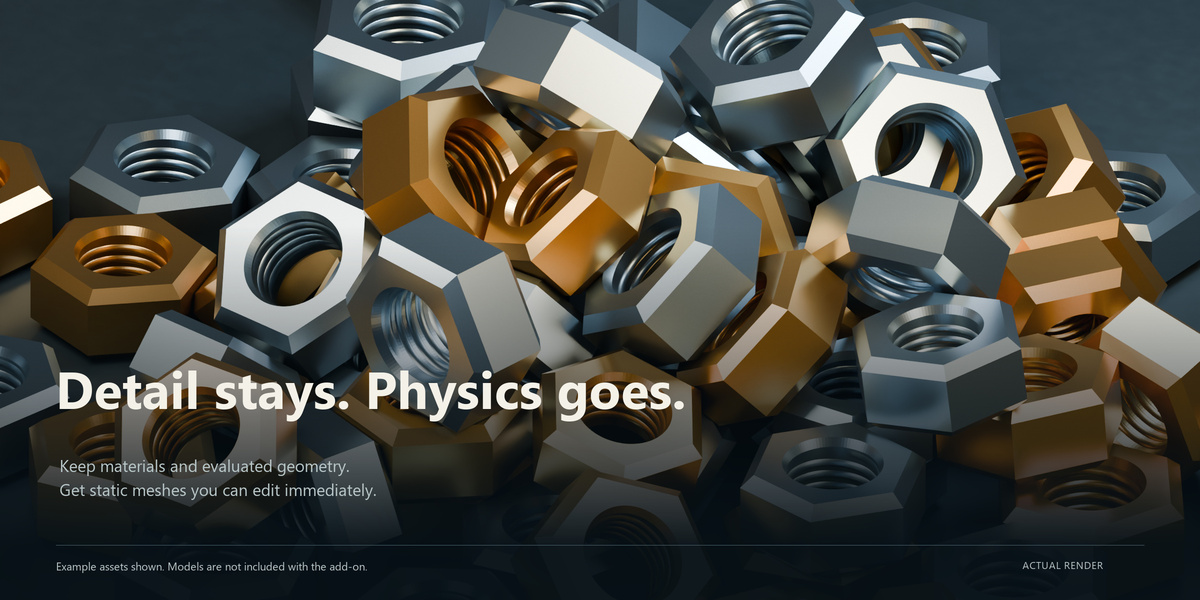
The finished arrangement contains static mesh objects with materials and evaluated geometry. No ongoing simulation is needed. Regenerate, keep separate results or continue editing with Undo and Redo support.
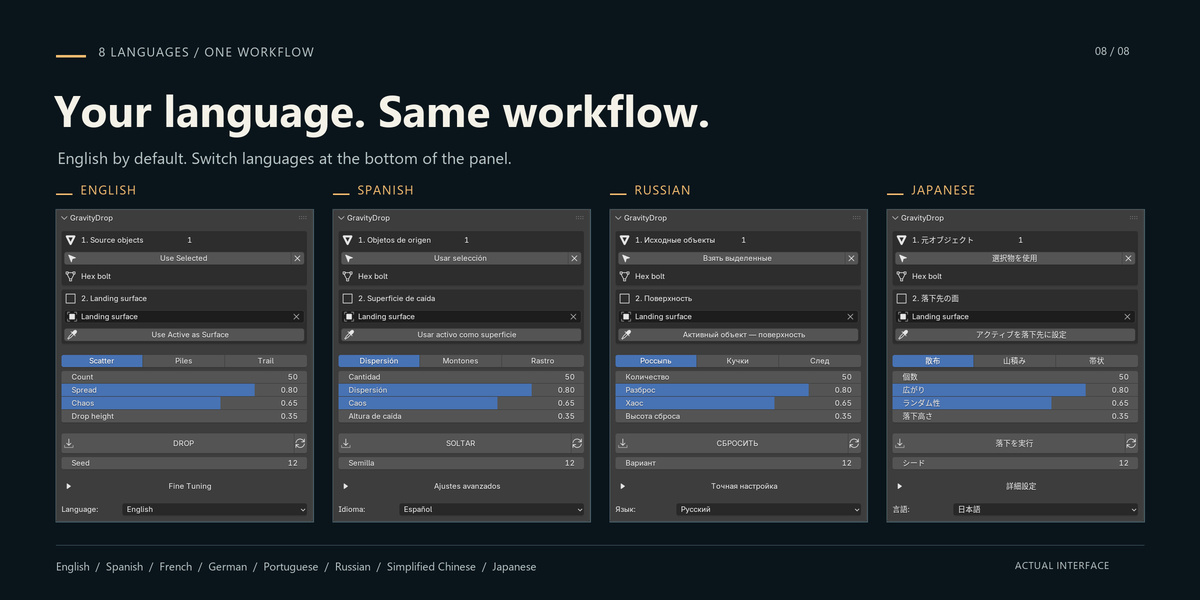
Eight interface languages
English, Spanish, French, German, Portuguese, Russian, Simplified Chinese and Japanese. English is selected by default. The language selector sits at the bottom of the panel and works independently of Blender’s interface language.
Included
GravityDrop Generator 2.3.0 by Mars0hod.
Extension installer for Blender 4.2 and newer.
English and Russian user guides.
Python source and GPL-3.0-or-later license.
Compatibility
Minimum supported version: Blender 4.2. Tested in Blender 5.2.2 LTS on Windows. Blender 4.2–5.1 compatibility was reviewed against published APIs and source code without running those versions. macOS and Linux have not been runtime tested.
Before you buy
Use your own objects and surfaces. Models and demonstration scenes shown in the images are not included.
Collision shapes approximate the outer form of objects; hollow interiors and interlocking parts are not simulated. Small contact tolerances are possible. Large counts and complex surfaces require more processing time.
Works offline, with no additional Python packages required.