 Solaris Core — MHD-INT
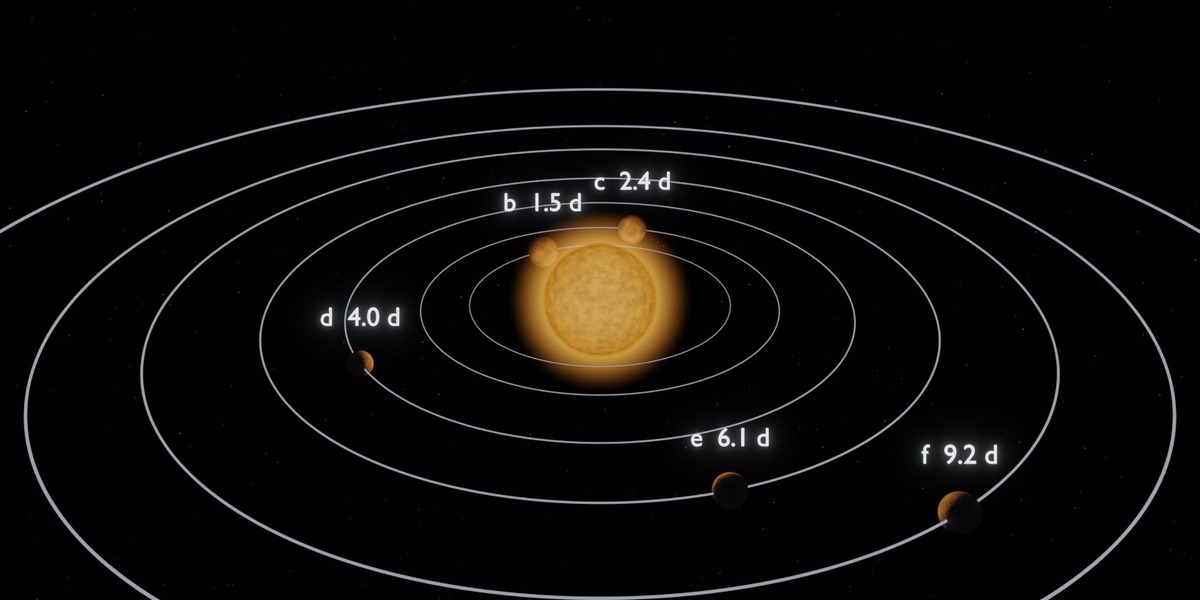
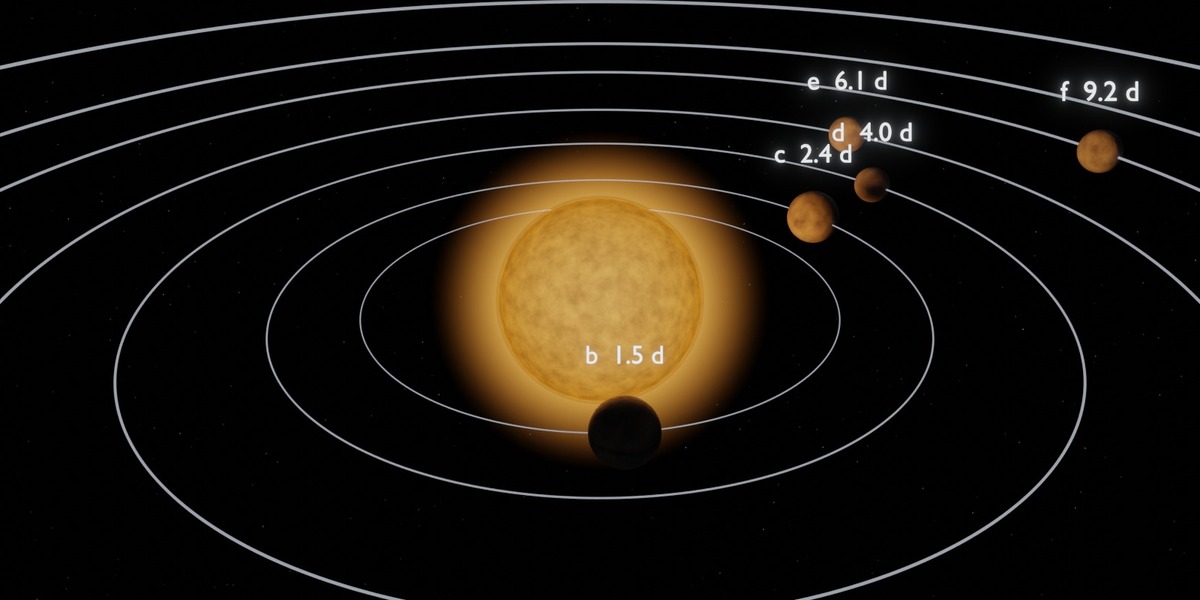
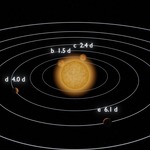
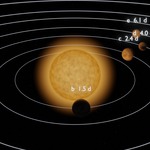
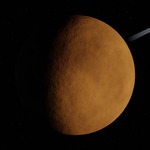
TRAPPIST-1 is an ultra-cool red dwarf, 12 parsecs away, with seven Earth-sized planets, all packed inside an orbit smaller than Mercury's. This product gives you the whole system as a ready-to-render scene, built from the published numbers, with every value labelled as measured, computed or illustrative.
What makes it different
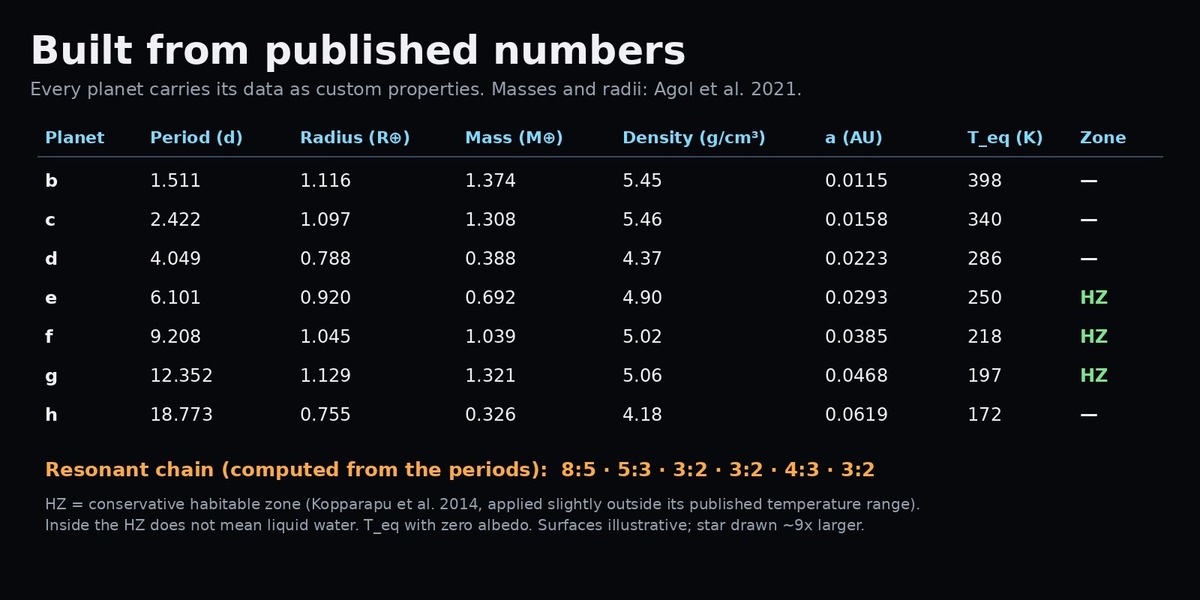
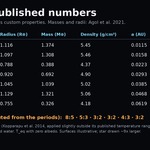
Real data, not guesses. Periods, radii and masses of planets b to h come from the transit-timing analysis of Agol et al. (2021). The masses are measured, not estimated from a formula.
Computed, not drawn by hand. Orbital distances come from Kepler's third law, and the period ratios of the famous resonant chain (8:5, 5:3, 3:2, 3:2, 4:3, 3:2) are computed from the periods.
Honest labels. Every planet stores its data as Custom Properties (prefix mhdint_), including uncertainties, the source and whether each value is measured, computed or illustrative.
JWST results included. The dayside temperatures measured by JWST for planets b and c are stored on those planets with their references.
What's included
A ready-to-render .blend (Cycles) and the Python script that builds it, so you can change any setting and rebuild in about one second.
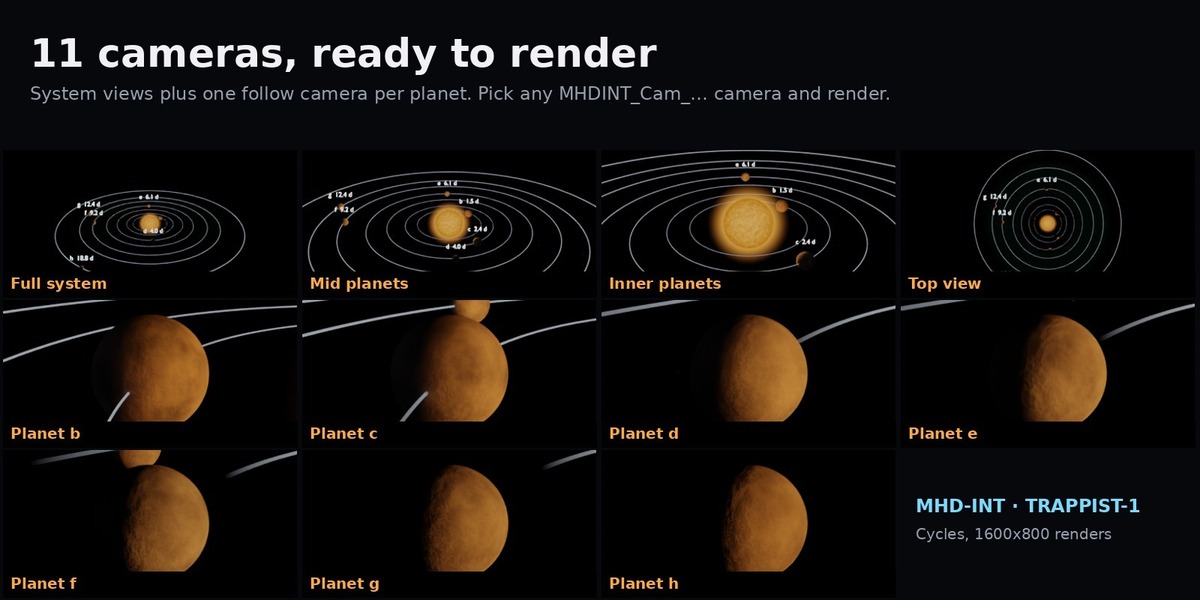
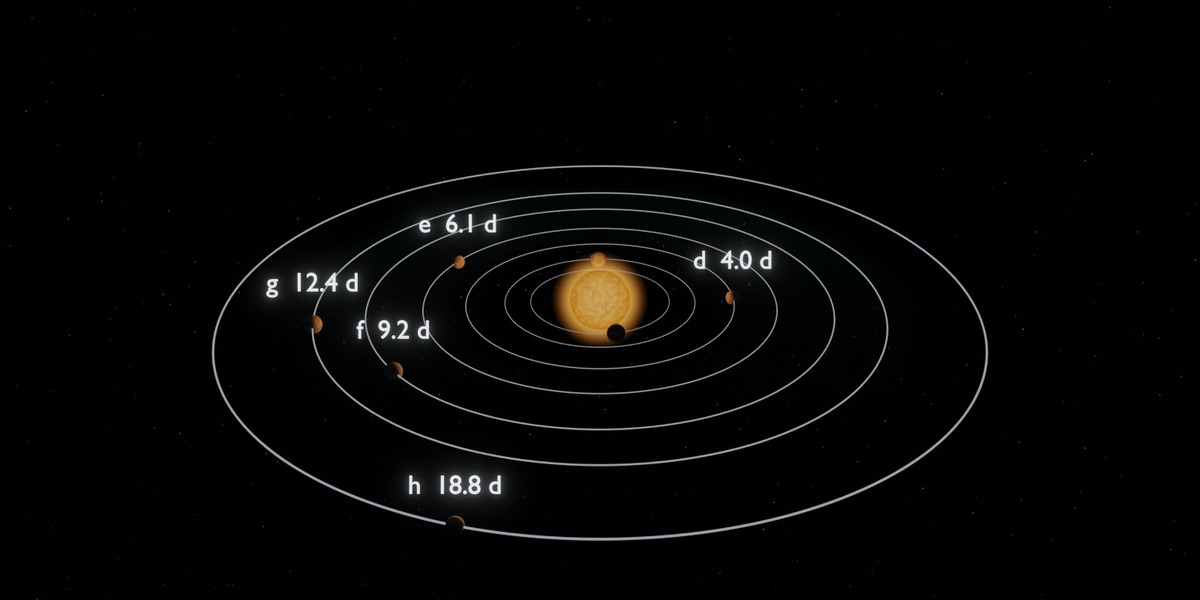
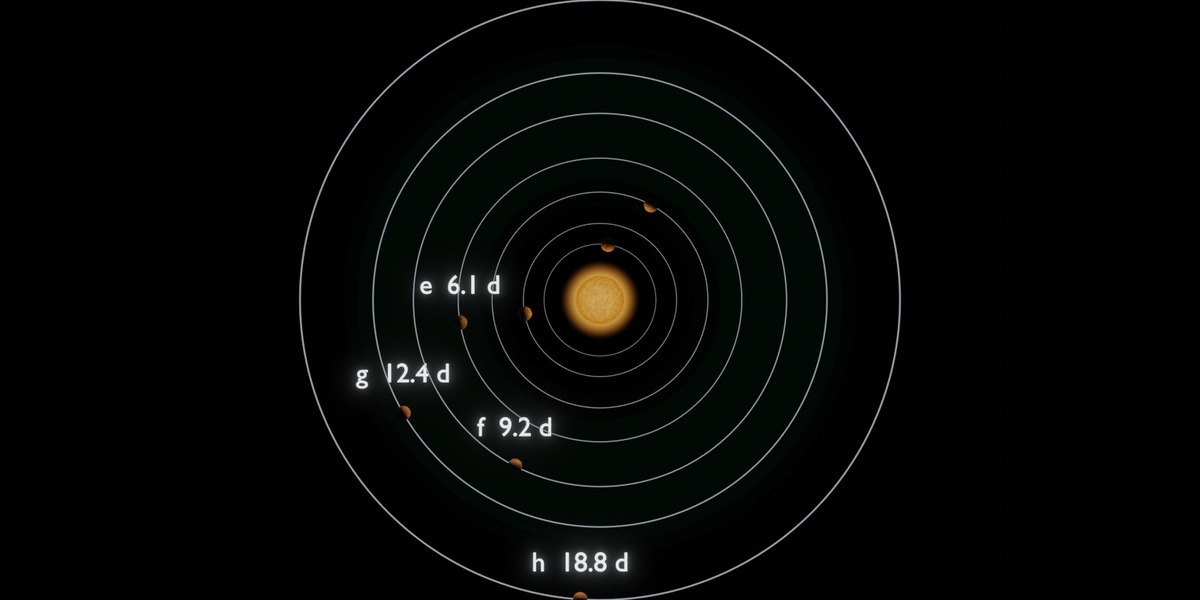
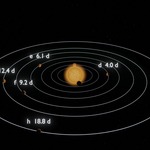
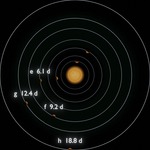
The star with animated surface granulation and the seven planets, with orbit lines and labels (period in days).
Habitable-zone limits (Kopparapu et al. 2014), insolation and equilibrium temperature, computed for each planet.
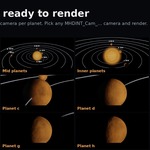
11 cameras: full system, mid planets, inner planets, top view, and one follow camera per planet.
20 days of orbital motion at 0.5 days per second (1,201 frames at 30 fps): planet b completes an orbit in 3 seconds, planet h once in the clip.
"Studio" lighting (looks good) or "physical" lighting (real 1/r² with per-camera exposure), adaptive or true scale, optional glare.
README with what is real and what is not, CREDITS with all references.
What is illustrative (we say it up front)
-
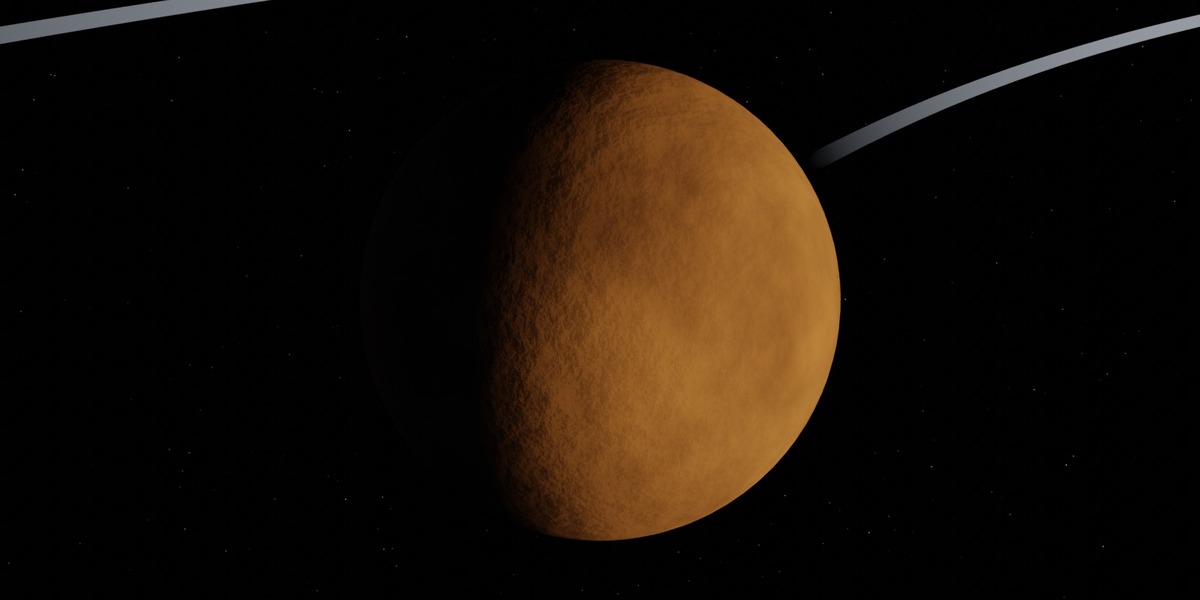
- Planet surfaces are invented: nothing is known about how they look.
- Orbits are drawn circular and coplanar (the real eccentricities are about 0.01 or less) with random starting phases.
- The star is drawn about 9 times larger than true scale so it reads on screen; TRUE_SCALE = True switches to real proportions.
- Being in the habitable zone does not mean a planet has liquid water.
Who it is for: science communicators, teachers, YouTube and planetarium creators, and anyone who wants a scientifically careful exoplanet scene instead of an artistic guess.