 RFKits
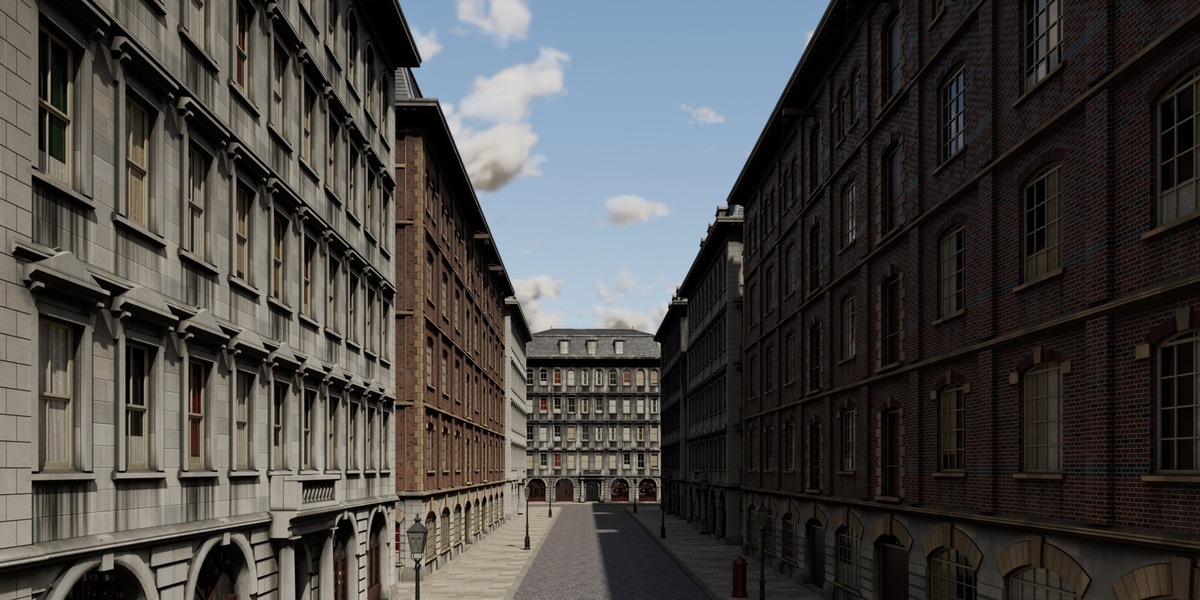
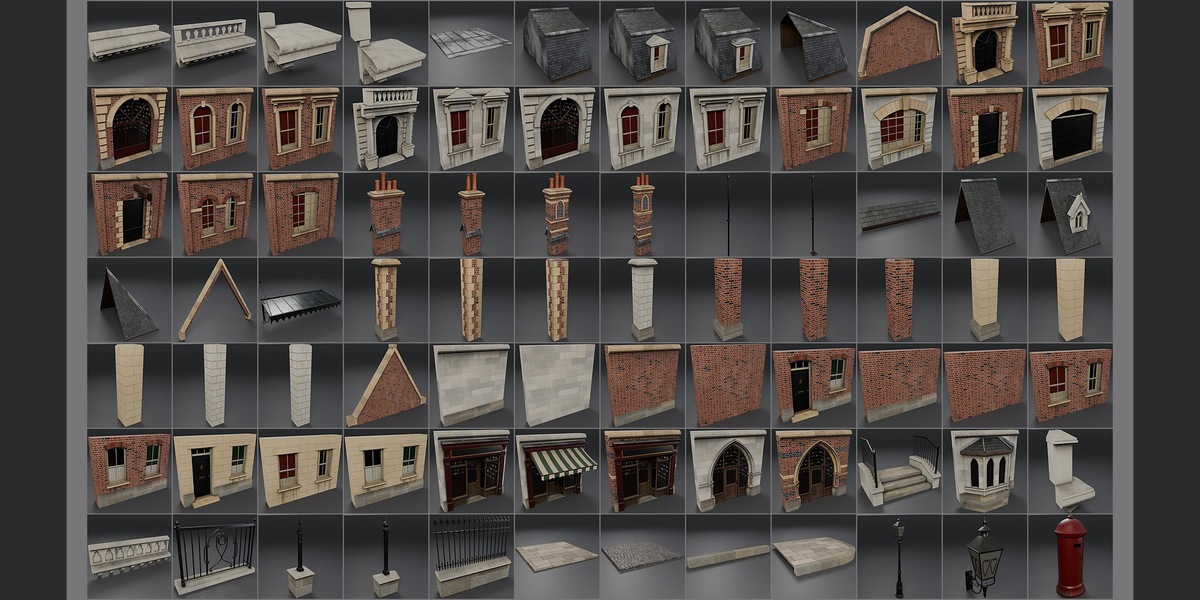
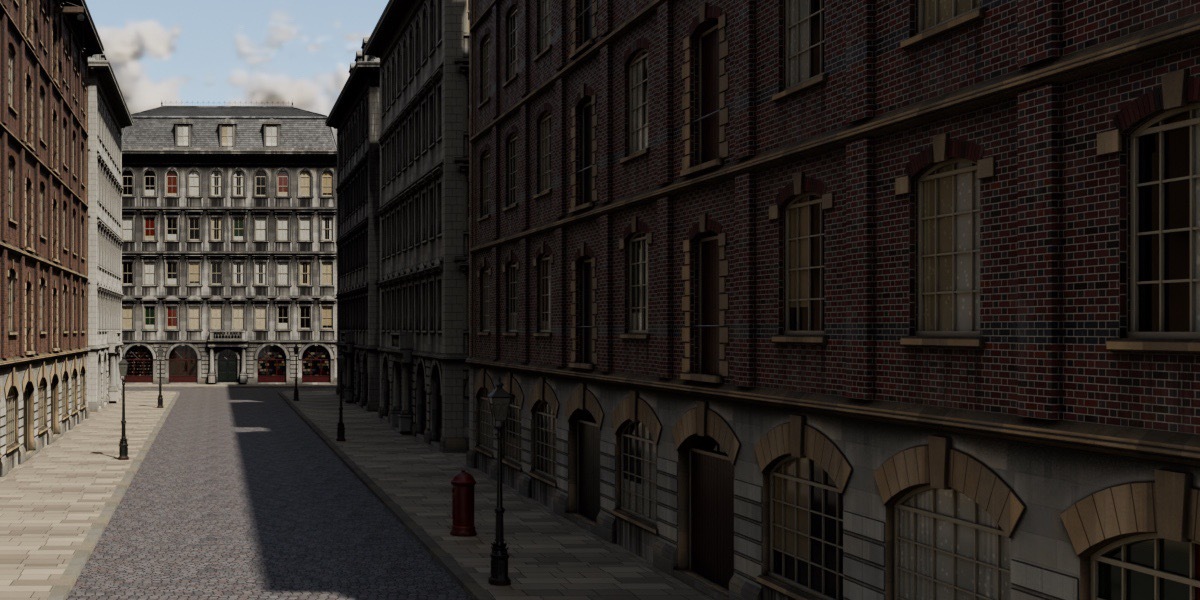
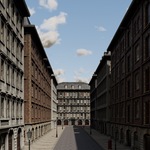
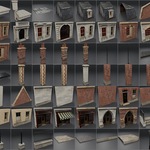
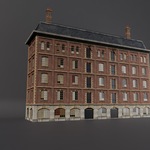
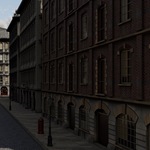
Victorian street and city fronts that snap together: office ranges, warehouses, shops and terrace houses with their corners, cornices, roofs, chimneys and street furniture. 84 pieces on a 0.5 m grid, a 4.0 m bay and a 4.0 m storey (3.0 m in the houses), so the bays, corners and roof modules line up without nudging, and the stone coursing and brick bond carry on from one bay to the next.
What is in it
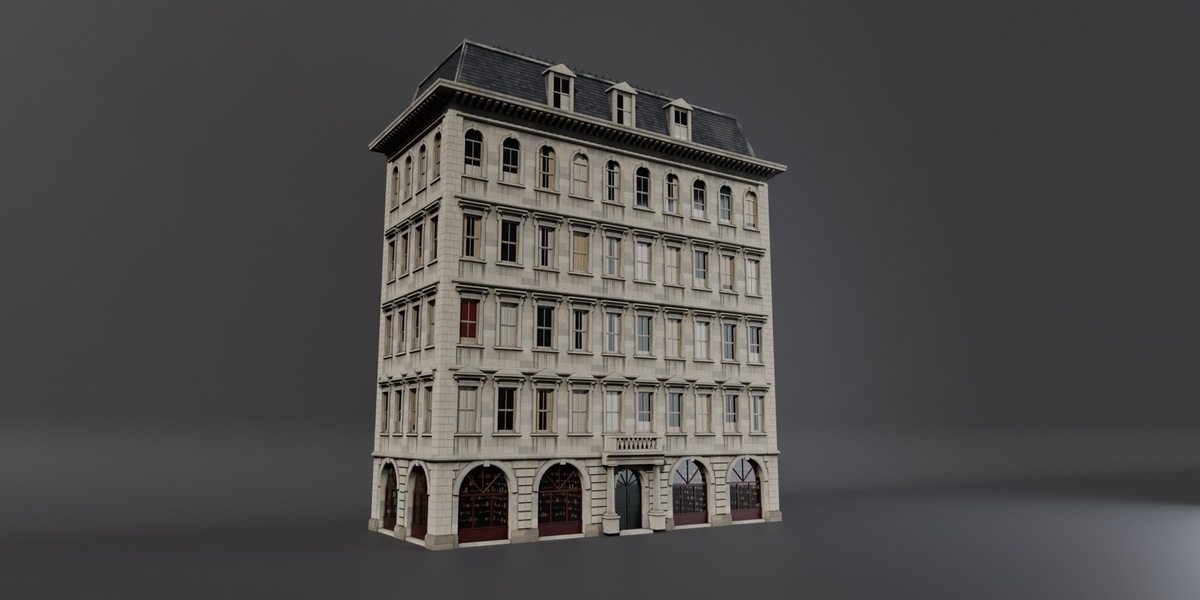
- Office ranges in Portland ashlar and in red brick, storey by storey from the entrance and the ground floor to the attic: sash windows under cornices and pediments, consoles, rusticated ground storeys and columned entrances.
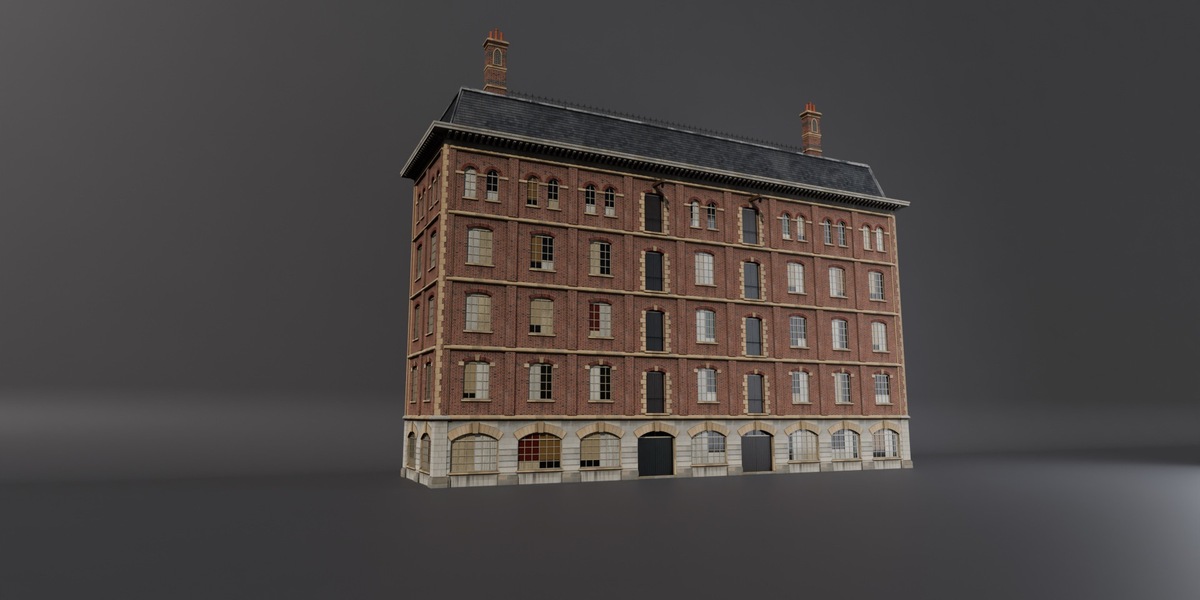
- Warehouses in red brick over a rusticated stone ground storey: small-paned iron windows under gauged arches, and loading doors from the ground to the top storey.
- Shops: shopfronts with fascias, blinds and stall risers, in stone or brick, and a glazed iron canopy.
- Terrace houses in red brick and in stucco, on a 3 m storey: sash-window bays, plain bays, a canted bay window, front steps, and their own corner piers.
- Plain ashlar and brick bays, and corner piers in stone and brick for every stage, including the ones that stop under a pitched roof's eaves.
- Main cornices with or without a balustrade, with their corners; panelled parapets.
- Roofs: mansards with plain, arched and hipped dormers, lead flats, Welsh slate roofs with dormers and hips, coped brick gables, party-wall upstands, gutters and downpipes, and chimney stacks with their pots.
- Street furniture: gas lamps on posts and on wall brackets, cast-iron railings with their posts and corners, a balconette, a pillar box, kerbs, paving and granite setts.
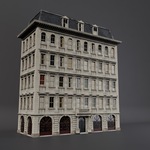
- 2 assembled buildings ready to place, built only from these pieces: a five-storey city office block and a nine-bay city warehouse.
Materials
36 procedural materials in the .blend: Portland ashlar, Bath stone, granite, Flemish-bond red, blue and polychrome brick, terracotta, stucco, slate, lead, painted cast iron, oak and glass. They weather from each piece's own shape (soot under cornices and sills, rain-washed faces, damp at the foot) and read at any scale with no texture repeats to hide.
Technical
Real-world scale in metres, Z up, transforms applied, one object per piece with its pivot on the grid, consistent names. 238,558 triangles in all. The .blend opens as an Asset Browser library in Blender 5.2 or later; a copy saved by Blender 4.5 LTS comes with it.
Part of a larger kit
These 84 pieces come from Victorian Gothic Revival (662 pieces), which adds churches, civic halls, towers, domes, carved ornament, villas, a canal and a hillside. The pieces are the same models with the same names and materials, so the two work together.
How it was made
Designed by a human, implemented with the help of AI: every piece is built by procedural Python scripts in Blender, written with AI assistance. No AI-generated models, images or textures. The designs are original, drawn from real Victorian buildings.
